A Smaller Target Hides in the Rim
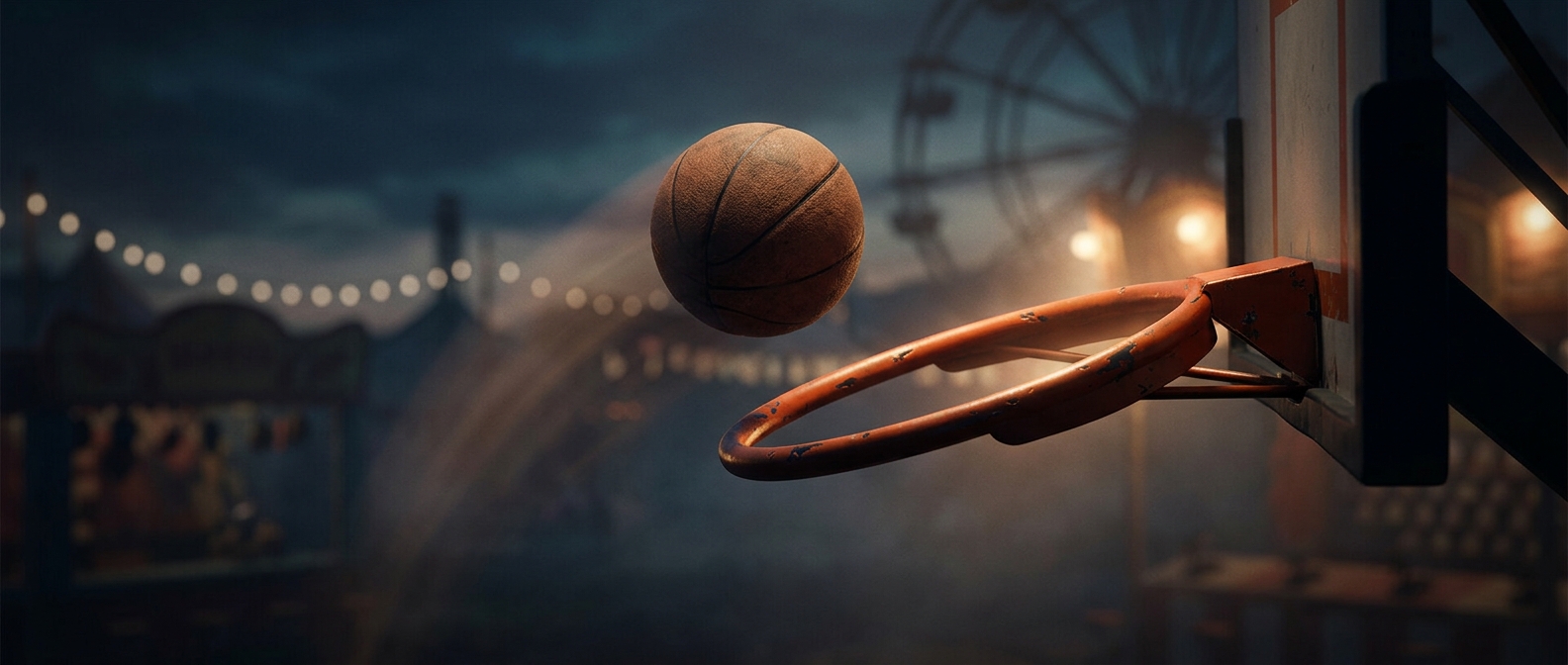
A carnival hoop can look regulation-sized while offering a less forgiving opening. If its rim is slightly oval rather than round, the gap is narrower along one axis. A shot that approaches from that direction has less room for error: the ball may clip the rim even when it appears centered from the player’s viewpoint.
The shape also makes the result depend more on the shot’s angle. A ball arriving from the side encounters a different opening than one coming from straight on, so aiming by eye is less reliable than it would be with a circular rim.
Why the Ball Bounces Away
An overinflated basketball is firmer and deforms less when it hits the rim. A softer ball can flatten slightly at impact; a harder one tends to spring away more sharply. That can turn a near miss into a lively rebound rather than a gentle drop through the hoop.
The two features compound each other. The oval rim makes clean passage harder, while the firm ball makes rim contact less forgiving—and sends misses bouncing in less predictable directions. A player may adjust the aim after one attempt, only to find that the next shot hits a different part of the oddly shaped opening.
The Skill Is in Reading the Setup
The challenge is not simply shooting accurately. Players must judge an unfamiliar target and account for a ball that responds differently from the one they are used to. That is why a hoop that looks ordinary from the midway can feel surprisingly stubborn once the ball is in the air.