A slow turn is part of the show
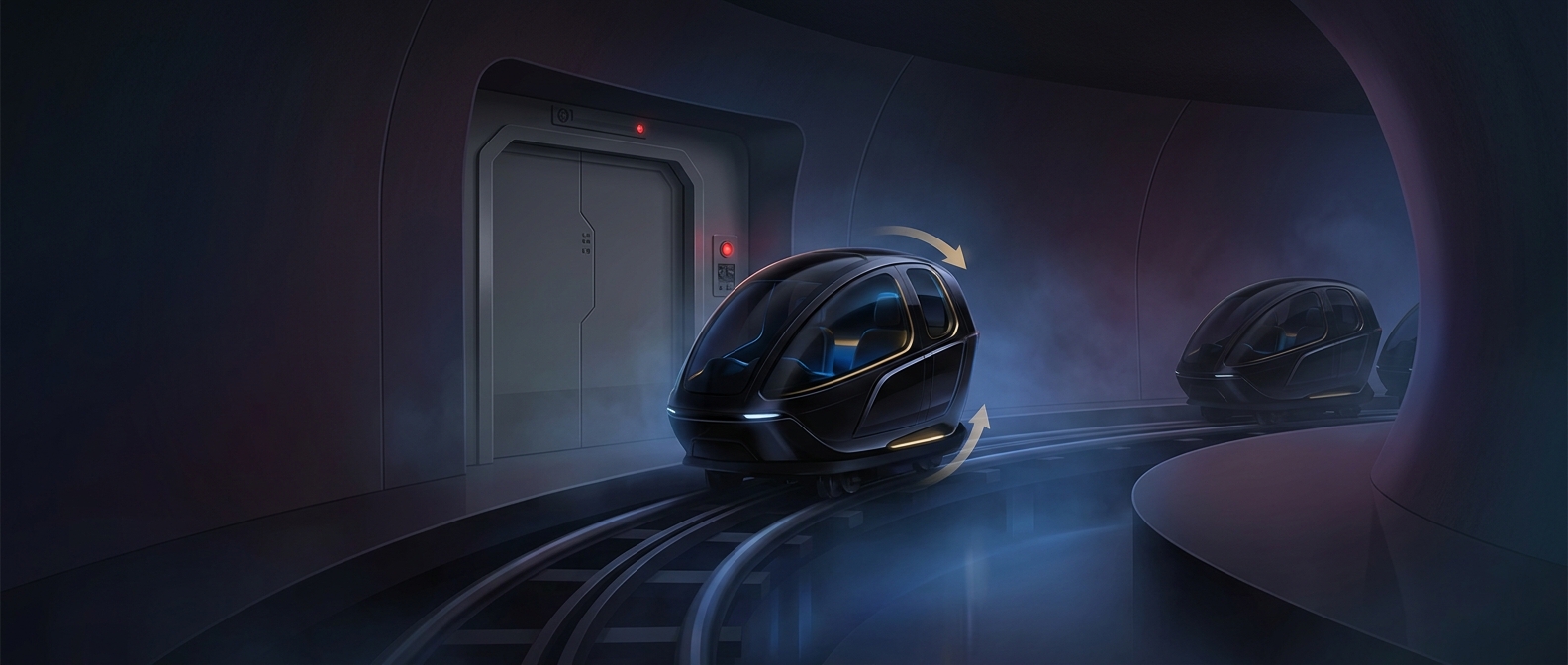
On a dark ride, the vehicle does more than carry passengers from scene to scene: its direction determines what they can see. A gradual turn can keep the next view centered on an animatronic—a moving figure built to look lifelike—while steering attention away from a bright exit door, exposed equipment, or backstage supplies.
That matters because the illusion depends on selective visibility. A water bottle or work light may be ordinary backstage clutter, but in the middle of a carefully staged scene it can make the setting feel like a theater rather than another world. Rotating the riders’ view helps the attraction present the scene as its own complete environment.
The vehicle controls the reveal
A turn also gives designers a way to manage timing. Instead of letting riders see a new scene all at once, the vehicle can bring it into view gradually, directing attention toward the intended focal point. Meanwhile, scenery or practical areas outside that viewing angle can stay out of sight. The slow movement makes the change feel like part of the journey rather than a sudden mechanical repositioning.
So the turn is not merely a way to follow the ride’s route. It is a moving frame: it decides what enters the picture, what stays hidden, and when the next illusion begins.