A Water Slide Built Around a Difficult Loop
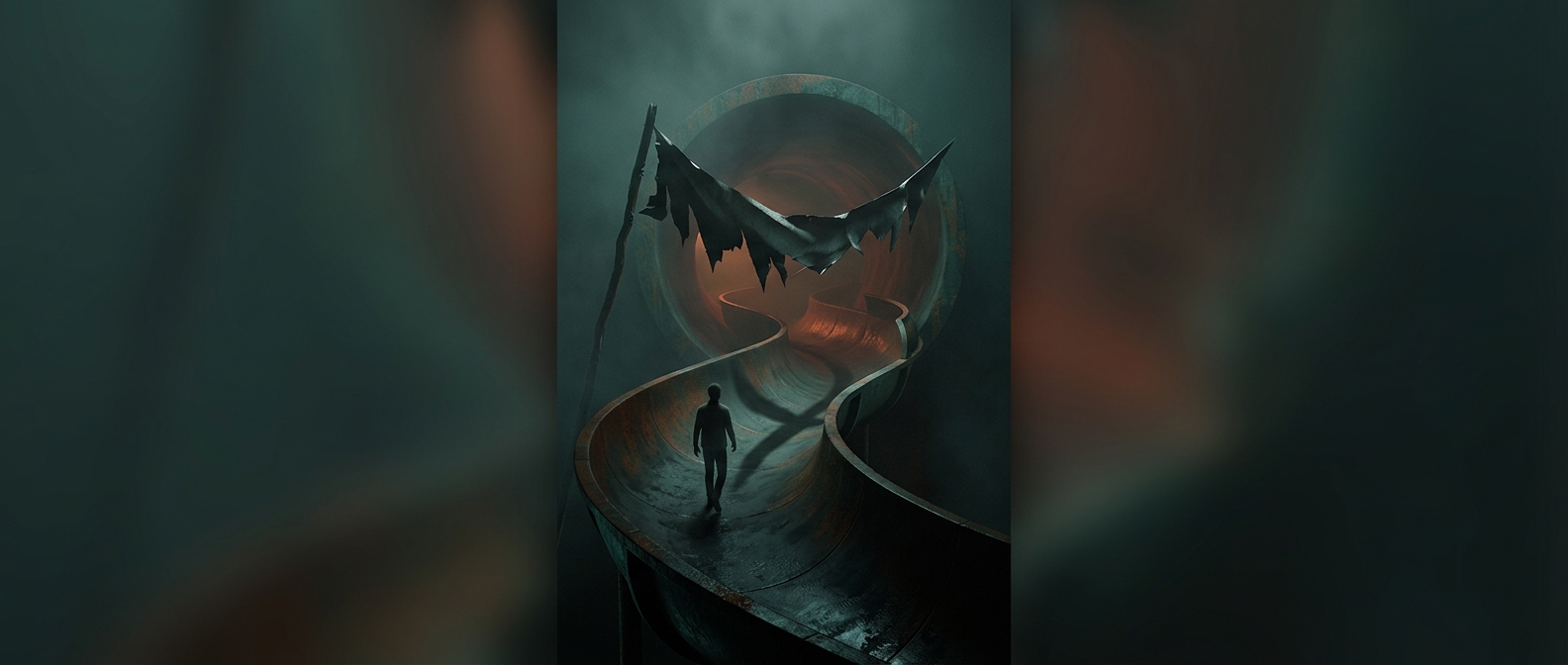
The Cannonball Loop at New Jersey’s Action Park sent riders through a full vertical circle—a shape far more demanding than the gentle dips and turns of an ordinary water slide. To make it around, a rider had to enter fast enough to climb the loop, while the slide also had to keep the body moving along a controlled path rather than letting it slam against the fiberglass.
That balance is unforgiving. At the bottom, speed and the curve press a rider into the slide; near the top, gravity slows the rider and can pull the body away from the track. If the transition into or through the loop is too abrupt, the rider can strike the surface hard. Water reduces friction, but it does not cushion a collision with a rigid wall.
Why the Design Could Hurt Riders
A person is not a rigid test vehicle. Riders differ in size, posture, and how tightly they brace themselves, so the same ride can produce different movements and impacts. In the loop, a head or face hitting the side could cause serious injury. The slide became notorious for riders losing consciousness, broken noses, and teeth reportedly left embedded in its fiberglass walls.
Those injuries exposed the central engineering problem: a loop that looks smooth from the outside can still impose violent forces on a moving body. The ride’s daring geometry was also its weakness. It required enough speed to complete the circle, but that speed made any loss of control or badly timed impact more dangerous. The result was a water slide whose most memorable feature—the complete loop—was inseparable from the physical risks of trying to ride it.