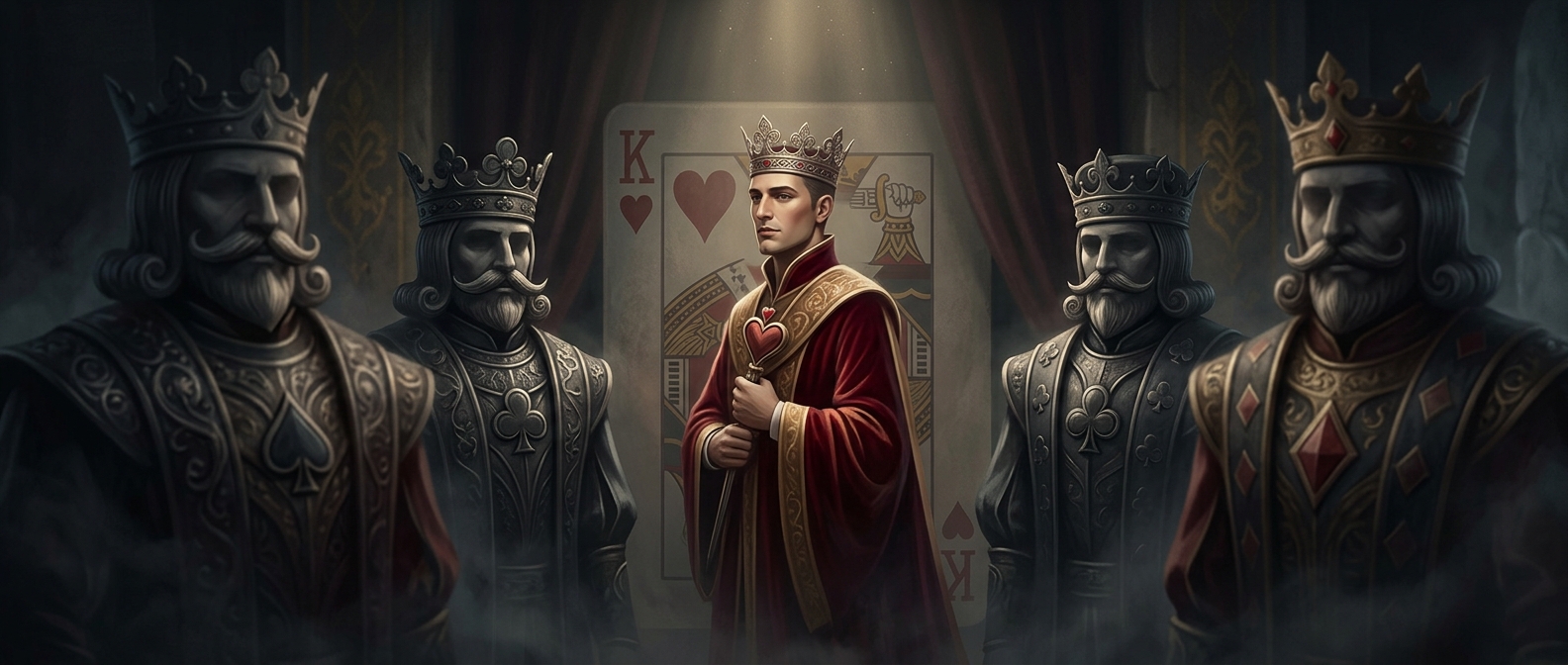
How a Small Printing Error Became a King’s Face
Early playing cards were made by carving designs into woodblocks, inking the raised surface, and pressing it onto paper. A block could reproduce a face many times, but later makers often copied existing pictures rather than redesigning each figure from scratch. If a detail vanished in one version, the next copyist could treat its absence as part of the design.
That appears to be what happened to the King of Hearts’ mustache. Once a woodblock showed him clean-shaven, the altered face could be repeated across a run of cards—and then copied into later decks. The lost facial hair was no longer a one-off printing flaw; it became a visual convention.
Why the Mistake Lasted
A playing card’s king had to remain recognizable at a glance, not anatomically consistent with the other kings. Makers could preserve the essential signals—a crown, royal clothing, and the suit symbol—while reproducing small differences in each figure. The King of Hearts’ bare upper lip therefore did not make the card confusing enough to prompt a correction.
Each new copy also carried the old image forward. A tiny omission in a reproducible design can outlast the person who made it, especially when later makers rely on familiar models. The clean-shaven king is a reminder that the details in everyday objects may reflect not a deliberate artistic choice, but a copying chain in which an accidental change became tradition.