Why the Drop Needs Industrial-Scale Water Handling
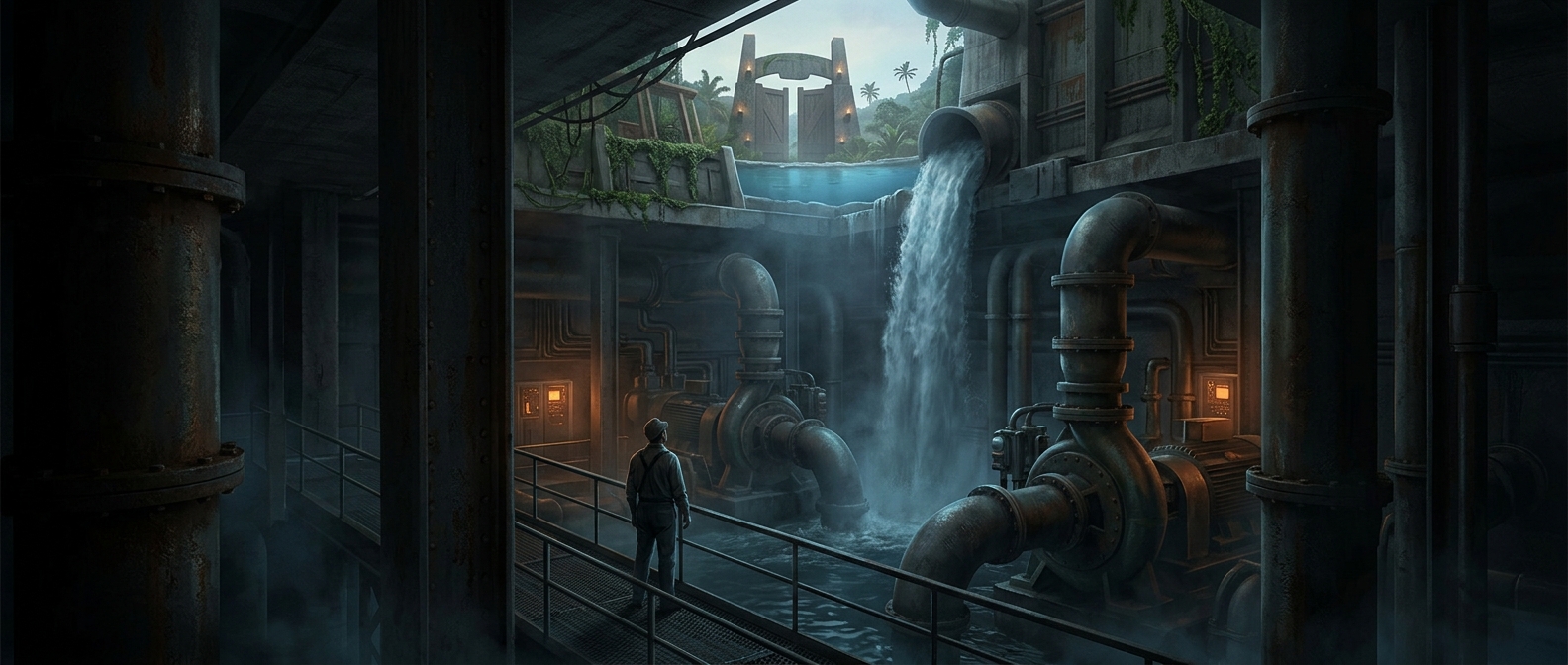
An 85-foot plunge sends a boat—and the water around it—down the flume in a sudden surge. As the boat enters the drop and reaches the bottom, it pushes water aside, creating waves and shifting water through the channel. The ride must manage those repeated surges while keeping enough water in the river for boats to travel safely and smoothly.
That is why the pumps move water at a rate measured in tens of thousands of gallons per minute. The figure describes flow, not a fresh supply poured into the ride every minute: pumps circulate and redistribute water so the channel can recover between passing boats and remain ready for the next plunge.
Keeping a Moving River Ride-Ready
A flume is not simply a pool with a drop attached. Its water has to support the boats along the route, while the system handles the changing level and turbulence created by each descent. If water were allowed to surge away from the course without being managed, the river would not stay consistently rideable.
The pumps make the dramatic drop repeatable. They help turn a large, momentary rush of water into a controlled cycle: boats descend, water shifts, and the system moves it back through the ride. The memorable scale is not just the height of the plunge, but the infrastructure needed to make that plunge happen again and again.