A Factory Town Needed Somewhere to Unwind
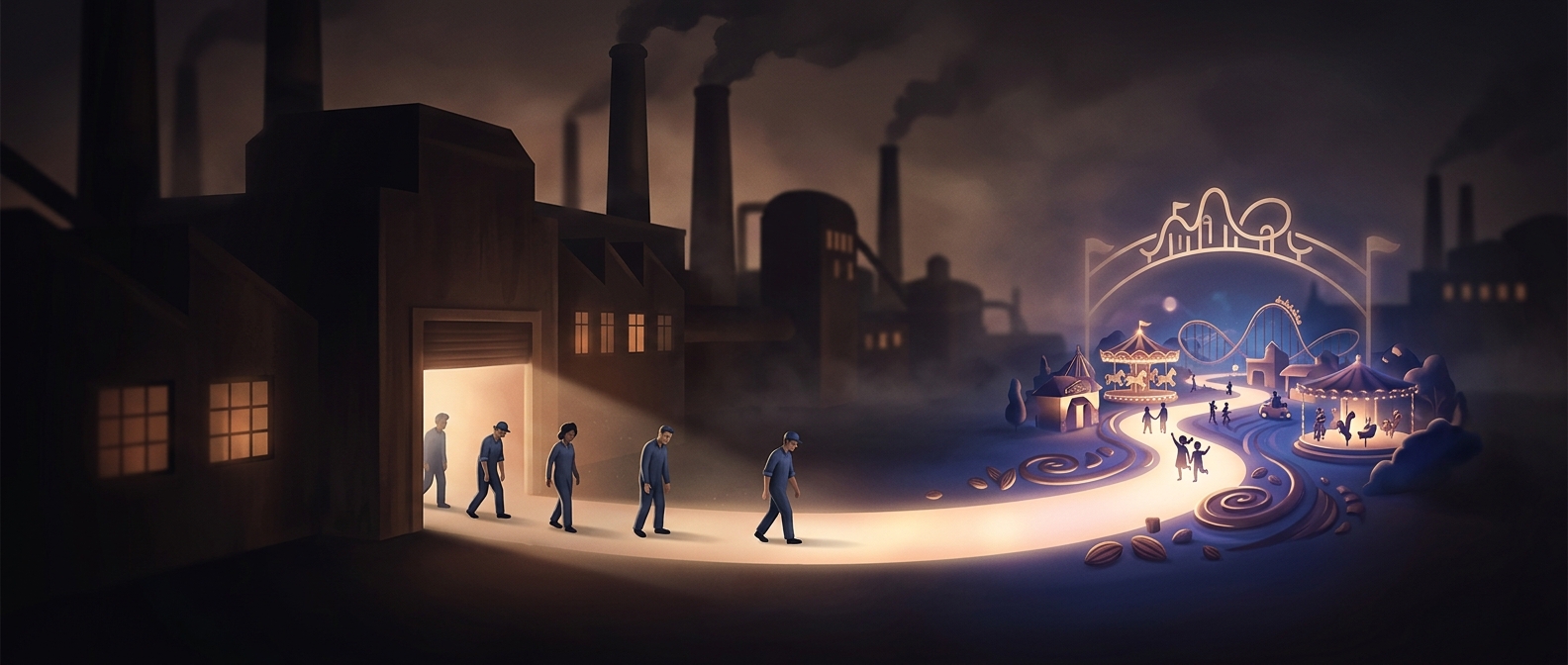
When Milton Hershey created a leisure area for factory employees, the idea was practical as well as pleasant: workers needed somewhere to spend their free hours near the town where they worked. The grounds offered activities such as canoeing and carousels, turning a day off into an outing without requiring a trip elsewhere.
That mattered in a company town, where work and daily life were closely tied to one employer. A shared recreation area gave employees and their families a place to relax and socialize outside the factory. It also made the town more than a collection of workplaces and homes: it had a public gathering place built around enjoyment.
From Employee Recreation to an Amusement Park
The original attraction was not the elaborate destination Hersheypark would later become. It began as a modest leisure amenity, with the park’s appeal rooted in simple experiences—rides, outdoor space, and time together. As interest and facilities grew, the grounds developed into a larger amusement park, eventually drawing visitors beyond the factory workforce.
The change reveals how a small workplace benefit can shape a place’s identity. What started as a way to make employees’ time off more enjoyable became a lasting feature of Hershey itself: a recreation ground that outgrew its original audience and helped define the town for generations.