The restaurant idea that became SeaWorld
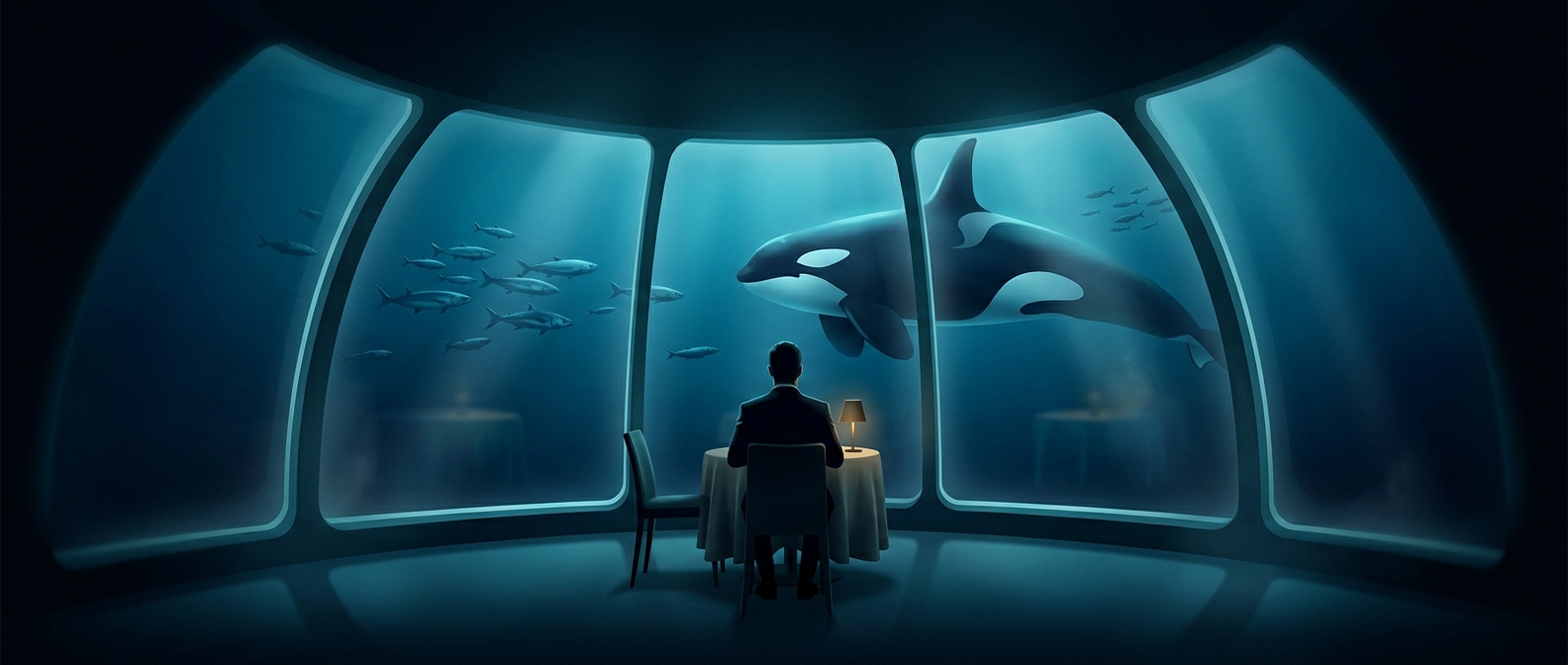
SeaWorld’s origin story began with a more intimate attraction than a theme park: a restaurant where diners could watch marine life through aquarium glass. The founders’ challenge was not simply putting windows underwater. A dining room below the surface would need a structure that stayed watertight and could withstand the surrounding water pressure, making the plan difficult to build and finance.
Bringing the underwater view above ground
Rather than abandon the appeal of seeing sea life up close, the founders shifted to a marine park. Aquariums could offer a window into underwater habitats without requiring visitors—or a restaurant—to be submerged. The change turned a costly, technically demanding building project into a collection of exhibits and attractions that people could visit on land.
That pivot also changed the experience from quiet observation to live entertainment. Animal shows made marine life visible to crowds at a distance, with trainers using food rewards to prompt behaviors such as jumps. The same design choice that made performances easy to watch helped create a lasting controversy: animals became both the attraction and the subject of questions about keeping them in captivity.
The surprising link is that SeaWorld’s signature spectacle grew out of a failed effort to make diners feel underwater. When the original setting proved impractical, the park brought the animals—and the audience—together above the surface.