A small world built around a repeating schedule
In The Legend of Zelda: Majora’s Mask, the three-day clock is more than a deadline: it is the structure that makes the world legible. The same characters follow routines across each cycle, so a meeting missed on the first afternoon can be anticipated and caught on the next. Players learn not just where people are, but when they will be there—and what changes if Link intervenes.
That turns exploration into planning. A side quest may require finding someone at night, carrying an item to another person the next morning, and arriving somewhere else before evening. The clock makes these errands feel connected: Link is working within a shared timetable, rather than collecting tasks that can be completed at any convenient moment.
Reset the world, keep what you learned
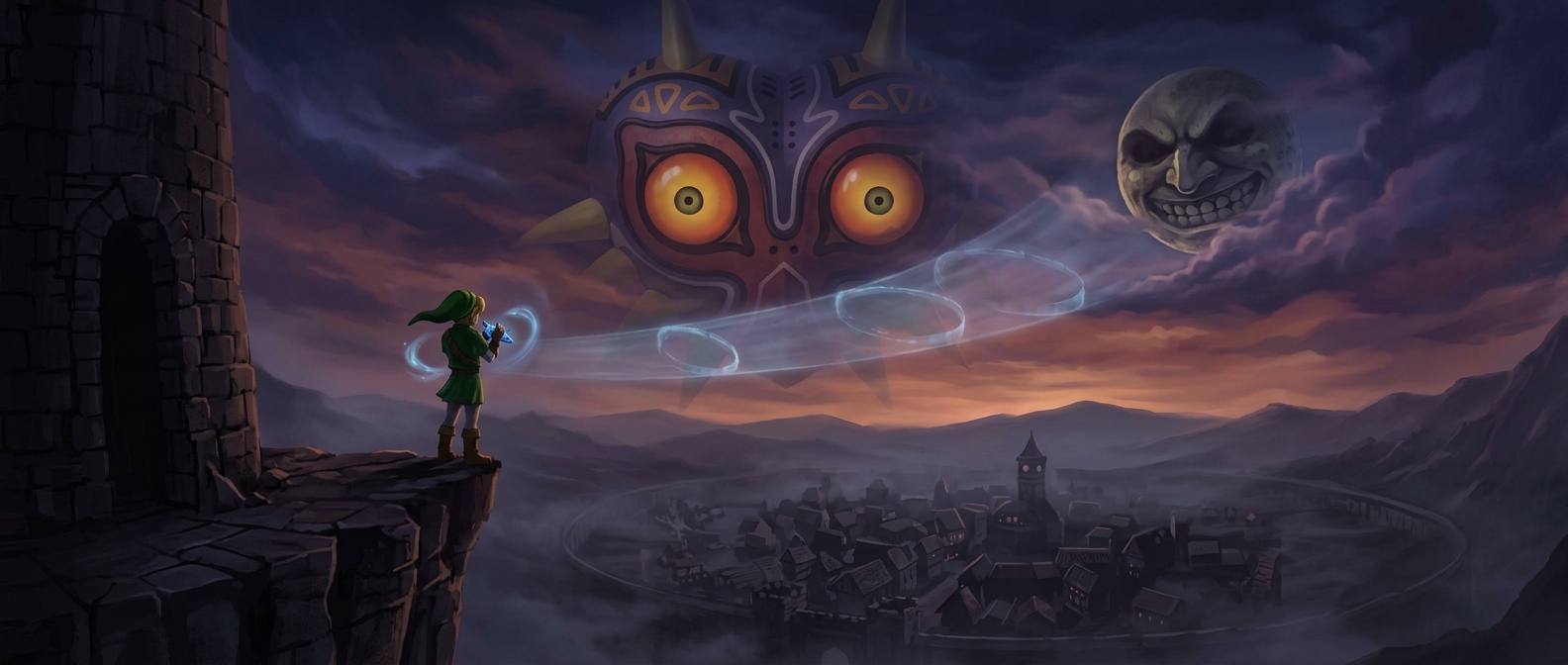
Playing the Song of Time sends the cycle back to its beginning. The town’s events and much of Link’s temporary progress reset, but important abilities, equipment, and knowledge carry forward. That distinction is central to the design: a failed attempt can still teach you a route, reveal an appointment, or unlock a tool that makes the next attempt more productive.
Two songs give players some control over the pace. The Inverted Song of Time slows the clock, making it easier to explore or wait for an event; the Song of Double Time jumps ahead to a later part of the day. They do not erase the schedule, but they let players manage it instead of watching every minute pass in real time.
Repetition becomes a form of progress
Because the cycle repeats, the game can make small changes feel consequential. A character rescued on one run may be helped earlier on the next; a newly acquired ability can open a different route through a familiar day. The moon’s deadline creates urgency, but the repeating calendar gives that urgency a practical answer: learn the world’s rhythms, then use each reset to act with more precision.