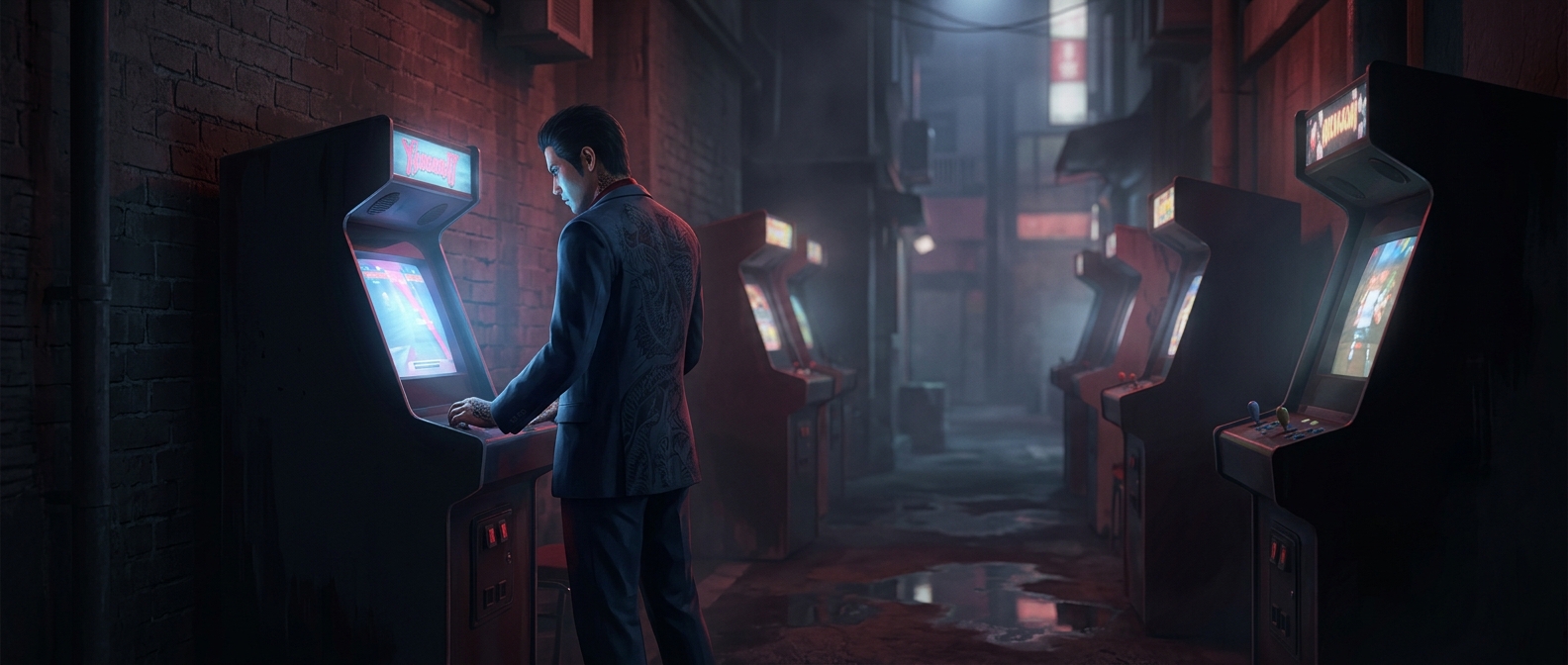
An arcade inside the adventure
In the Yakuza games, an arcade cabinet is more than decoration: approaching it can open a playable version of an older arcade game. The switch is a small but deliberate break in perspective. One moment, the player is moving through the series’ crime drama; the next, the game presents a compact challenge built around a separate set of rules, controls, and goals.
That works because the arcade fits naturally into the world. Rather than sending players to a separate menu for every diversion, the games make entertainment part of the streets they explore. A cabinet becomes a place to pause, try a different kind of game, and then return to the larger story.
Two kinds of play, one setting
The contrast also changes the pace. The main adventure can involve navigating a city and following a long-running plot, while an arcade game offers a self-contained activity with immediate feedback. Its familiar, old-fashioned format makes the fictional neighborhood feel like a place where people might actually spend time—not just a backdrop built to funnel the player between story scenes.
The replicas are digital adaptations, not physical machines, so the experience is shaped by the game’s own interface and hardware. Still, keeping the cabinets recognizable preserves the appeal of encountering a piece of gaming history in context. The result is a layered kind of play: the arcade game is a diversion for the character, and a playable extra for the person holding the controller.