A tiny timing test in the middle of a murder mystery
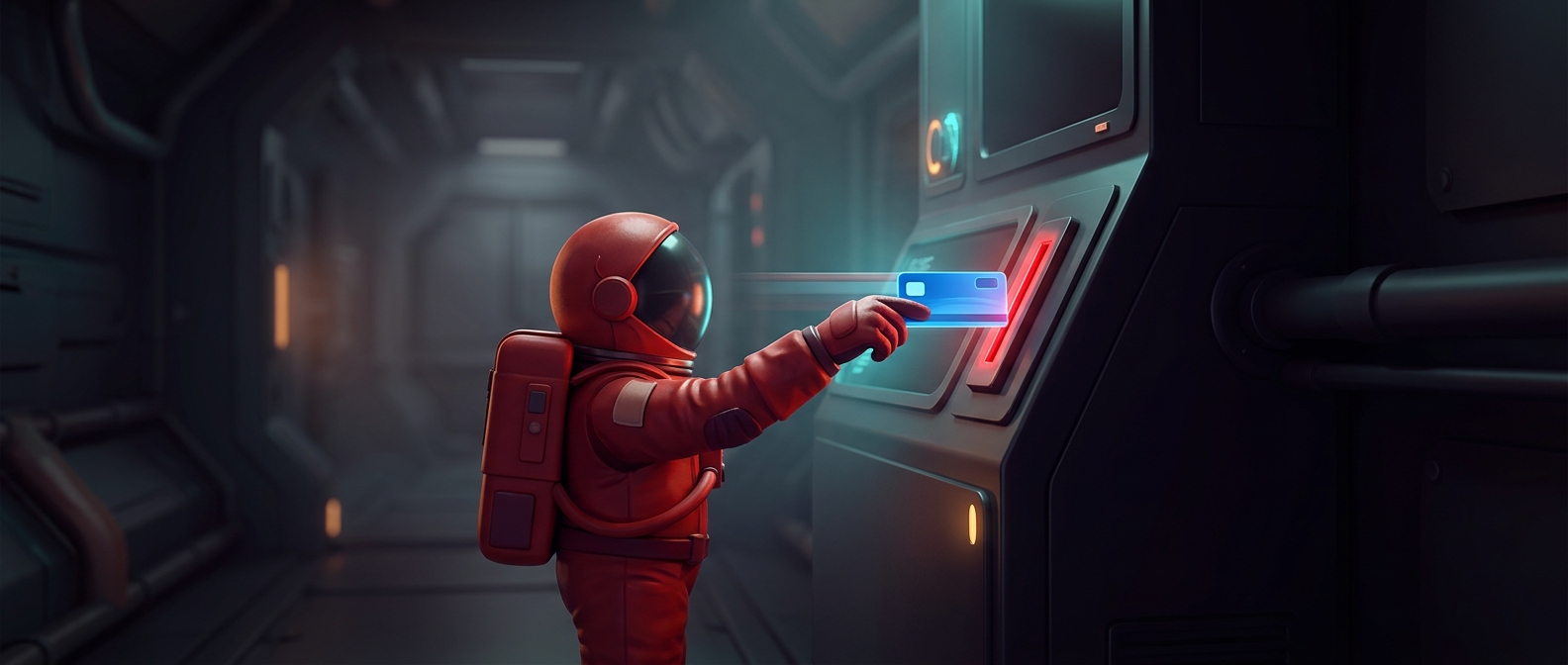
In Among Us, the card swipe is a short, hands-on task: drag an ID card through a reader, then try again if the swipe is too fast or too slow. The action is simple, but its narrow timing window makes success depend on control rather than merely reaching the right room and pressing a button.
That small demand changes how the task feels. A player has to pause and concentrate on a fiddly motion while the rest of the match continues around them. The card reader does not become more dangerous on its own; the tension comes from having to focus in a place where another player may be watching—or may be the impostor.
Why an ordinary chore fits the game
The task makes routine spaceship maintenance playable without a long explanation. Its familiar action and immediate feedback let players understand the challenge quickly: adjust the swipe, see whether it worked, and try again if needed. A failed attempt costs a little time, which is enough to make an otherwise forgettable interaction memorable when the stakes are social.
It also gives other players something to interpret. Someone working at a task may look occupied, but a single observed action does not settle who is trustworthy. The swipe’s lasting joke is that an everyday office gesture becomes a test of both timing and nerve: the card must move at the right speed, and the player must decide whether it is safe to stand still long enough to try.