What a rumble patent can cover
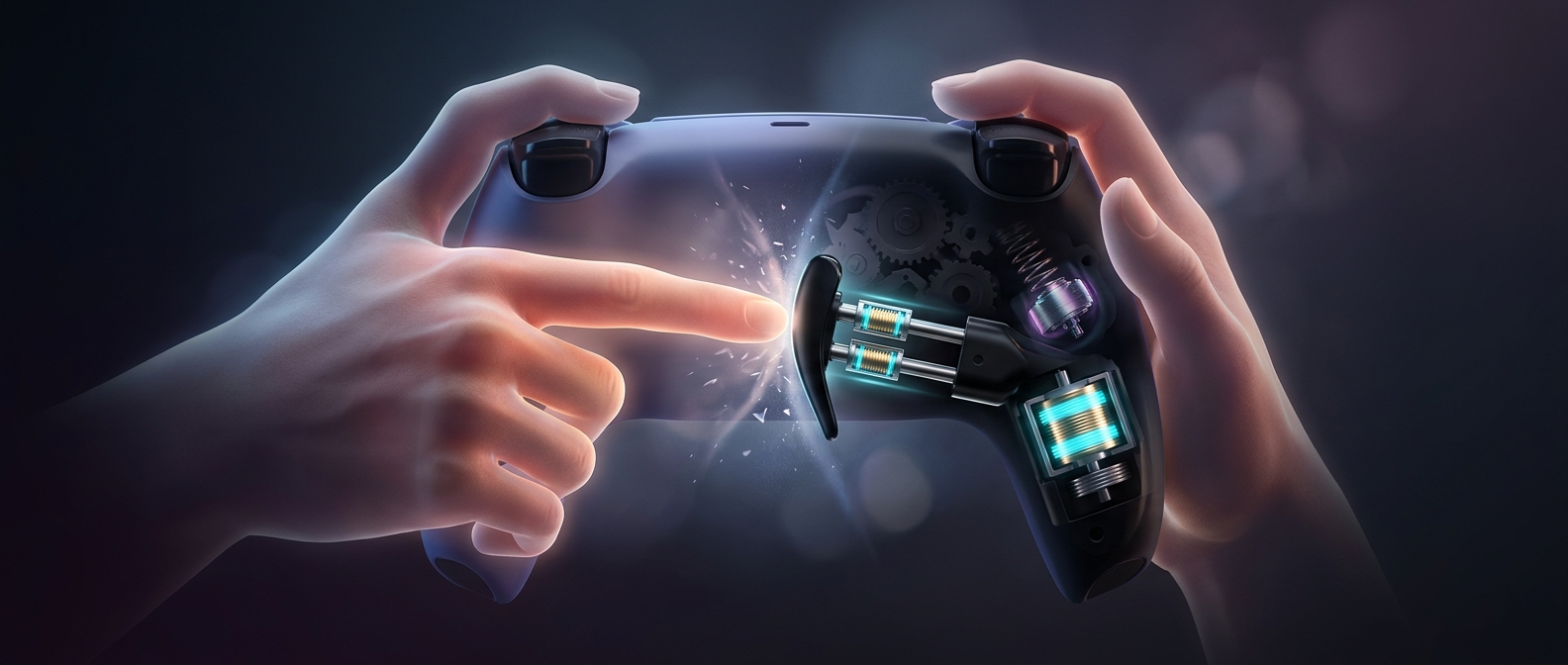
A controller’s vibration seems simple: a small motor spins an off-center weight, making the controller shake. But patents can cover more than the basic idea of making something vibrate. They may claim particular ways of producing, controlling, or combining tactile effects—the taps and shakes a player feels through a controller. Immersion, a company that developed interactive-feedback technology, asserted patents covering parts of this field.
That distinction mattered. A manufacturer could not necessarily avoid a patent dispute just by using a familiar motor; the question was whether its design used a method covered by a patent claim.
Why the dispute reached players’ hands
Rumble had become a standard feature, so the technology sat inside products sold at enormous scale. Immersion brought claims against major console makers, including Sony and Microsoft. The fight turned a small internal component into a consequential design and business problem: removing feedback could weaken a familiar feature, while keeping it could mean changing the implementation or negotiating permission to use patented technology.
The legal pressure also made controller design less interchangeable than it looked from the outside. Engineers had to consider not only how well a mechanism felt, but whether its circuitry and control methods could expose the company to a patent claim.
A hidden cost of a familiar feature
The result was that rumble could carry costs beyond motors and assembly. Licensing could preserve the feature while adding a legal expense; redesign could avoid some disputed methods but require engineering work and testing. A vibration players experienced as a split-second cue could therefore shape product budgets and hardware decisions long before a controller reached a store.