A game sensor could see distance
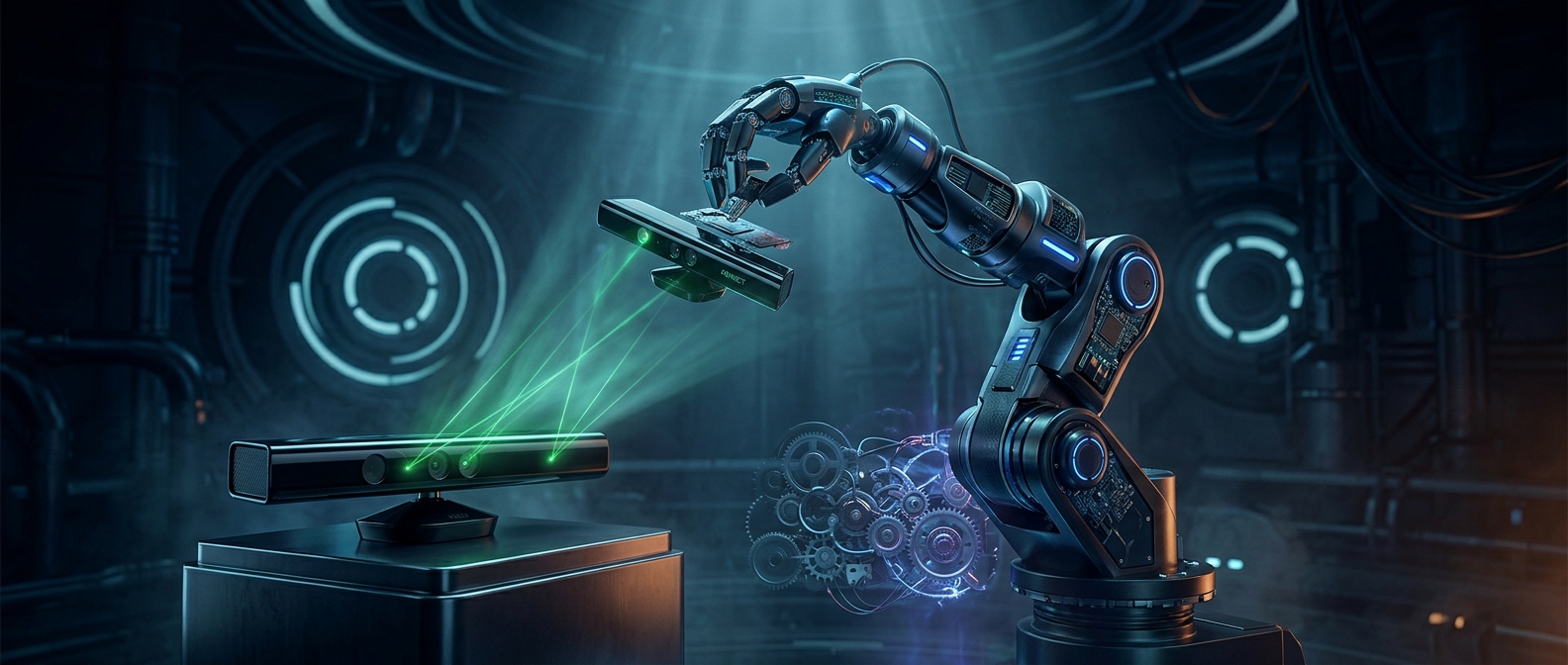
A regular camera records color and brightness, but it cannot directly tell how far away each object is. Kinect paired a conventional camera with an infrared depth system. In the original model, an infrared projector cast a pattern of dots into the room; a sensor read how that pattern shifted across surfaces, letting the device estimate their distance. The result was a depth map—an image in which each pixel also carries a rough distance measurement.
That extra dimension changed what software could infer. A robot could distinguish a nearby obstacle from a wall farther back, outline a person’s body, or build a rough map of a room without relying only on visual color and texture.
Why researchers put it to work
Robotics labs often need sensors that can measure the environment, but specialized equipment can be costly and cumbersome. Kinect offered a packaged camera-and-depth sensor that was widely available for games. Researchers could connect it to a computer and experiment with tasks such as tracking movement or helping a robot navigate indoor spaces.
The sensor was not a complete solution: its readings could be noisy, and infrared depth sensing works best under suitable conditions. It also had limits in bright sunlight and at the edges of its range. But for many indoor experiments, an imperfect, inexpensive view of distance was more useful than a pricier sensor—or no depth data at all.
A second life for consumer hardware
The important shift was not that a game console turned into a robot. It was that a device designed to interpret people’s gestures supplied a useful kind of information to a different field. Once researchers could access that information, they could adapt it to their own software and prototypes. A living-room accessory became a practical way to let a robot perceive the room around it.