The TV is filling in the gaps
A movie does not show continuous motion. It presents a sequence of still images, usually photographed at a relatively low frame rate. Your eyes and brain perceive movement between them, but the images themselves leave small jumps from one frame to the next.
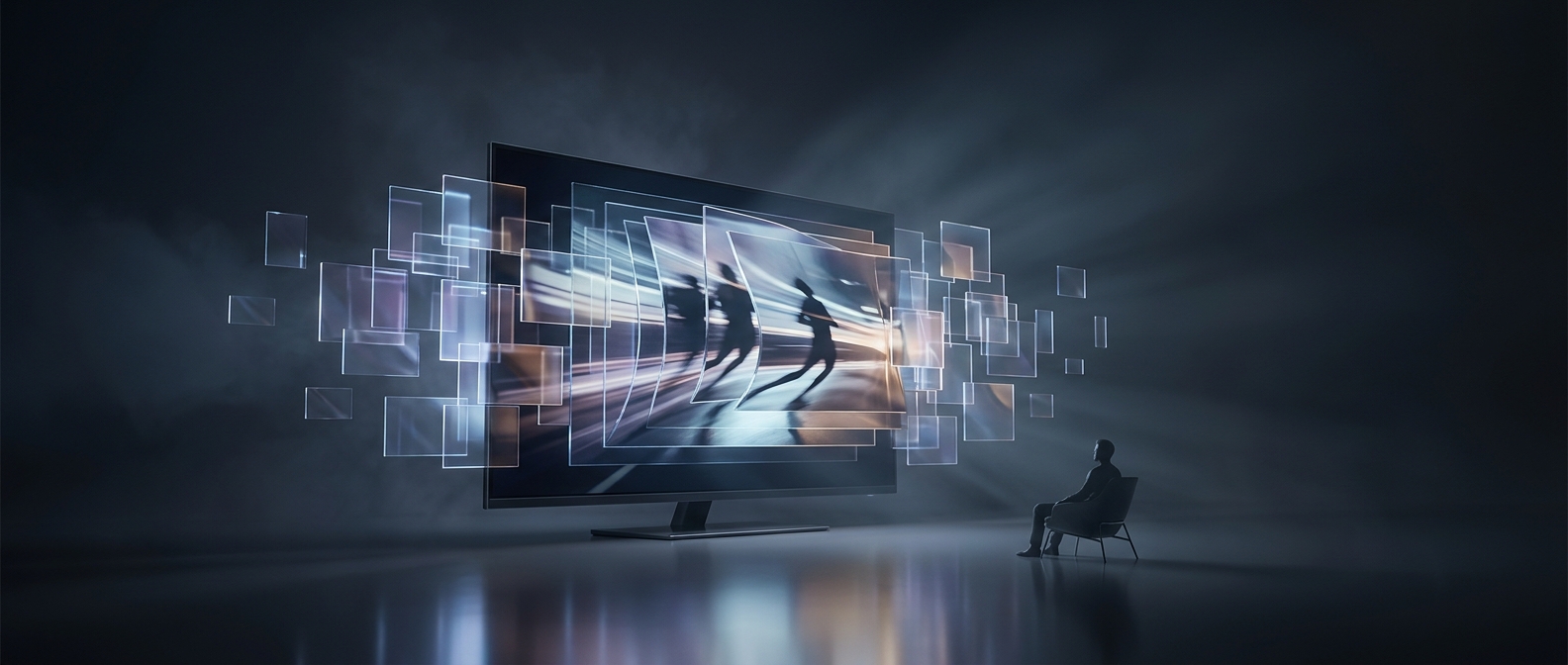
Motion interpolation tries to smooth those jumps. The TV compares neighboring frames, estimates where objects are moving, and creates artificial frames to place between the originals. Instead of simply repeating or holding an image, it guesses what the scene might look like midway through the movement.
Smooth motion can change the style
That guess can make a camera pan or a person crossing the screen look unusually fluid. The result resembles the look many viewers associate with soap operas, which have often been produced for television at higher video frame rates than traditional films. The TV has not changed the movie’s story or lighting; it has changed how its motion appears.
The effect can also expose the TV’s guesses. Fast movement, overlapping objects, or sudden cuts may confuse the software, producing brief smears or warped edges. Even when the interpolation is convincing, the extra smoothness can make a carefully staged film scene feel more like live television than cinema.
Choosing between smoothness and intent
Interpolation is a viewing preference, not a universal improvement. Some people like the clearer motion, especially in sports; others prefer a movie’s original cadence. TV makers often put the feature under names such as “motion smoothing” or “motion enhancement,” and settings may differ by picture mode. Turning it down or off lets the film’s original frames—and the rhythm its creators chose—remain in charge.