Myst Made Note-Taking Part of the Puzzle
Myst gives players little help keeping track of what they have discovered. There is no quest log to collect clues or objective marker to point toward the next task. Instead, the island’s puzzles leave information in the world: a pattern of symbols here, a sequence of sounds or numbers there, and controls whose correct settings may only become clear much later.
That design turns memory into part of the challenge. A player might find several sliders in one location, then learn elsewhere that their positions correspond to a clue. Without a record, it is easy to forget which settings were tried or where a symbol appeared. Writing them down preserves the connection between discovery and solution.
The Notebook Became an External Memory
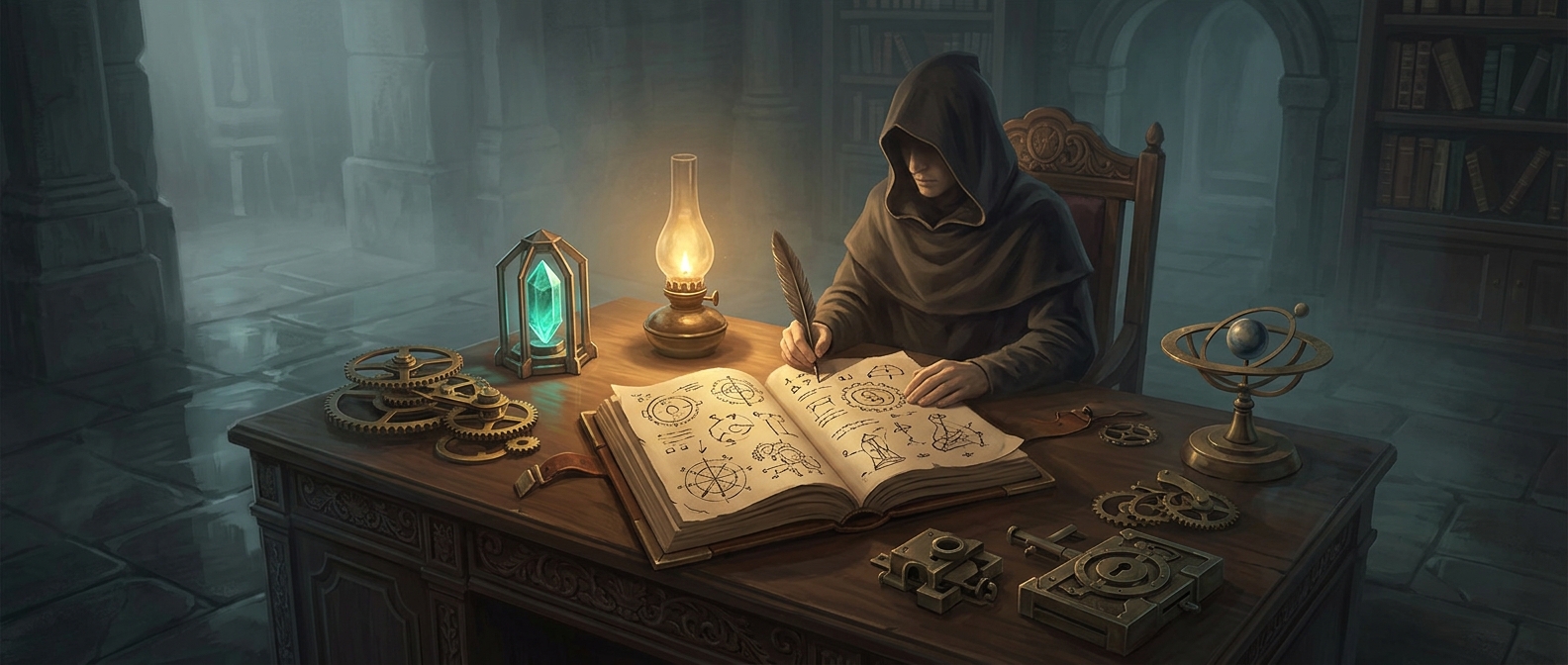
A spiral notebook could hold sketches, symbol translations, slider positions, and brief reminders of where each clue came from. The useful notes were not necessarily polished: a rough diagram or a row of numbers could be enough to prevent repeated trial and error. Players were effectively building their own reference system because the game did not build one for them.
This also shaped the pace of play. Myst invited players to stop, look closely, and reason across observations gathered at different times, rather than follow a continuous chain of prompts. A clue could feel meaningless when first encountered and become valuable only after another discovery supplied its context.
A Different Kind of Progress
In many adventure games, progress is made visible through updated objectives or a journal. Myst made progress depend more on what the player noticed and remembered. The notebook did not solve the puzzles; it kept scattered evidence available long enough for the player to recognize a pattern.
That small act of writing became part of the game’s physical experience: the screen supplied the mystery, while the page beside it held the trail of reasoning needed to unravel it.