The hidden spring behind a comic bounce
A dropped object does not need to hit a visible coil to spring away. In a game, an invisible spring can be a small region of code near a character: when an object enters or strikes that region, the game pushes it in a chosen direction. The “spring” is a behavior, not a piece of scenery.
That shortcut can make a collision read clearly. A real-time physics simulation has to calculate how shapes meet, how fast they are moving, and how much energy the impact transfers. A deliberately placed force can produce the desired bounce without requiring every detail of that interaction to be simulated.
Why put the spring beside the character?
The character model and the object’s collision shape—the invisible boundary the game uses to detect contact—do not have to match perfectly. A spring placed beside the model can catch an object that would otherwise slide off, snag, or barely move. Because the force is controlled by the game, developers can make the result noticeable and repeatable rather than leaving it entirely to the quirks of a physical collision.
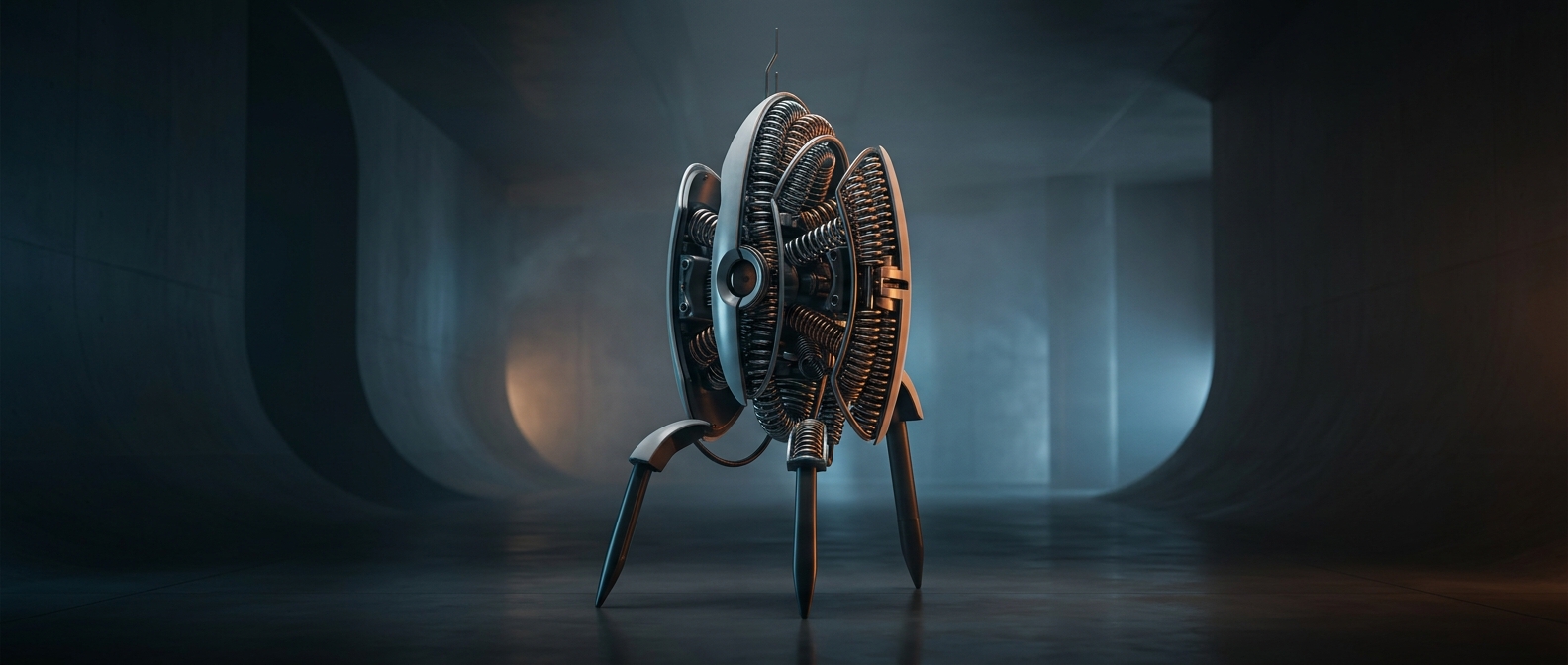
The tradeoff is that the motion is less general than a full simulation: it works because someone placed the effect where it is useful. But that is often a good bargain in a tightly designed scene. The player sees a dropped object bounce near a turret; the game quietly supplies the nudge that makes the gag land.