Why an Unpolished Conversation Holds Attention
A long, meandering podcast can feel intimate without asking the listener to participate. There is no need to answer, keep eye contact, or follow every detail. You can tune in closely for a story, then let the talk recede while doing something else. That makes the exchange feel socially present but low-pressure.
The appeal is not simply that the hosts sound casual. Conversation carries small signals of people responding to one another: a laugh that interrupts a point, a pause before an answer, or a tangent that grows out of something just said. Those cues make the talk feel less like a performance delivered to an audience and more like an interaction the audience happens to hear.
What the Long Format Makes Possible
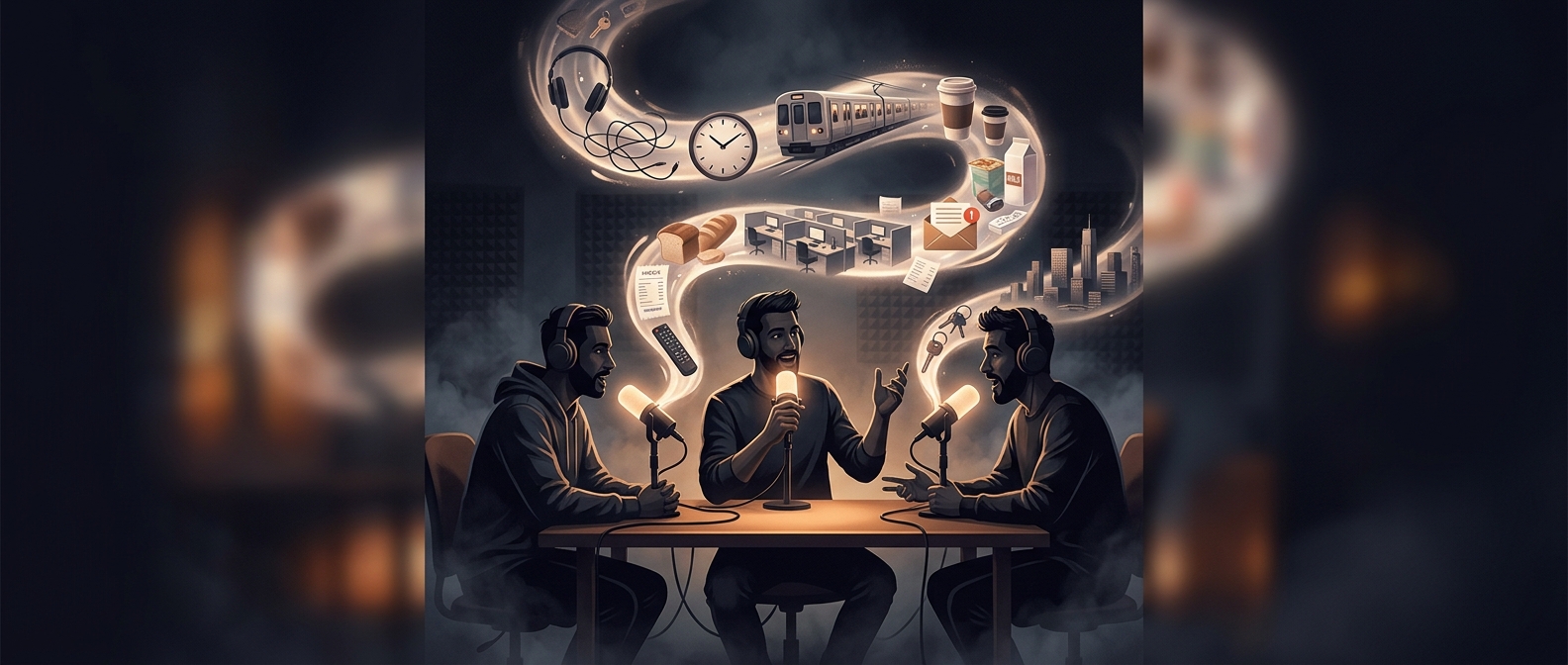
A tightly edited show has to move efficiently from one point to the next. A longer, less scripted one can leave room for digressions, repeated jokes, and stories that take time to reach their point. The listener gets a sense of how the speakers think together, not just the polished conclusions they would offer in a short segment.
That looseness is also a design choice. Hosts can make space for conversation to wander, trusting that some listeners will value the company and texture as much as the subject. The talk does not have to be gripping every minute to be enjoyable; it can work like a familiar social setting, with moments of real interest scattered through the ordinary flow.