How True-Crime Podcasts Turn Ordinary Details Into Clues
A true-crime story often begins with a gap: someone disappears, a crime goes unexplained, or investigators cannot agree on what happened. The podcast’s job is to guide listeners through that uncertainty one detail at a time. A familiar routine—a neighbor’s weekly chore, a friendly greeting, a light left on—can acquire a different meaning once the story has introduced a question about who was nearby and when.
That shift is a feature of the storytelling, not evidence that ordinary behavior is suspicious. The host controls the order in which listeners learn facts. A detail may first sound harmless, then return later beside a timeline, a contradiction, or a witness’s account. Repetition makes it feel significant, even when it remains ambiguous.
Why the Format Feels So Personal
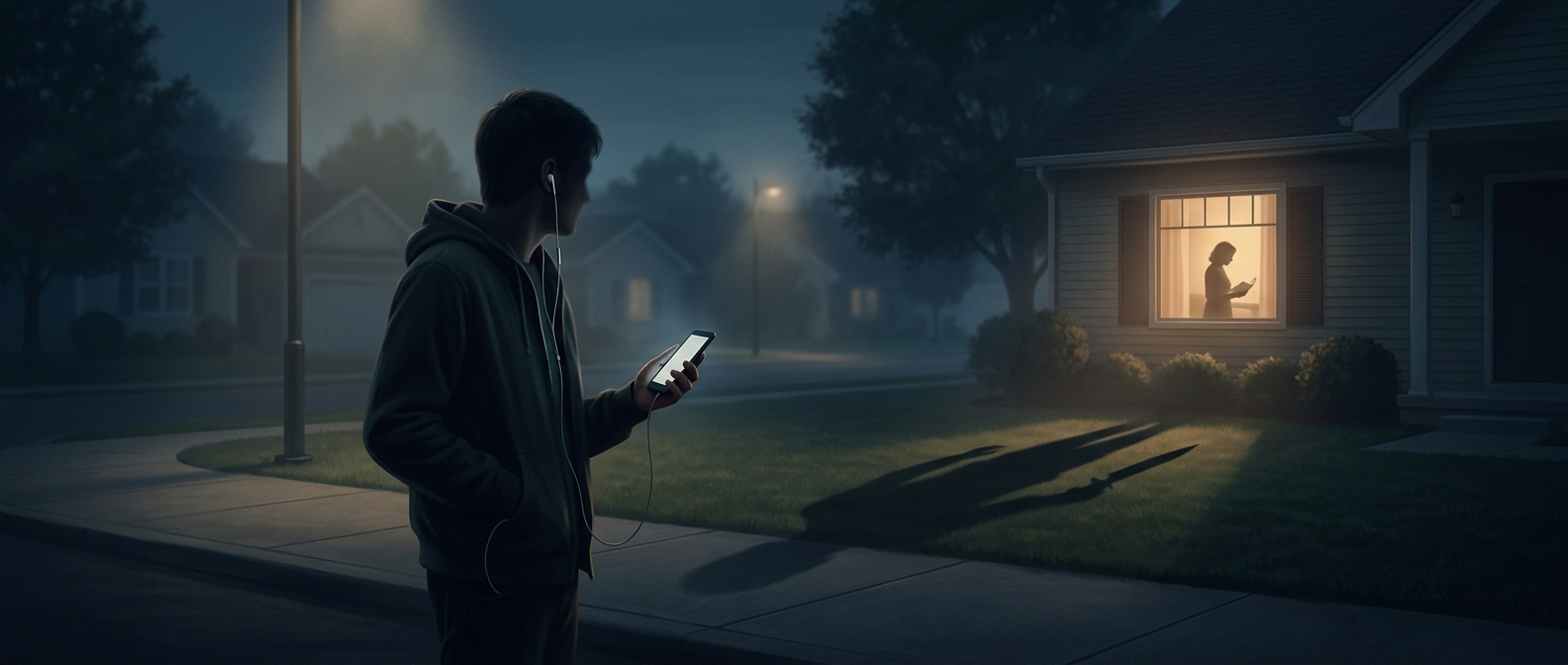
Audio brings the narration close: listeners hear a person speak directly into their ears, often while walking, driving, or doing chores in their own neighborhood. That private, conversational setting can make a case feel less like distant news and more like a mystery unfolding nearby. Sound design can reinforce the mood with pauses, music, or carefully placed recordings, while the narrator’s questions invite listeners to make their own guesses.
The suspense comes partly from the difference between what is known and what is still unresolved. A podcast can leave a question hanging through an episode break, prompting the listener to revisit earlier details. In that frame of mind, familiar neighbors may seem newly legible—as possible characters in a story rather than simply people going about their lives.
The effect is worth noticing precisely because it can outlast the episode: the same Sunday lawn-mowing routine may feel ominous in a crime narrative, then become ordinary again once the listener steps back from the story.