Why a tense story can make a dull chore easier
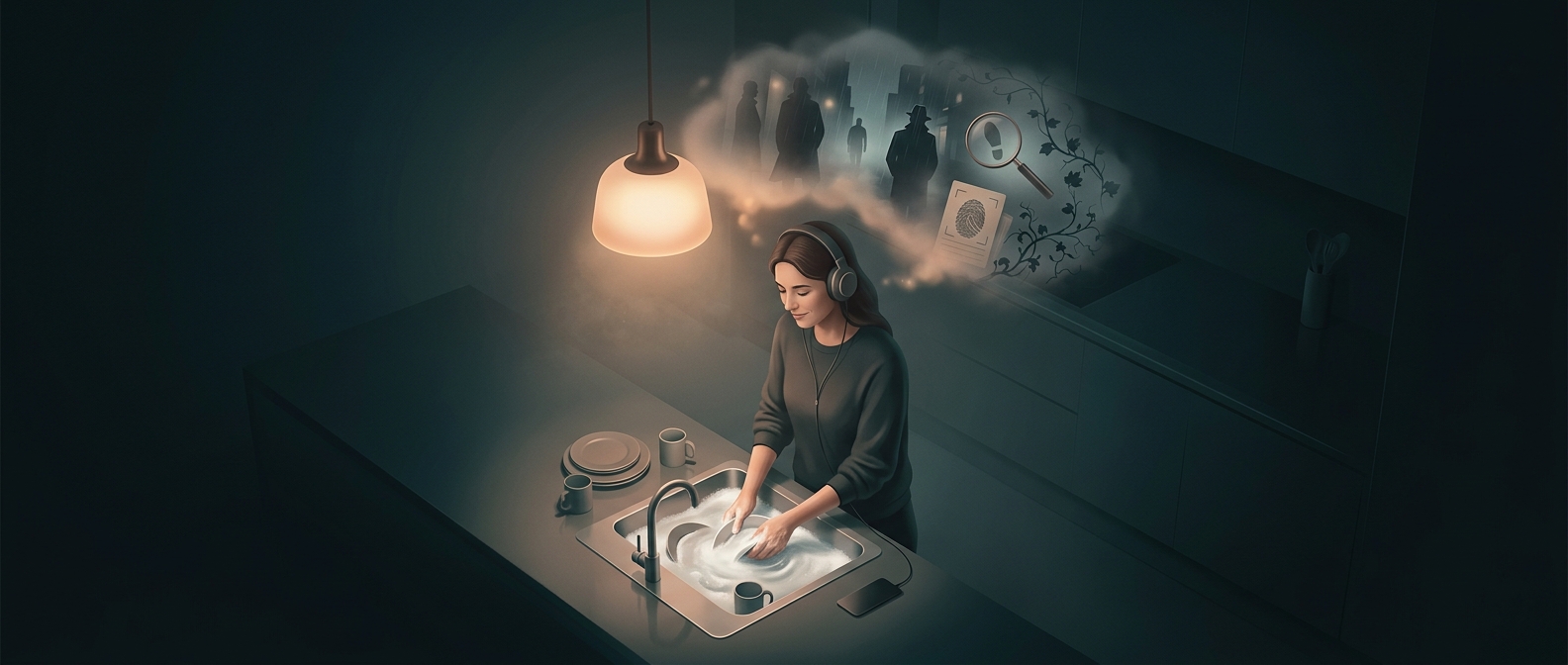
Washing dishes asks little of the mind once the motions become familiar. That leaves attention free to wander—to tomorrow’s obligations, an awkward conversation, or the simple fact that the sink is still full. A true-crime story gives that spare attention somewhere else to go. Its clues, possible suspects, and unanswered questions create a thread to follow while the hands keep working.
The combination can feel calmer than either activity alone. The chore supplies a steady, predictable rhythm; the story supplies mental engagement. Because the physical task is low-stakes and repetitive, a listener can follow the narrative without needing to concentrate as intensely as they might while reading or watching.
Suspense with a safe distance
True crime often centers on danger, but listening at home is not the same as facing danger. The listener can pause, stop, or turn off the episode. That separation lets suspense create interest without requiring an immediate response. An unresolved case can also hold attention through a sequence of questions—what happened, which details matter, and what might explain them—rather than leaving the mind to invent its own distractions.
That does not mean every listener finds the genre soothing. Graphic details or stories that feel too close to home can make some people anxious, and a complicated plot may compete with a chore that requires care. The effect depends on the fit between the task, the story, and the listener.
A small sense of momentum
A podcast episode can make an ordinary task feel as if it has a companion and a natural endpoint: finish the dishes, reach the next reveal, or get through one more segment. The chore has not changed; the attention around it has. That pairing can turn a stretch of routine work into time that feels occupied rather than merely endured.