A different kind of world to explore
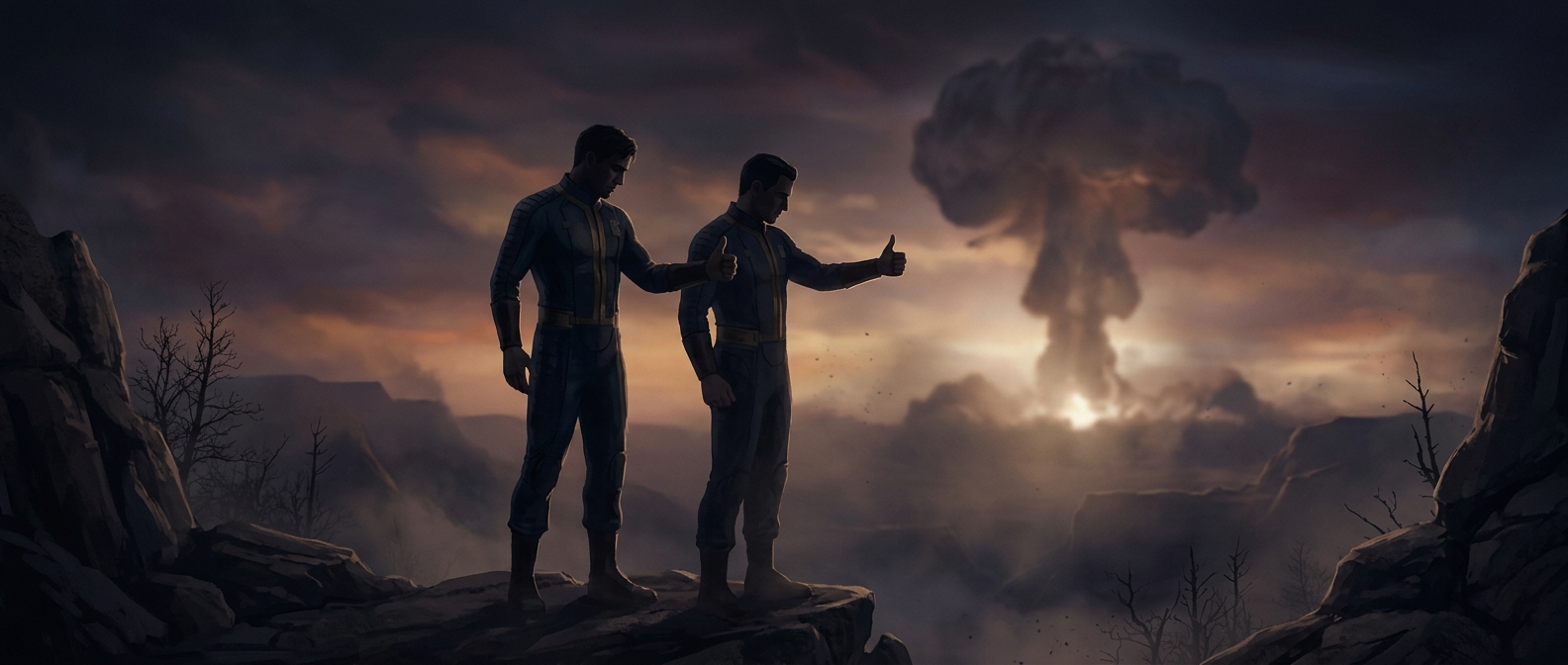
An elf-and-magic setting gives a role-playing game familiar building blocks: ancient kingdoms, monsters, spells, and heroes. A nuclear wasteland offered a different design problem. Instead of asking how a fantasy world’s magic worked, the developers could ask what ordinary life might look like after civilization had collapsed—and what people would do to survive among its remains.
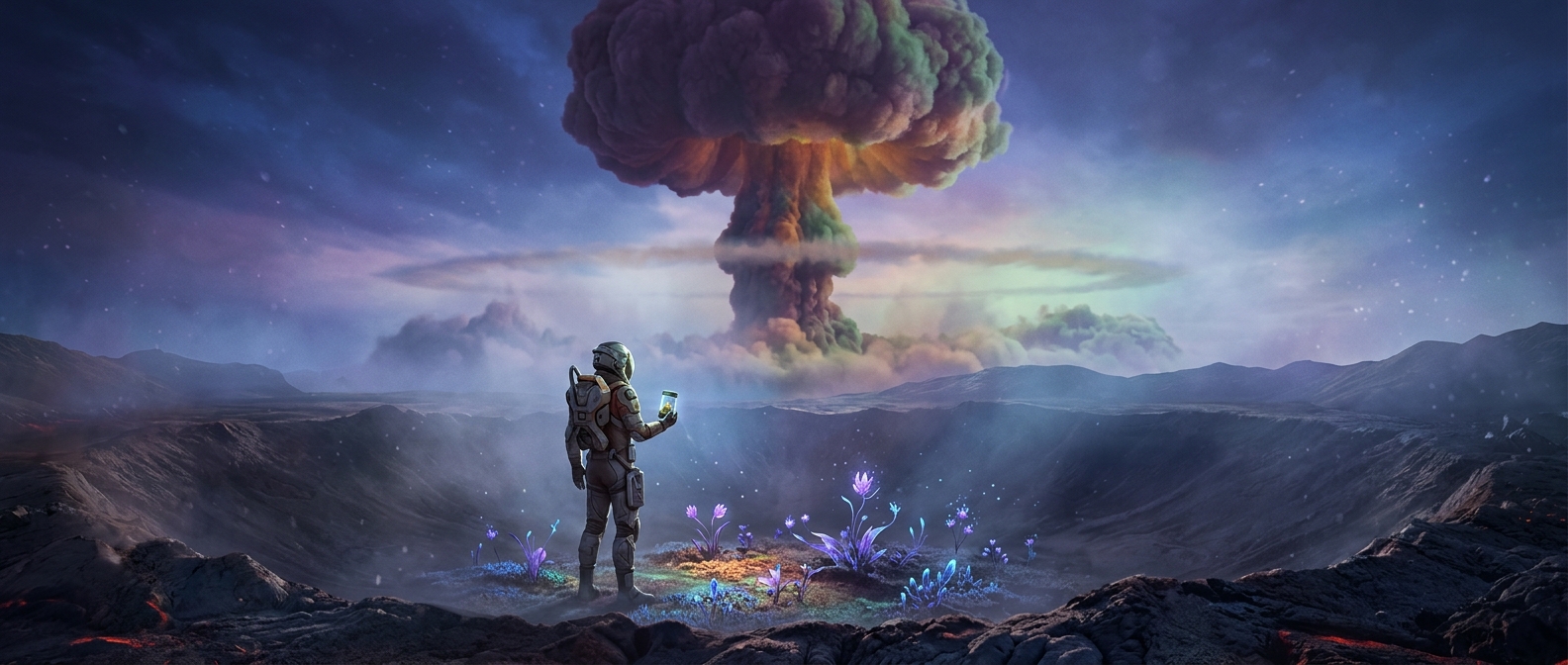
That shift changed more than the scenery. Ruined buildings and abandoned technology could tell stories about the world before the disaster, while settlements and factions showed how survivors had adapted. The landscape itself became a record of catastrophe: players could explore the consequences of the past rather than simply hear about them.
From fantasy conventions to Fallout’s identity
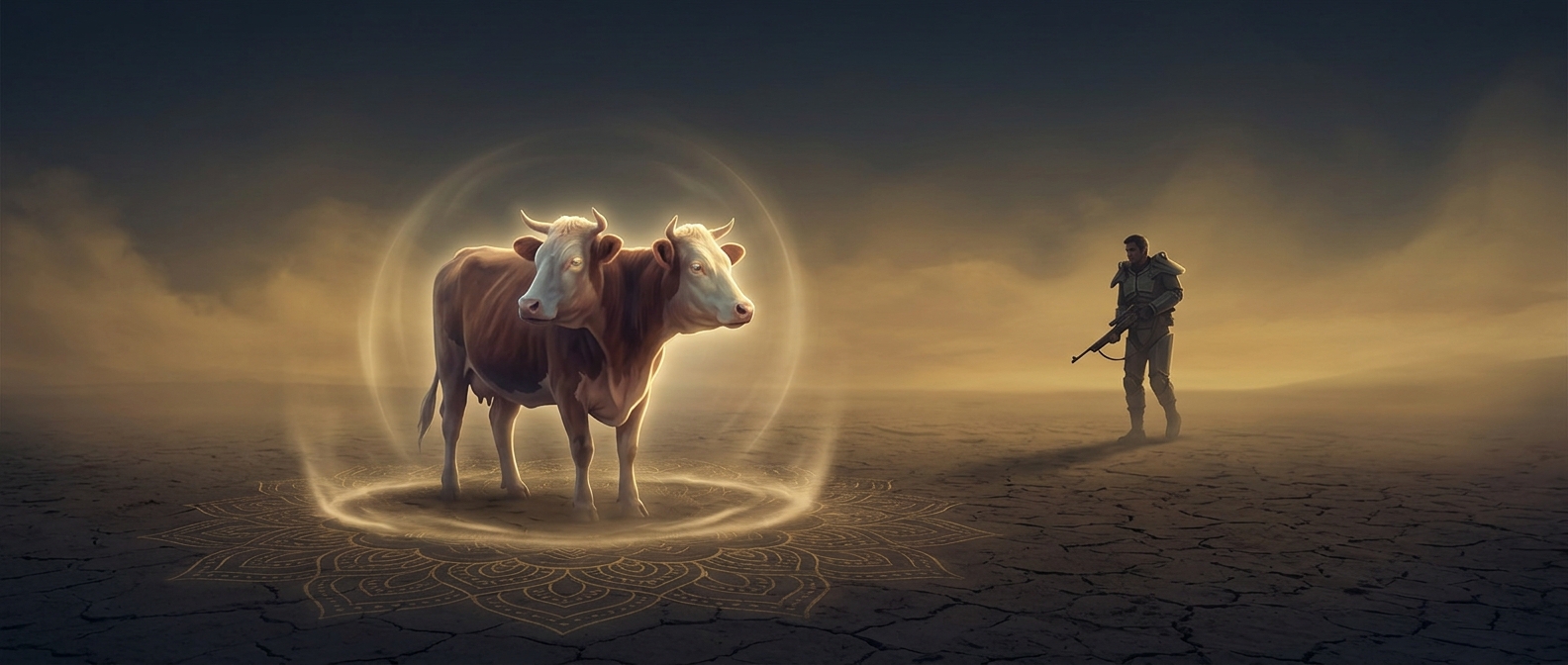
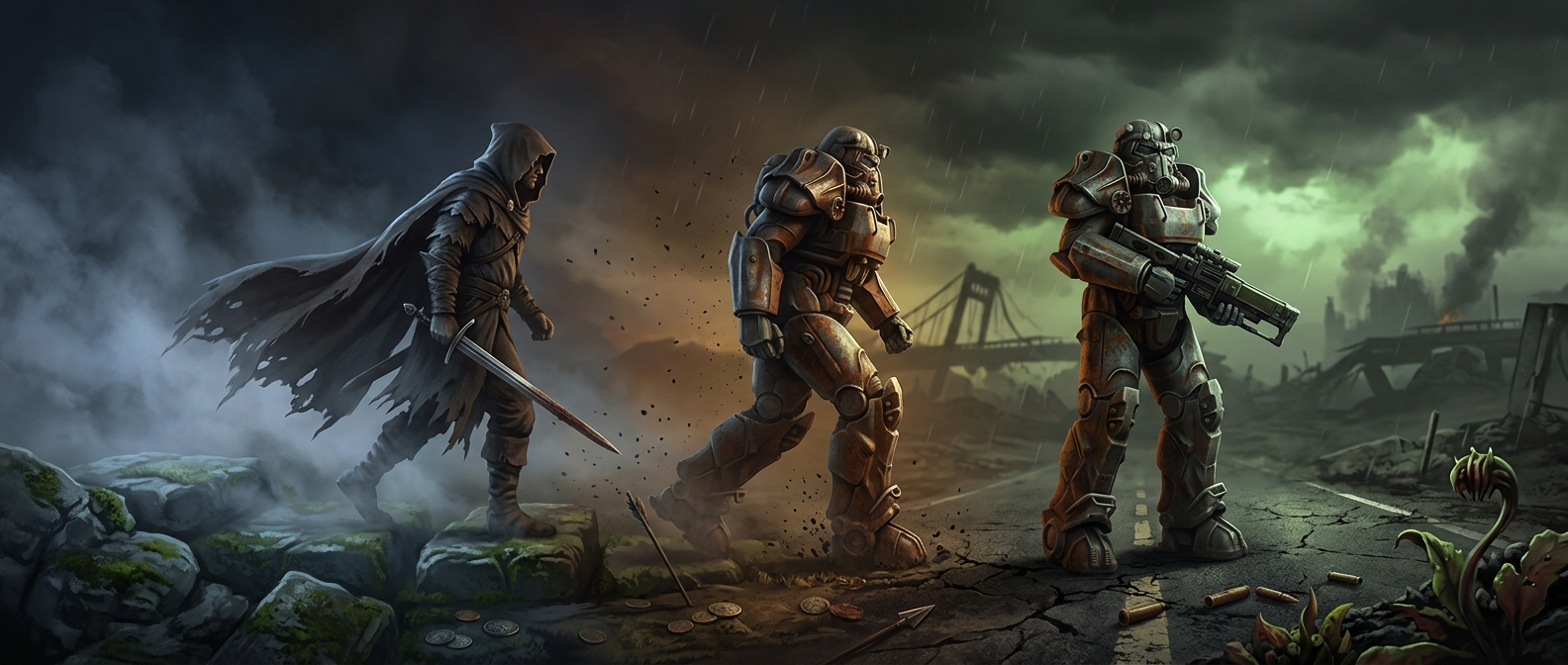
The post-nuclear setting also made familiar role-playing choices feel different. A powerful weapon might be a piece of old technology rather than an enchanted artifact; a dangerous creature might suggest mutation rather than a fantasy bestiary. The central tension was not just whether a hero could defeat a monster, but how people might rebuild—or exploit one another—in a world with scarce resources and broken institutions.
That contrast helped give Fallout its distinctive tone: retro-styled technology and remnants of an optimistic past set against harsh survival in the present. The move away from conventional fantasy was therefore a change in the game’s basic questions. Instead of sending players into an imagined age of magic, it invited them to examine what civilization leaves behind when it ends.