Rehearsal made a low shooting ratio workable
On film, a “shooting ratio” compares the amount of footage recorded with the amount that ends up in the finished movie. A 2:1 ratio leaves little room to try a scene repeatedly or capture many alternate versions. That constraint matters especially when dialogue is intricate: a stumble can disrupt not just a line, but the timing and continuity of an entire exchange.
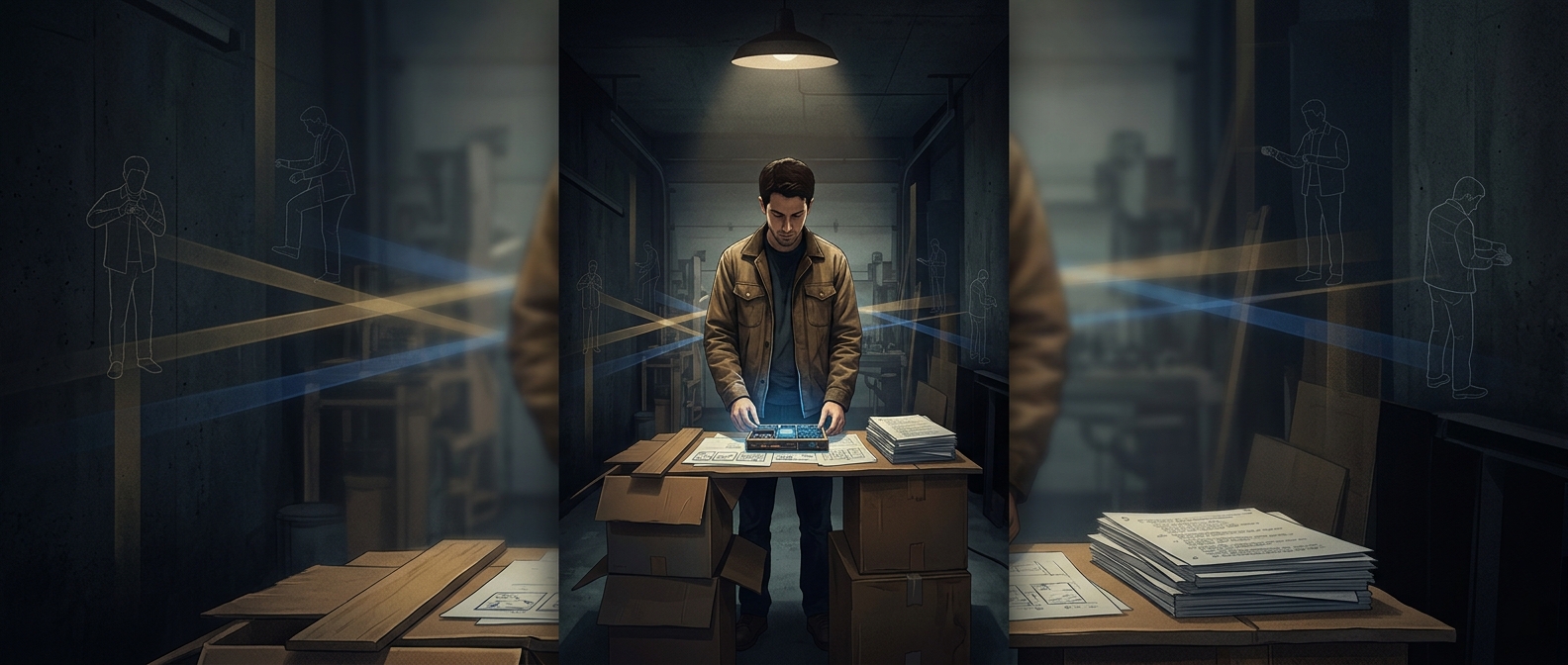
Months of practice shifted some of that work out of the costly filming days. Carruth’s friends could learn the dense dialogue and rehearse how to deliver it together, making it more feasible to capture usable performances with fewer takes. Rehearsal did not replace filmmaking; it made each chance to film count for more.
The constraint shaped the viewing experience
The approach suited a story carried largely through conversation. Its technical-sounding exchanges move quickly, and viewers may not catch every detail on a first pass. Rather than stopping to explain each point, the film lets the dialogue’s pace and the characters’ focus convey how absorbed they are in their work.
That density can make the movie feel demanding, but it also gives the conversations a particular texture: they sound like exchanges between people who have rehearsed their ideas and are thinking several steps ahead. The practical economy of the production thus became part of the film’s character—less time spent chasing alternate takes, more emphasis on getting the words and rhythm right before the camera rolled.