A cleanup mechanic with a cost
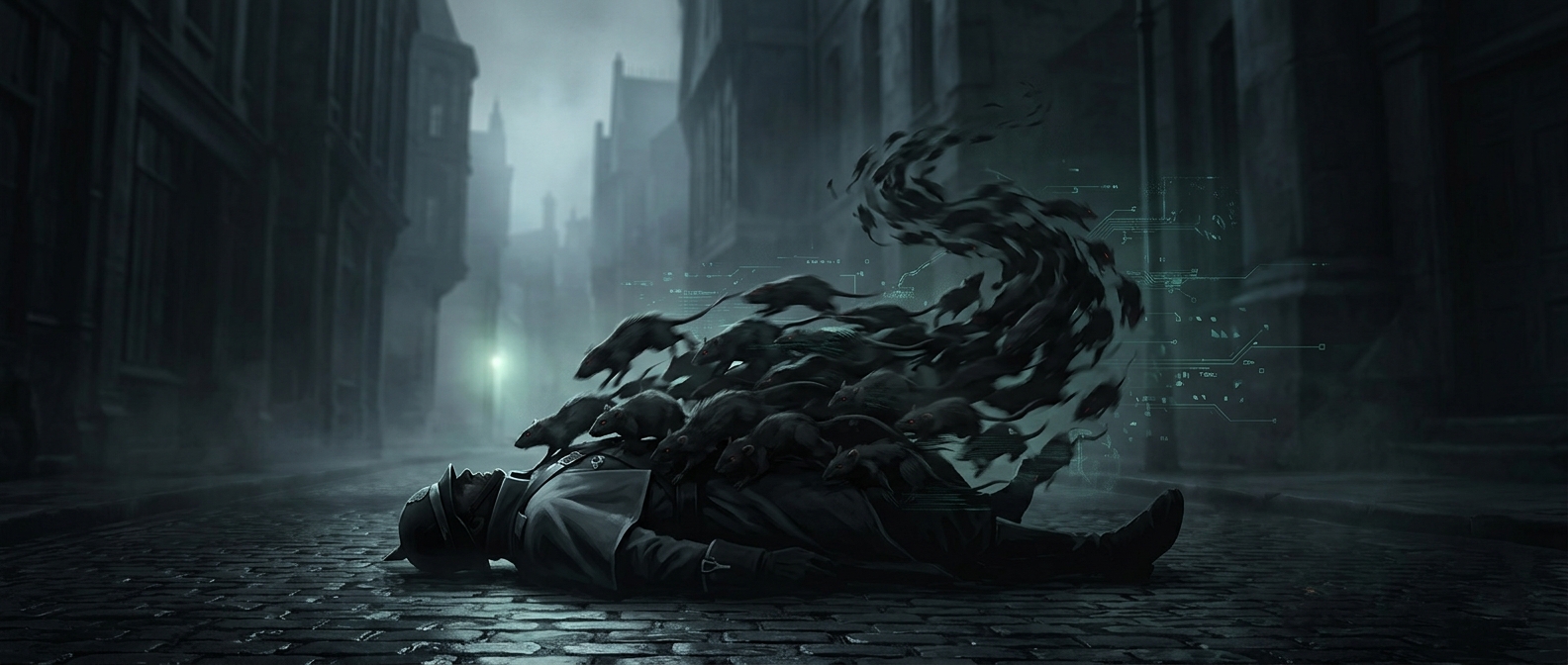
In Dishonored, a fallen enemy can become food for a summoned swarm of rats. The bodies disappear, leaving bones behind. That makes the rats more than a weapon: they also erase evidence of a fight from the environment.
Why the detail matters to play
The effect links combat to the game’s stealth systems. A body left in a corridor can be found by a guard, raising an alarm or disrupting a careful route. Rats can remove that obstacle, but calling them in is not a tidy, consequence-free solution. They are dangerous to anyone nearby, and the sight of them reinforces the game’s plague-stricken setting.
The player is therefore choosing not simply whether to kill, but what happens afterward. A corpse might be hidden, moved, or left for others to discover; the rat swarm offers a more brutal kind of cleanup, turning a practical problem into another expression of the world’s violence.
The world tells the story
The bones make the process legible at a glance: the swarm has consumed the body, and the space has changed. That small visual consequence connects a useful gameplay choice to Dishonored’s bleak atmosphere—its streets are so overwhelmed by rats that even disposing of a body can feed the crisis.