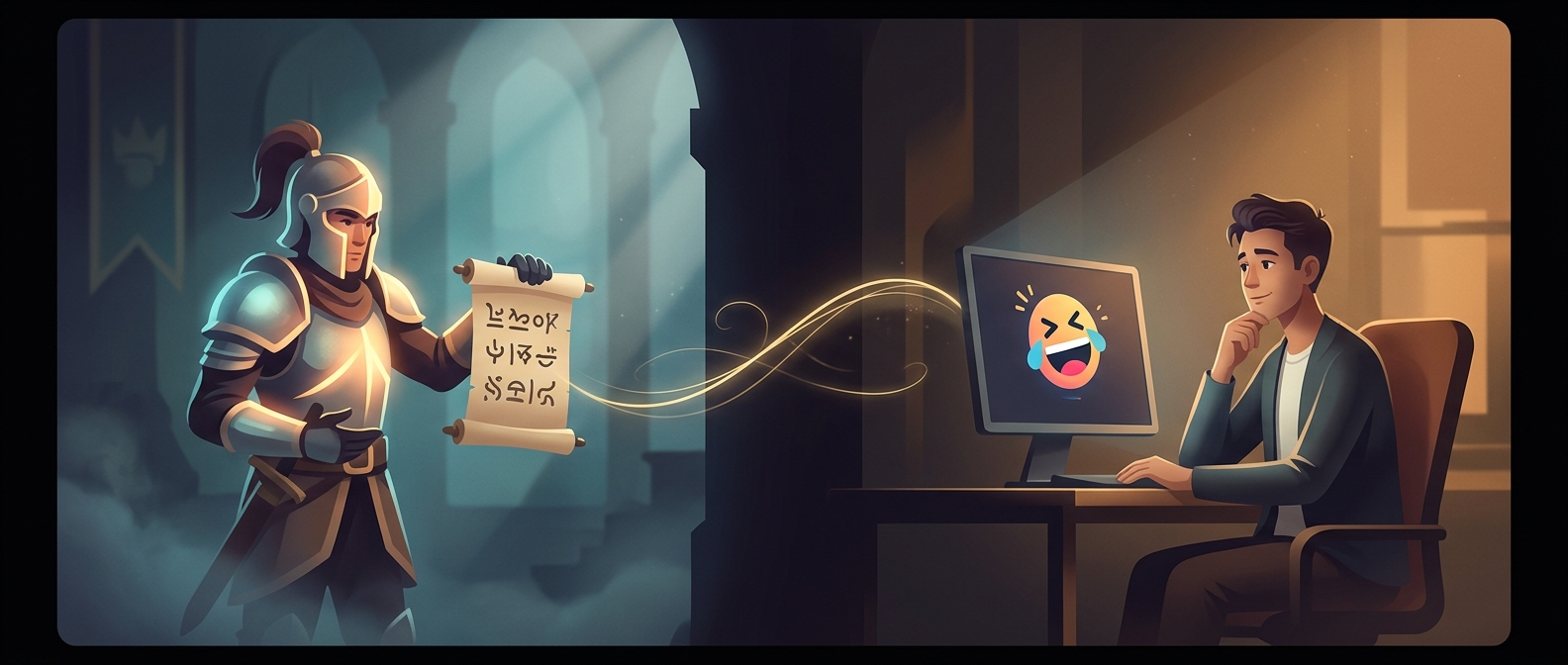
How a translated item name can reshape Dark Souls lore
An item name in Dark Souls is rarely just a label. Players use names to connect objects to characters, places, and events—especially when the game offers only fragments of explanation. A shared word or unusual title can look like evidence that two things belong to the same history.
But the English name is a translator’s choice, not always a word-for-word rendering of the Japanese. A translator may favor a concise phrase that fits an item menu, sounds natural in English, or preserves a mood that would otherwise be lost. That choice can introduce an association the original wording does not make, or replace a different association with one English readers readily recognize.
What that means for theories
A theory built on a name alone may therefore be tracing the English localization as much as the game’s underlying fiction. The name can still be meaningful: localization is part of how English-speaking players experience the world. But it is weaker evidence for authorial intent than a pattern supported by descriptions, dialogue, and events across the game.
When a theory hinges on one striking English term, the useful question is not simply “What does this name suggest?” It is “Does the surrounding text support that suggestion, and does the original wording point the same way?” That distinction can turn an apparent clue into a translation-driven reading—and remind players that the lore they are piecing together may have passed through another language first.