Why Yakuza’s karaoke lyrics had to be rewritten
A lyric can be accurate on the page and still fail when sung. Japanese and English package meaning differently: a short phrase in one language may take more syllables in the other, and the words that carry emphasis may land in different places. Put a word-heavy English translation over a fixed melody, and the singer can be forced to rush, stretch an awkward syllable, or finish a line after the music has moved on.
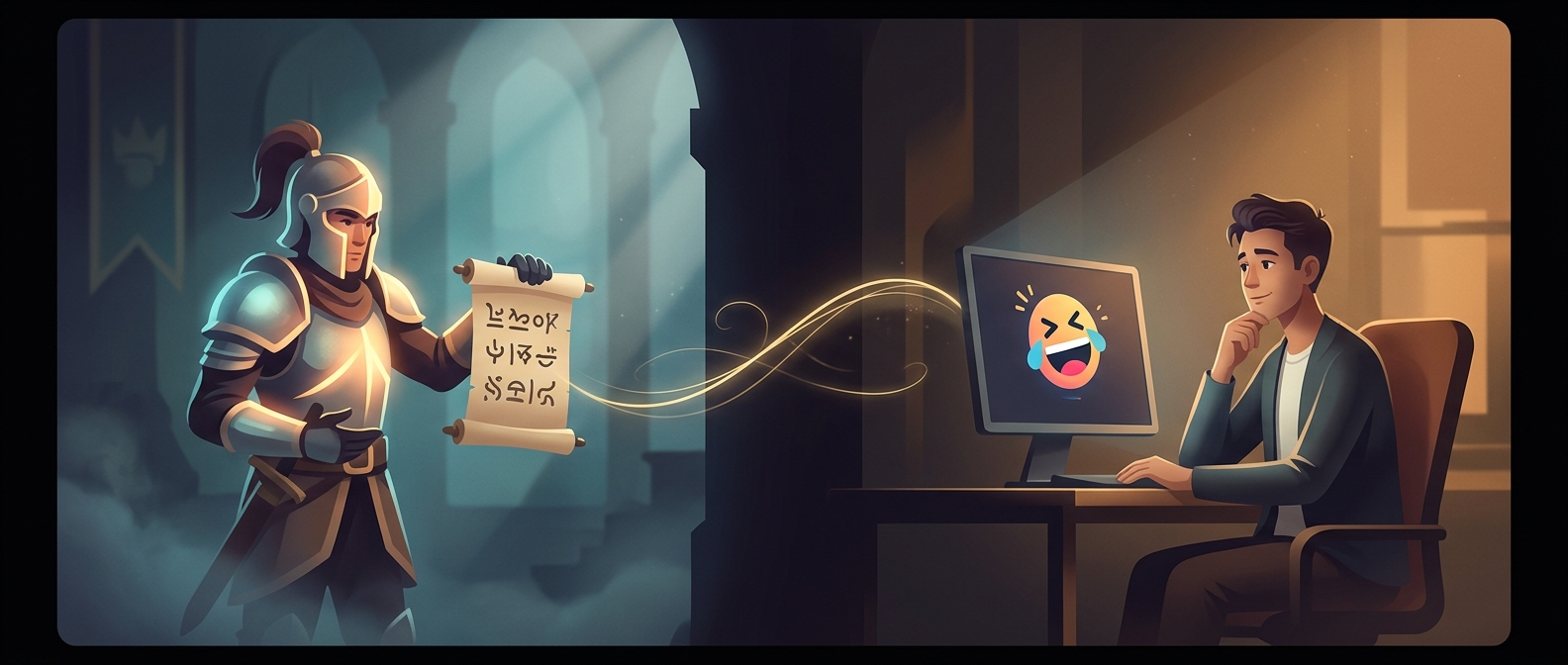
That is why localization—the adaptation of a game for another language—has to account for the song as well as its meaning. Translators shape lines to fit the available musical beats, while rhyme helps the words sound like lyrics rather than dialogue laid over a tune.
The melody sets the limits
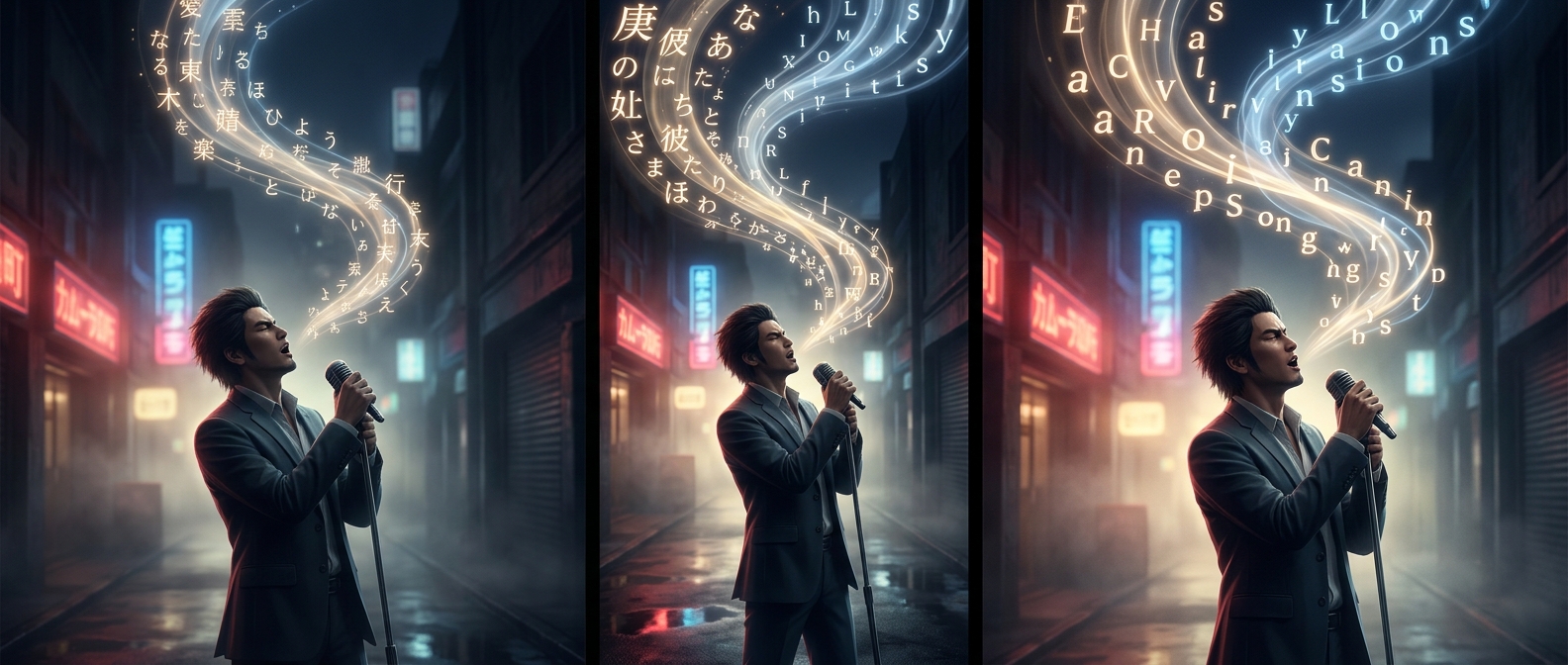
A karaoke screen makes those limits visible: players follow the words as the song proceeds, so a line that arrives too early or too late feels wrong even if its translation is clear. The English version has to fit both the rhythm of the performance and the timing of the on-screen lyrics. That can mean choosing a phrase that preserves the line’s effect without matching every original word one-for-one.
The tradeoff is between literal wording and singable wording. In Yakuza’s karaoke, the goal was not merely to tell players what the lyrics meant, but to give them English lines that could ride the song naturally. A successful adaptation can disappear into the performance: the player reads the words, follows the beat, and hears a song rather than a translation.