Iron at the Boundary of the Home
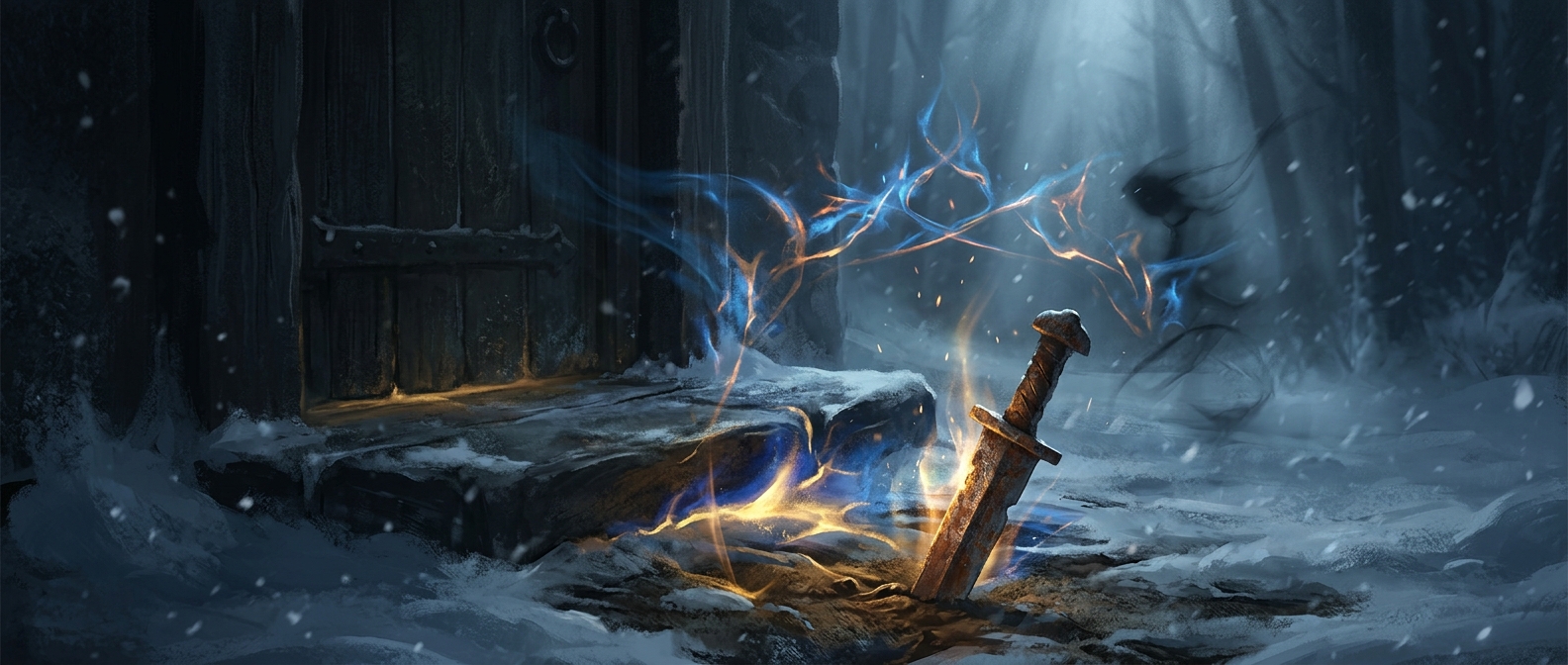
In European folklore, iron was often treated as more than a useful metal: it could serve as protection against the fae and other dangerous, shape-shifting beings. A blade buried beneath a doorstep turned that belief into a hidden guard. The iron did not need to be held or displayed; it was placed where an unwelcome visitor would have to cross into the household.
The doorstep mattered because it marked a boundary. Outside lay a world imagined to contain forces that could deceive or threaten; inside was the protected space of the home. Burying a blade at that crossing made the threshold itself part of the defense. Its sharpness suggested resistance, while iron was believed to make the supernatural unable—or unwilling—to pass.
Why Winter Made Protection Feel Urgent
Winter gave the doorway special practical importance. People spent more time indoors, and a household depended on its shelter against cold and darkness. In a worldview where harmful beings might also threaten the home, guarding the entrance offered a tangible action: place a durable object at the point of entry and trust it to hold the line.
The practice belongs to a varied body of European folk belief, not a single uniform ritual shared by all ancient communities. Its logic is easy to grasp, though: a hidden piece of iron made an ordinary threshold feel protected from dangers that could not be seen.