How Kukeri bells turn movement into a warning
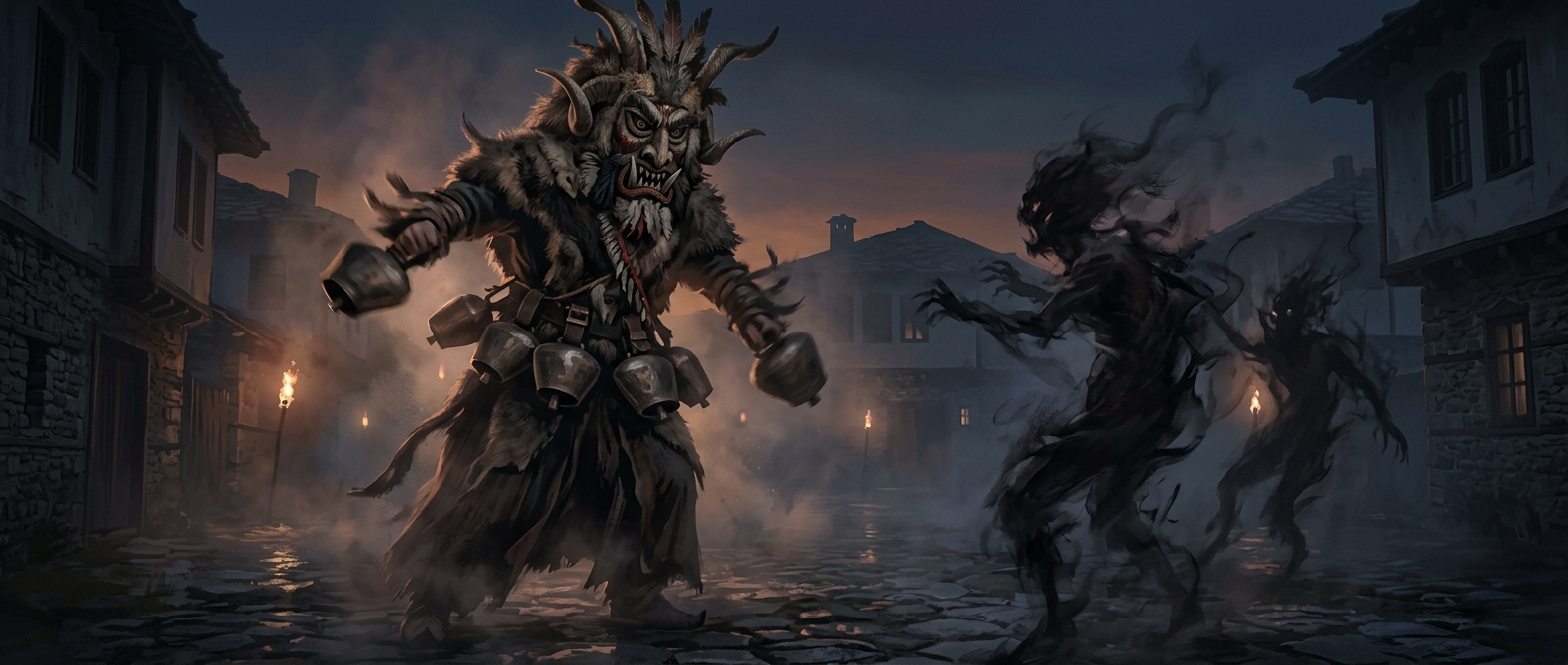
In Kukeri celebrations, dancers wear heavy belts hung with large metal bells, often alongside masks and costumes made from animal hides or other materials. The bells do not ring in a steady rhythm like a musical instrument. Each jump, turn, and forceful step sets them clanging together, filling the village with a rough, shifting roar.
That sound is part of the ritual’s logic: the performers make their presence impossible to ignore. The noise, masks, and vigorous dancing are understood as a way to frighten harmful forces away and help protect the community. The bells are therefore not just costume decoration; they make the dancers’ movements audible across the gathering.
A village ritual, not just a spectacle
Kukeri customs are associated with the winter-to-spring season, though their timing and details vary from place to place. The procession brings neighbors together around a shared act of protection and renewal. The performers’ exaggerated appearance and clamor give the ritual its force: the village is not merely watching a dance, but taking part in a dramatic effort to clear the way for a safer, more fruitful year.
Because the bells are heavy and must be set swinging through repeated movement, the sound is also a physical achievement. A dancer has to keep moving to keep the noise alive—so the very effort of performing becomes part of the ritual’s message.