A noisy ritual for turning the season
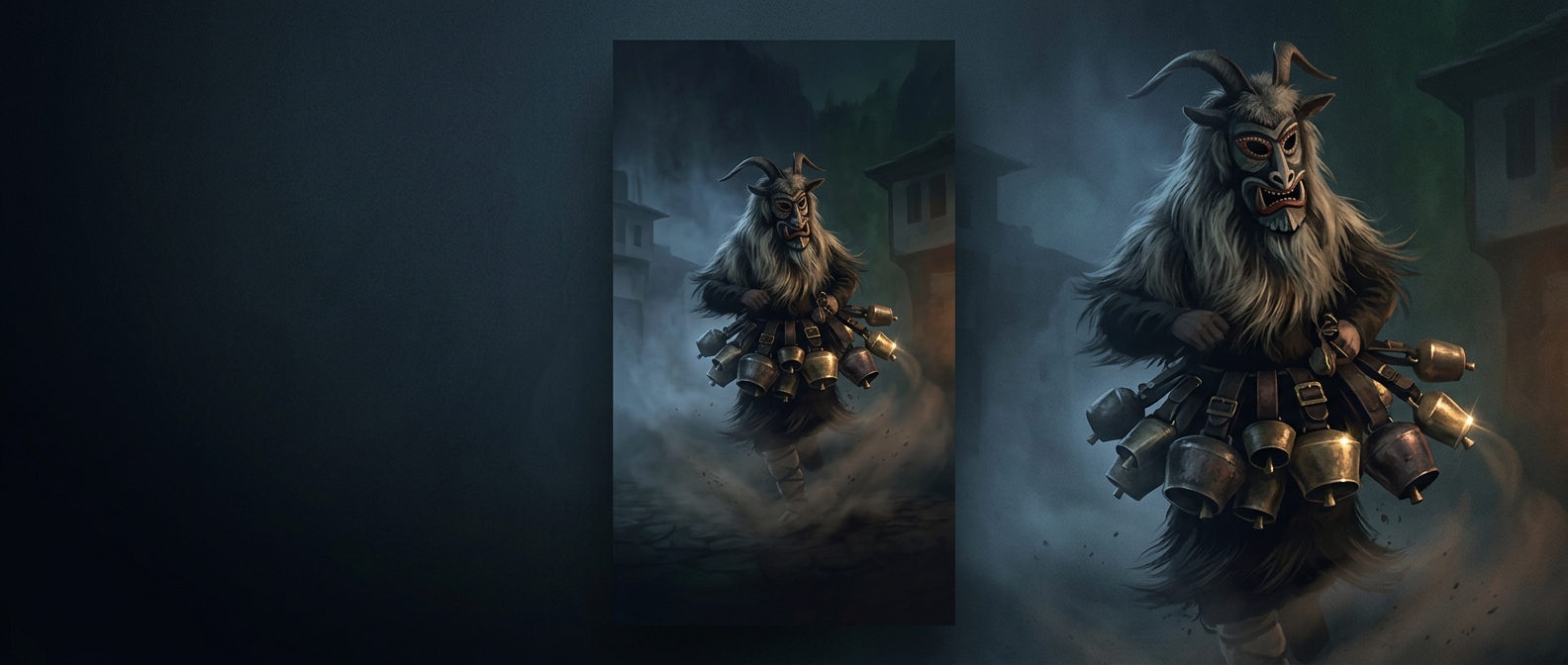
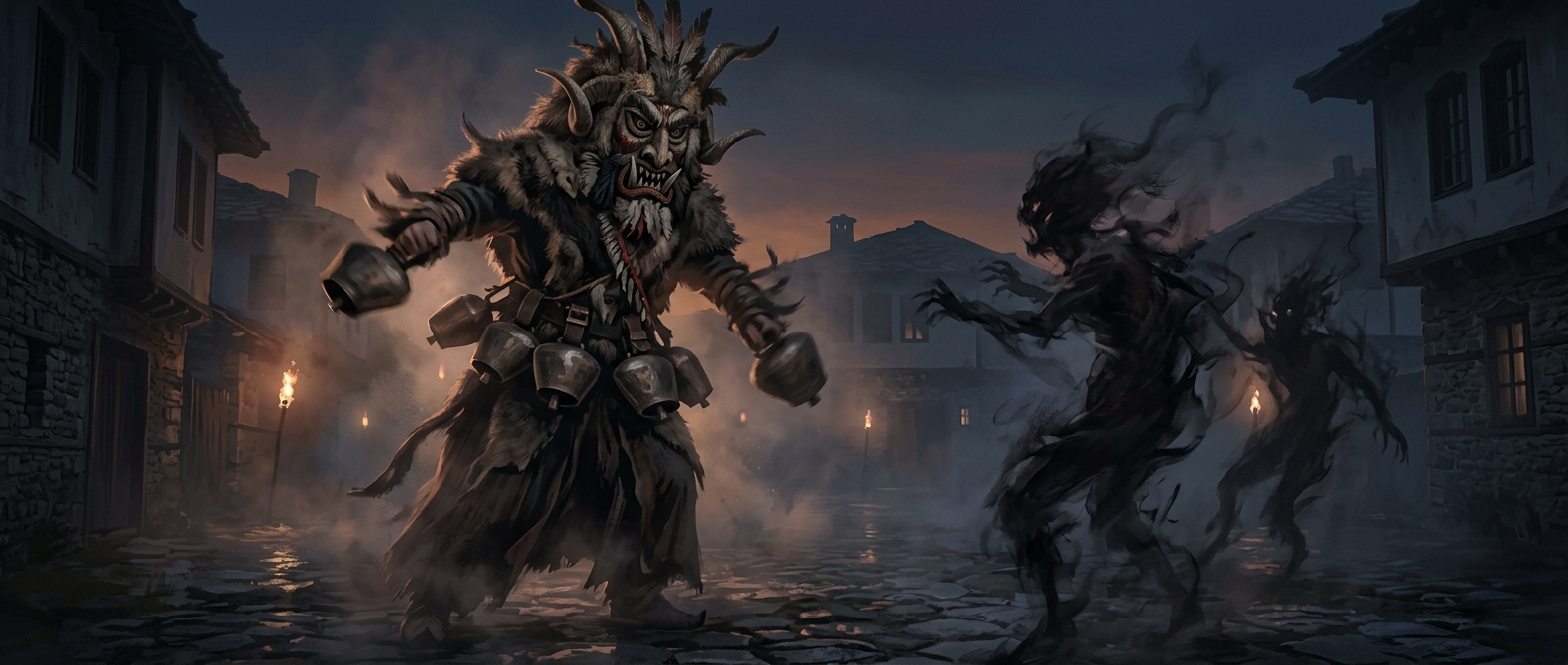
Kukeri performances belong to a wider family of winter and early-spring customs in which communities mark the passage from a dormant season toward renewal. Their frightening appearance is part of the point: in the tradition, the masked figures confront harmful forces rather than invite them in. The performance gives an unseen threat a form that people can face together.
The village becomes part of the ceremony
The dancers’ weighty costumes turn that idea into a physical event. Their steps and bells make the procession impossible to ignore; the sound carries through streets and courtyards as the figures move among neighbors. The ritual is not only something to watch. By gathering around it, residents take part in a shared act of protection and welcome the hopes associated with the coming growing season, including fertility and abundance.
Kukeri customs vary from place to place, so there is no single costume or performance that represents every Bulgarian community. But the combination of disguise, movement, and clamor makes the underlying purpose legible: the dancers briefly embody disorder so the community can ceremonially drive it away. The result is both unsettling and celebratory—a winter street transformed into a stage for renewal.