A shrine festival with an unexpectedly practical message
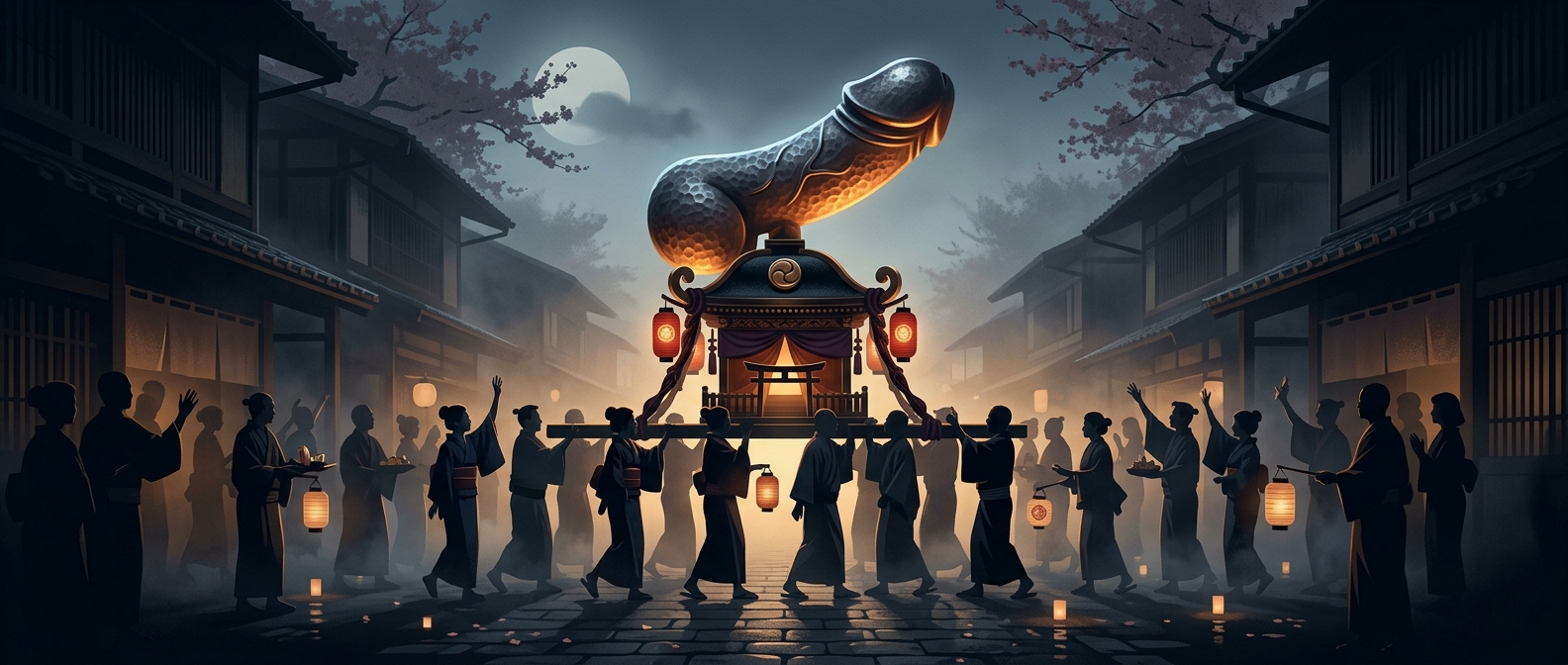
Kawasaki’s Kanamara Matsuri centers on Kanayama Shrine, whose traditional associations include fertility, childbirth, and protection in married life. The festival’s phallic symbols are not random street decorations: they make those themes unmistakable, turning private concerns about reproduction into something a whole community can acknowledge in public.
A local legend helps explain the imagery. In one version, a demon hid inside a young woman and bit the penises of her husbands; a blacksmith made an iron phallus that broke the demon’s teeth. The story is folklore, not a record of an actual event, but it links the festival’s striking symbol to the area’s metalworking tradition and to hopes for safety and fertility.
From ritual symbol to public-health event
Today, the procession gives the festival a second role: it draws attention to reproductive and sexual health. An openly sexual symbol can be startling, but that visibility is part of the point. It creates an occasion to discuss subjects that are often treated as private or embarrassing, while connecting the celebration to health awareness and community support.
For visitors, the memorable sight is also a clue to how the festival works: its humor and spectacle invite people in, while the shrine’s older associations give the display a local meaning. The result is a parade where a symbol of fertility can also carry a modern message about caring for health.