Why a village turns cattle into a blessing
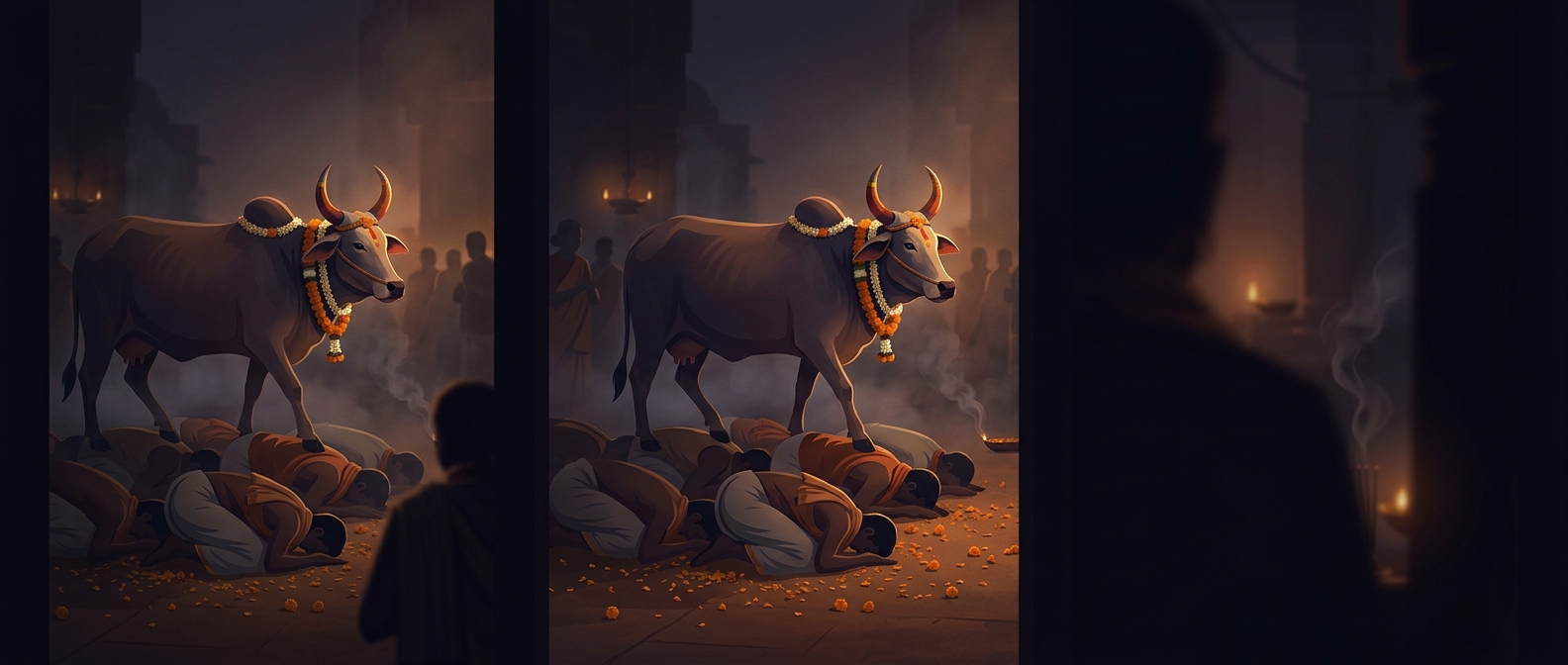
The ritual makes a hope for good fortune physical: participants lie on the ground while decorated cattle pass over them. In communities that observe it, the act is understood as a blessing, not simply a test of endurance. Its meaning rests on the place cattle hold in local life and belief—as valued animals associated with household well-being and, in many Hindu traditions, with reverence.
A shared act of faith and risk
The scene brings the community’s animals, ritual decoration, and human participants into one public event. For the men on the ground, accepting the animals’ weight is part of the act; for onlookers, the passage becomes a visible expression of trust in the blessing. The physical danger is real, even when participants regard the ritual as auspicious.
Customs differ from village to village, so this practice should not be taken as universal. Where it is observed, its striking image carries a local meaning: good fortune is sought not in private, but through a demanding ceremony shared with the community and its cattle.