How a frozen body became Nederland’s oddest festival
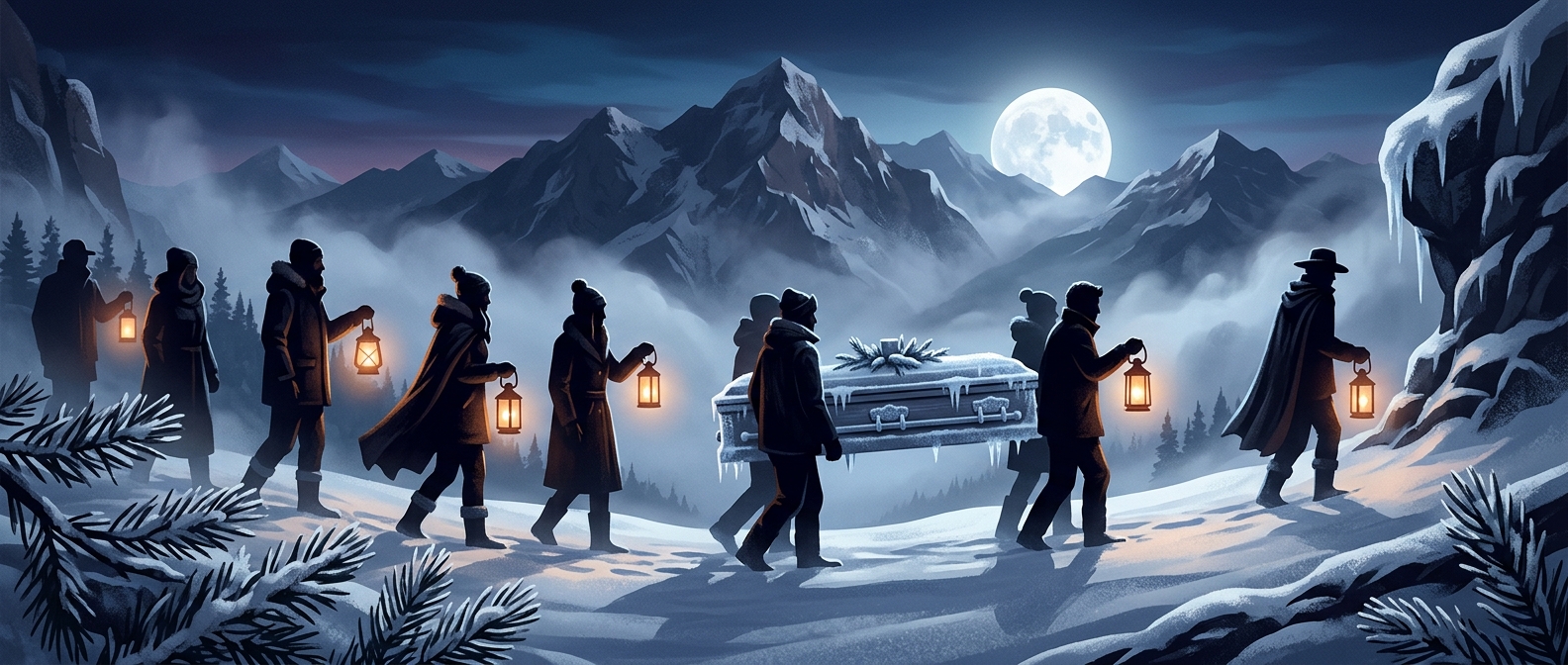
The man at the center of Frozen Dead Guy Days is Bredo Morstoel, a Norwegian whose body was cryonically preserved after his death. Cryonic preservation means cooling a body to very low temperatures in the hope that future technology might make revival possible; it does not mean that revival is currently possible.
Morstoel’s body was brought to the Nederland area in the 1990s and stored in a small shed, where it is kept cold with dry ice. Dry ice is frozen carbon dioxide. Unlike ordinary ice, it changes directly from a solid into gas, so it must be replenished to keep the temperature low. The arrangement is a continuing logistical chore, not a freezer that can simply be switched on and left alone.
From a local oddity to a town tradition
The unusual storage operation gave Nederland a story that was hard to confuse with anyone else’s. The festival that grew around it turned the macabre premise into a deliberately playful community event, with coffin races among its attractions. Teams race in decorated coffins, making the body’s long, silent preservation the setup for a noisy, social spectacle.
That contrast is the point: the celebration treats the situation as local folklore rather than a solemn ceremony. For years, the festival brought visitors to Nederland and made the small mountain town recognizable far beyond Colorado. The event later moved to Estes Park, but its identity remains tied to the Nederland story—and to the extraordinary effort of keeping one body cold with dry ice, day after day.