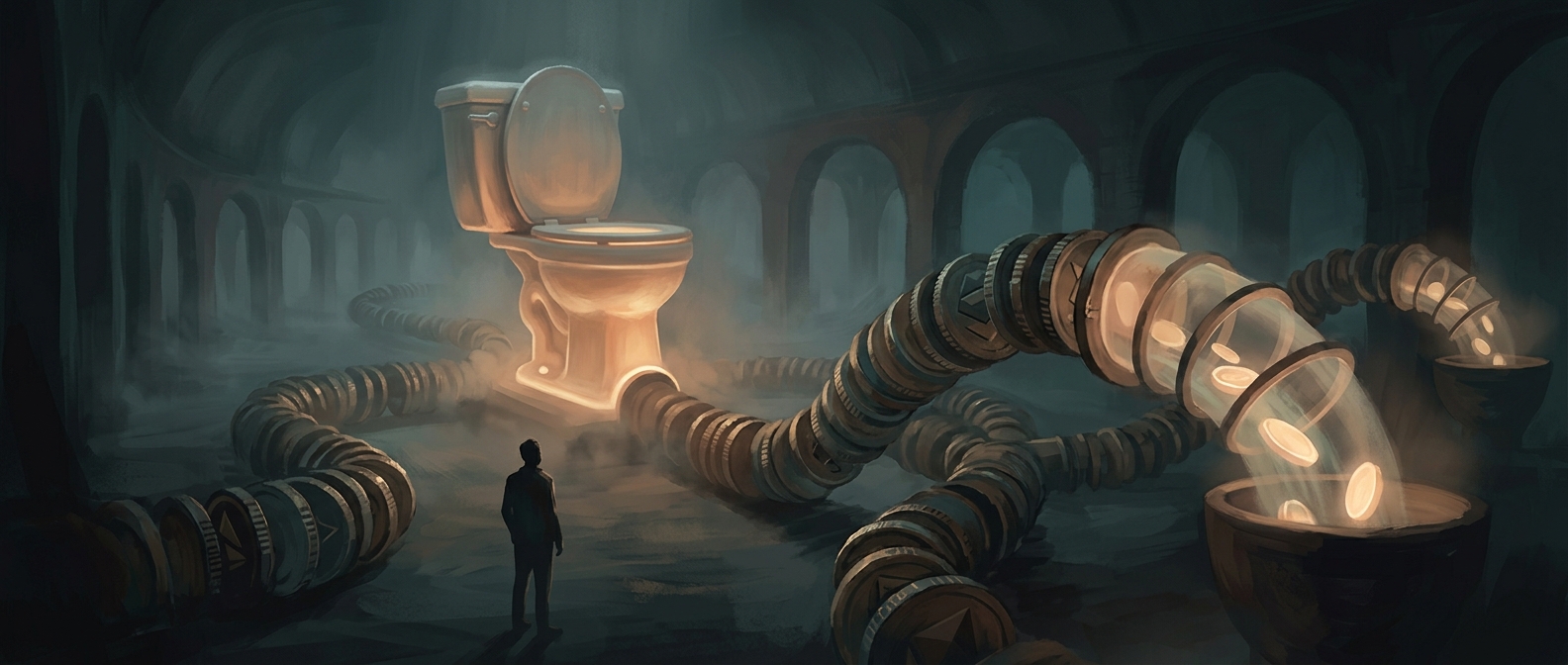
Why the bill may not count flushes
A sewer utility has to keep its network working even when little wastewater is flowing. Pipes still need inspection and repair; pumps and treatment plants still need upkeep, staffing, and power. Much of that expense is tied to having a system ready to serve a neighborhood, not to the number of times one household flushes on a particular day.
A flat charge for a sewer connection spreads those ongoing costs across connected households and gives the utility a steadier source of revenue. It is simpler to bill than measuring each home’s wastewater directly, which would require a way to track what actually enters the sewer. In this arrangement, the charge is for access to the system—not a meter running with every flush.
The tradeoff behind a flat charge
The same simplicity means households may pay similar amounts even when their use differs. A small household that conserves water could owe about as much as a larger household that sends more wastewater into the pipes. That can make a flat fee feel disconnected from individual use, even though it helps cover shared infrastructure that has to be maintained for everyone.
The distinction matters: reducing water use may lower a household’s water bill, but it does not necessarily shrink a flat sewer charge. The utility still has to keep the route from each connection to the treatment plant ready for the next flush.