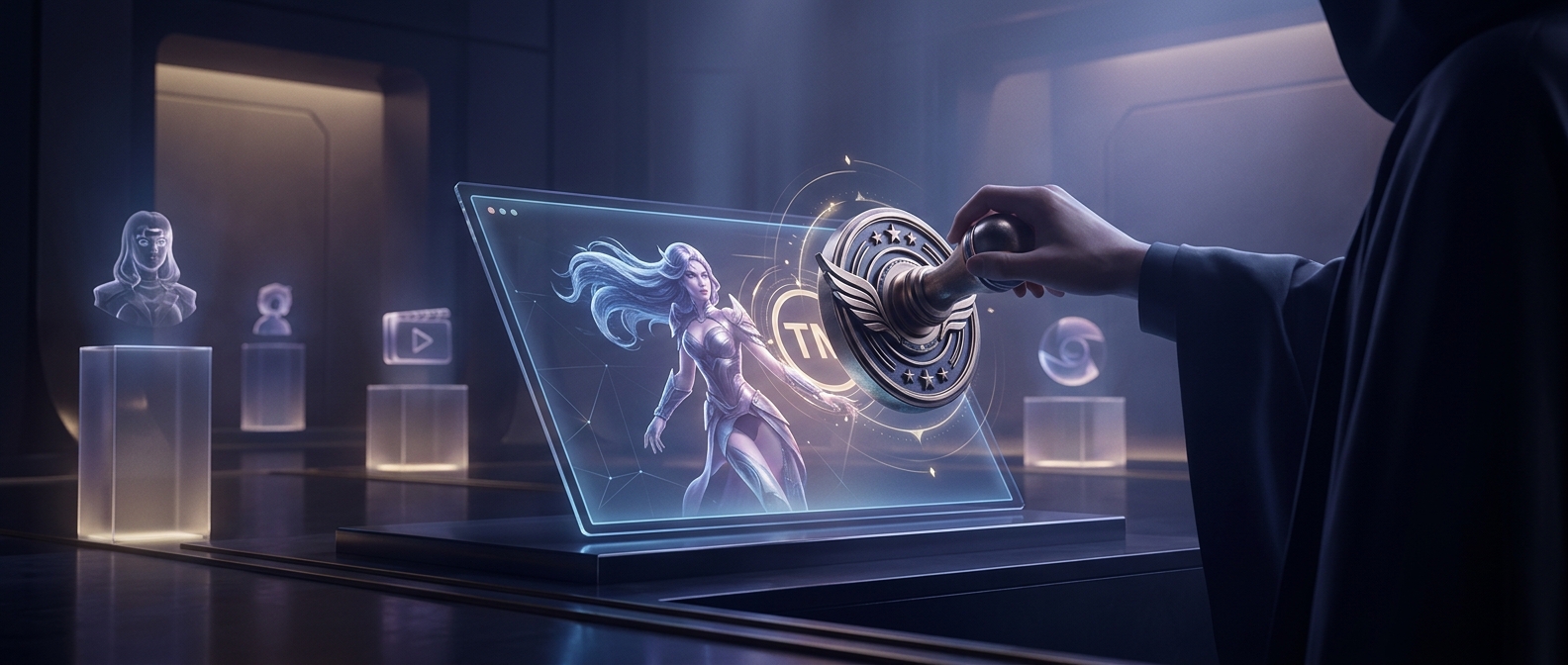
Who Holds the Rights to a Digital Persona?
A fictional digital persona can appear to own intellectual property or sign a brand deal, but the legal paperwork usually runs through the people or organizations behind it. A persona is not automatically a legal person just because it has a name, face, backstory, and social-media presence.
The distinction is between a character and the rights attached to that character. A company or creator may register a trademark—a protected name or symbol used to identify goods or services—or hold copyright in the character’s artwork, videos, and written material. A patent, by contrast, protects a qualifying invention, not a persona as a character. These filings can help protect the business built around a digital identity.
How a Persona Makes a Deal
When a brand hires a fictional influencer, the agreement is typically signed by the company or individual authorized to represent the persona. That party can license the character’s image, name, or content for an advertisement and collect payment. The character may be the public face of the arrangement, while the contract identifies who actually controls the rights and must deliver the work.
This structure matters because a digital persona can outlast any one post or campaign. If ownership is clear, the rights holder can approve uses, negotiate partnerships, and decide whether another company may put the character on a product. The audience sees a personality; behind it is a set of controlled rights and a real-world decision-maker.