Why a Wingsuit Needs a Parachute to Land
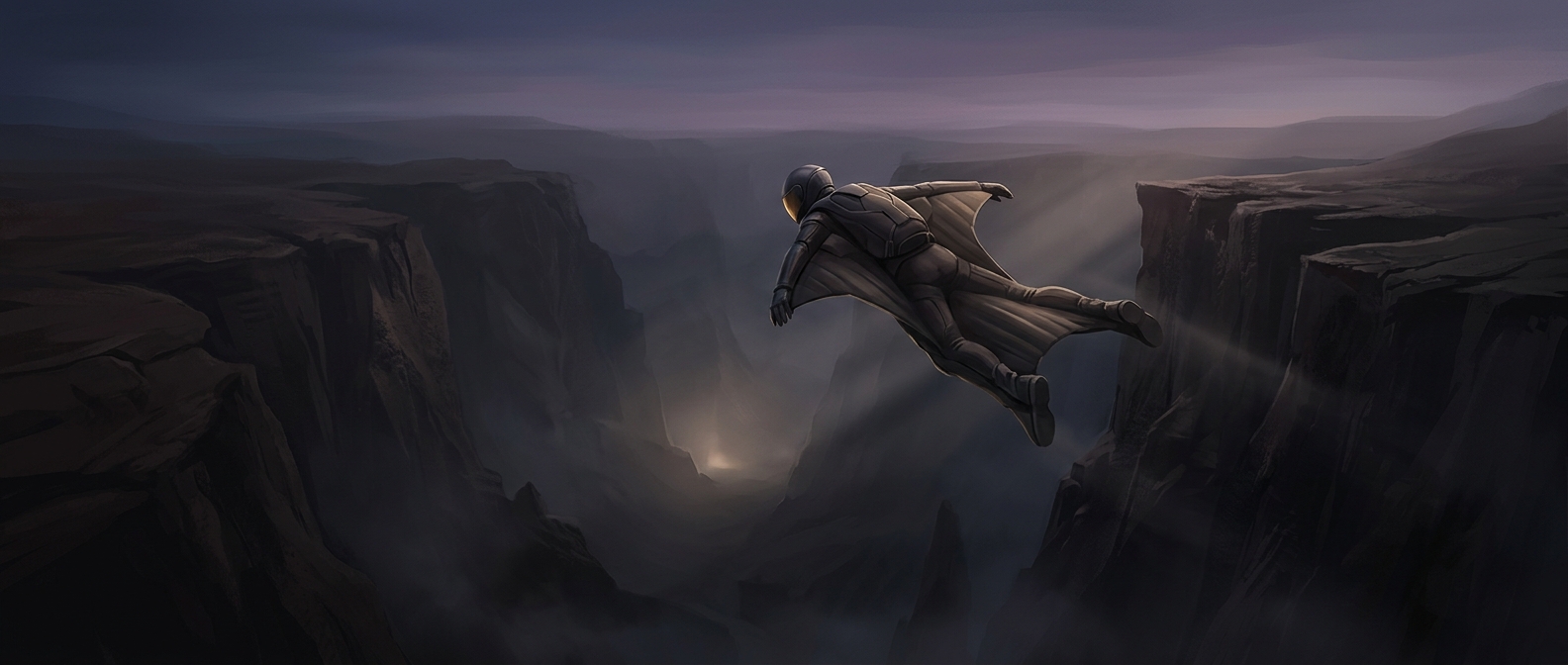
A wingsuit turns a falling body into a gliding one. Fabric stretched between the arms and legs catches air, producing lift that slows the descent and carries the flyer forward. But the suit is not an airplane wing with a landing gear or a powered way to hold position: it still loses height, and it needs substantial forward speed to keep producing lift.
That speed is the problem near the ground. A flyer cannot simply flare—pitch up to trade speed for a brief reduction in descent—then touch down safely as an airplane does. The suit cannot cancel the flyer’s motion or provide a controlled, slow landing on its own. Trying to meet the ground at wingsuit speed would be dangerous.
The Parachute Changes the Job
Instead, the flyer opens a parachute while still high enough to let it deploy and inflate. The parachute creates far more drag, reducing forward speed and descent so the flyer can steer toward a suitable landing area and arrive much more slowly. The wingsuit handles the long glide; the parachute handles the landing.
That handoff is built into the flight plan, not an emergency backup. A wingsuit flight is only complete once the parachute has opened and carried the flyer safely to the ground.