A scare that reached beyond the screen
William Castle’s The Tingler was built around a creature that, in the film’s own premise, grows stronger with fear. That made the audience’s reaction part of the show: viewers were not just watching characters confront a monster; they were sitting in a room where something seemed to be happening to them, too.
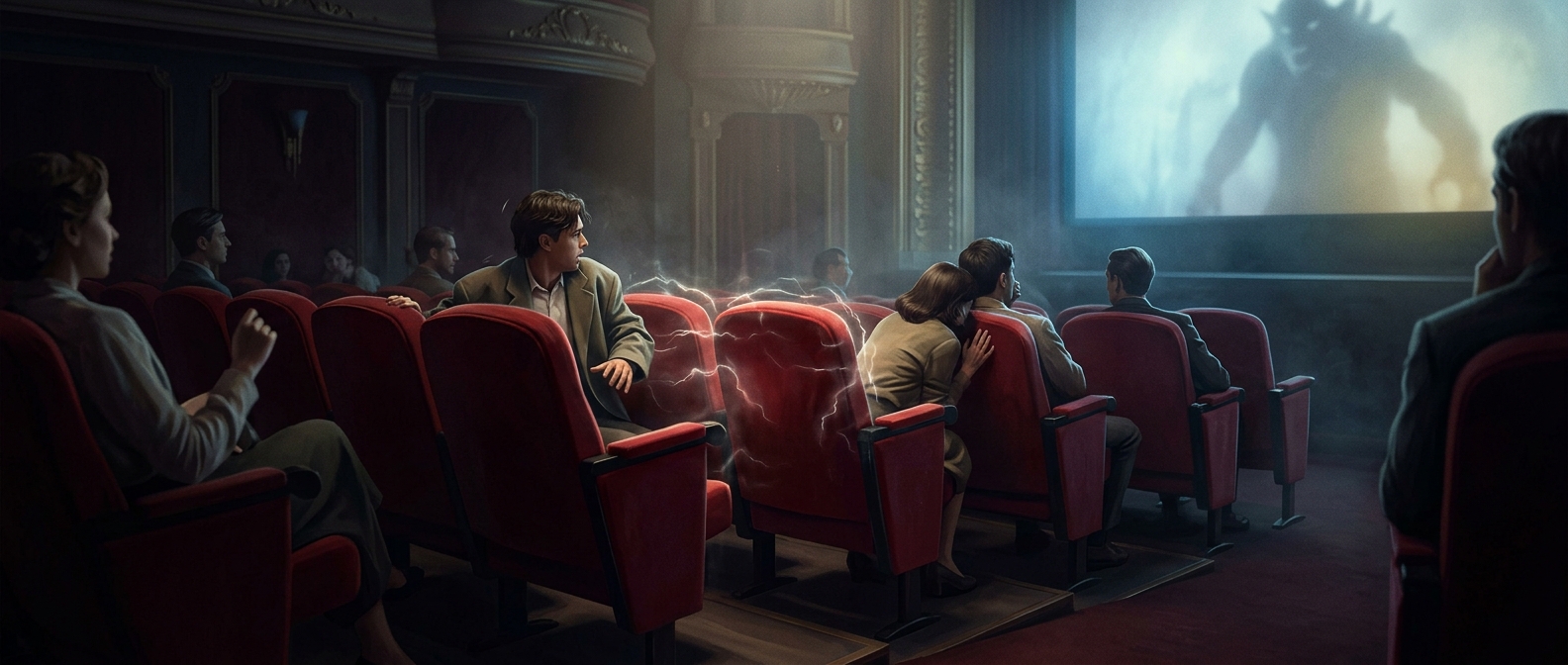
Castle’s solution was Percepto, a theater effect that sent brief vibrations through selected seats during the climax. Small motors attached beneath the seats made them buzz. The jolt was simple, but its timing mattered: it arrived when the story suggested the creature had escaped the screen and entered the auditorium. A physical sensation could make that fiction feel suddenly local.
The theater became part of the performance
The effect depended on coordination between the movie and the venue. The seats had to be fitted with the equipment, and the vibration had to land at the intended moment. Unlike a special effect contained in the image, this one crossed into the audience’s space. Each person’s response—startling, laughing, or calling out—could become part of the room’s atmosphere.
That approach reflected Castle’s showmanship. Rather than relying only on what the camera could show, he treated the screening itself as an attraction, with the theater helping deliver the scare. The motors could not make a creature real, but they could make the audience feel, for an instant, that the boundary between movie and auditorium had given way. In The Tingler, even a seat was part of the special effects.