A time machine built for two kinds of story
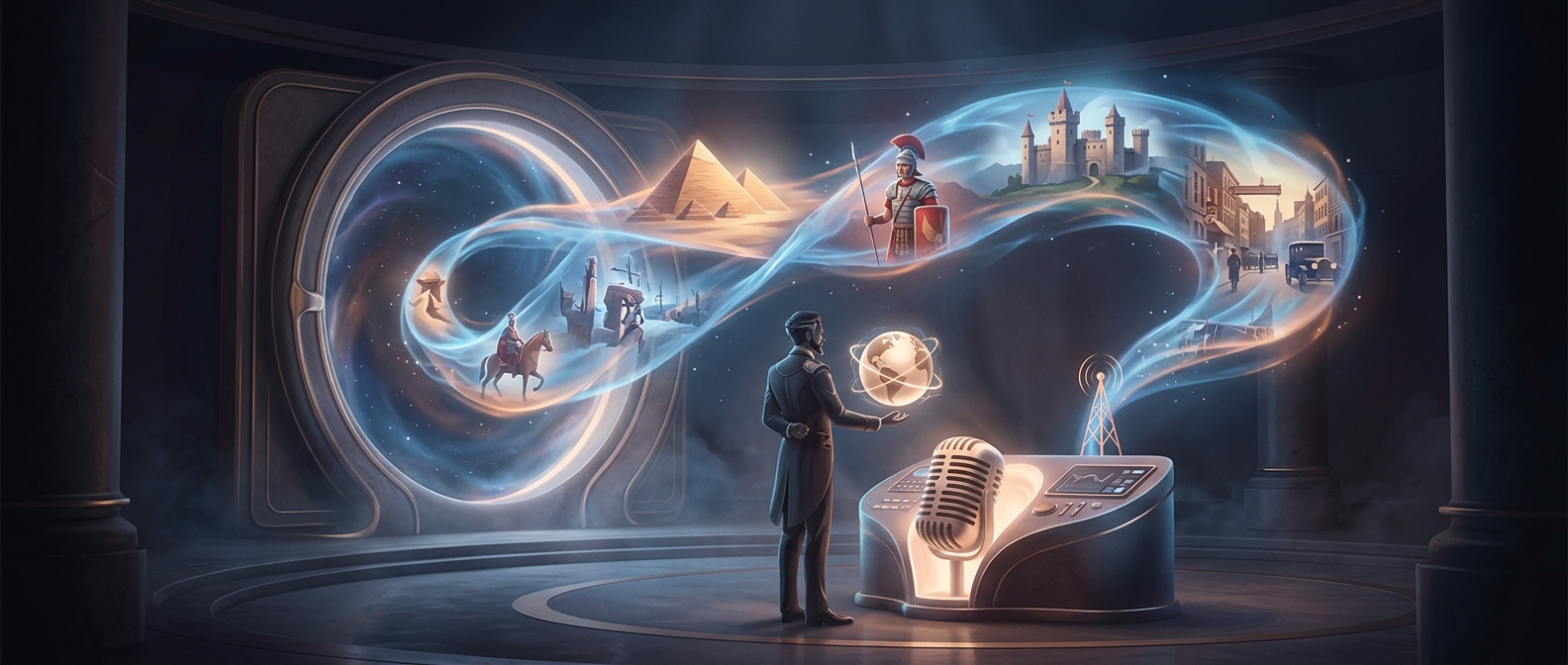
When Doctor Who was being developed, its time-travel premise offered a way to make children’s television both imaginative and educational. The Doctor’s machine could land in the future—or carry its crew into the past, where a story could unfold amid real historical people and events.
That plan shaped the show’s early format. Its stories could alternate between historical adventures, grounded in the human past, and science-fiction tales about unfamiliar worlds and technologies. The contrast gave the series room to entertain while opening a door to subjects children might not meet in an ordinary adventure program.
History without a classroom
A historical story could teach through the characters’ predicament: the Doctor and his companions arrived in a particular time and place, then had to navigate its dangers and customs. Rather than stopping the action for a lecture, the drama made the past part of the problem the characters had to understand.
That approach also created a practical challenge. The production had to make distant periods legible with the sets, costumes, and time available to a television series. The result was not a complete history lesson; it was a dramatic introduction, shaped around a few people and events.
The premise outlasted the lesson plan
The educational aim was part of the show’s original design, but the time machine proved more flexible than any single curriculum. It could support historical drama, monsters, alien civilizations, or a blend of them. The lasting consequence was a format in which the past remained available as an adventure setting—even as the series’ science-fiction side became central to its identity.