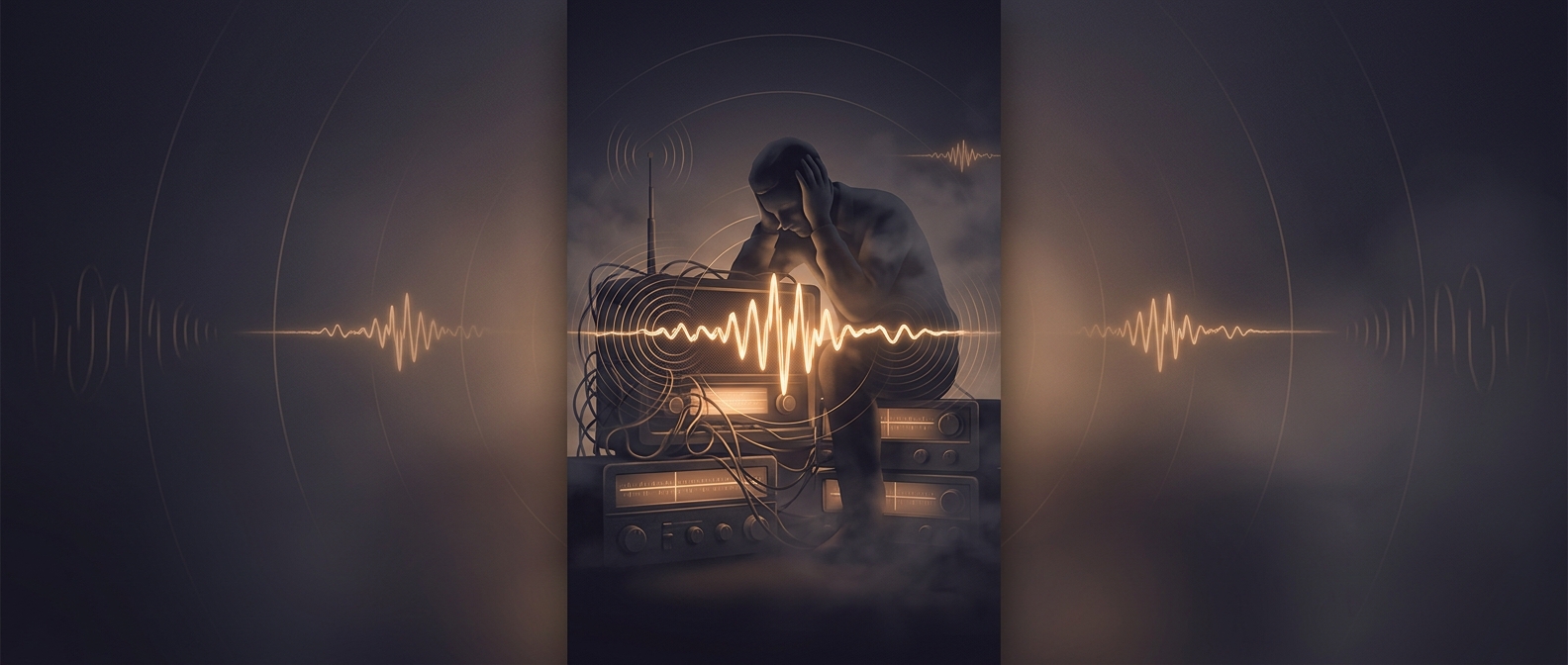
Silence Was a Signal on the Air
Radio silence in this setting did not mean switching the transmitter off. An operator could send a steady radio wave without adding speech or other sound. That unmodulated carrier—a radio signal that carries no changing audio—still occupied the frequency, much as a continuous tone can occupy a line even when no words are spoken.
How an Empty Message Held a Channel
Radio receivers are tuned to particular frequencies. When another operator tuned to the same one, a continuing carrier could be detected as a tone or interference rather than as a quiet, unused channel. That made it apparent that someone was already transmitting and discouraged others from using the frequency at the same time.
The practice mattered because two transmissions on the same frequency could overlap, making messages difficult or impossible to understand. Sending a carrier without a message was therefore a way to signal, in effect, “this channel is in use.” It did not physically lock the frequency: another transmitter could still send, and the signals could interfere. The protection came from other operators recognizing the occupied channel and cooperating.
Silence That Took Up Space
The apparent paradox is that the operator had to transmit something in order to send nothing audible. The carrier used radio energy and could keep the channel busy, while carrying no useful message of its own. In a shared medium where one transmission could drown out another, that empty signal served a practical purpose: it made a claim visible on the air before anyone tried to speak over it.