A Dress Code for an Invisible Audience
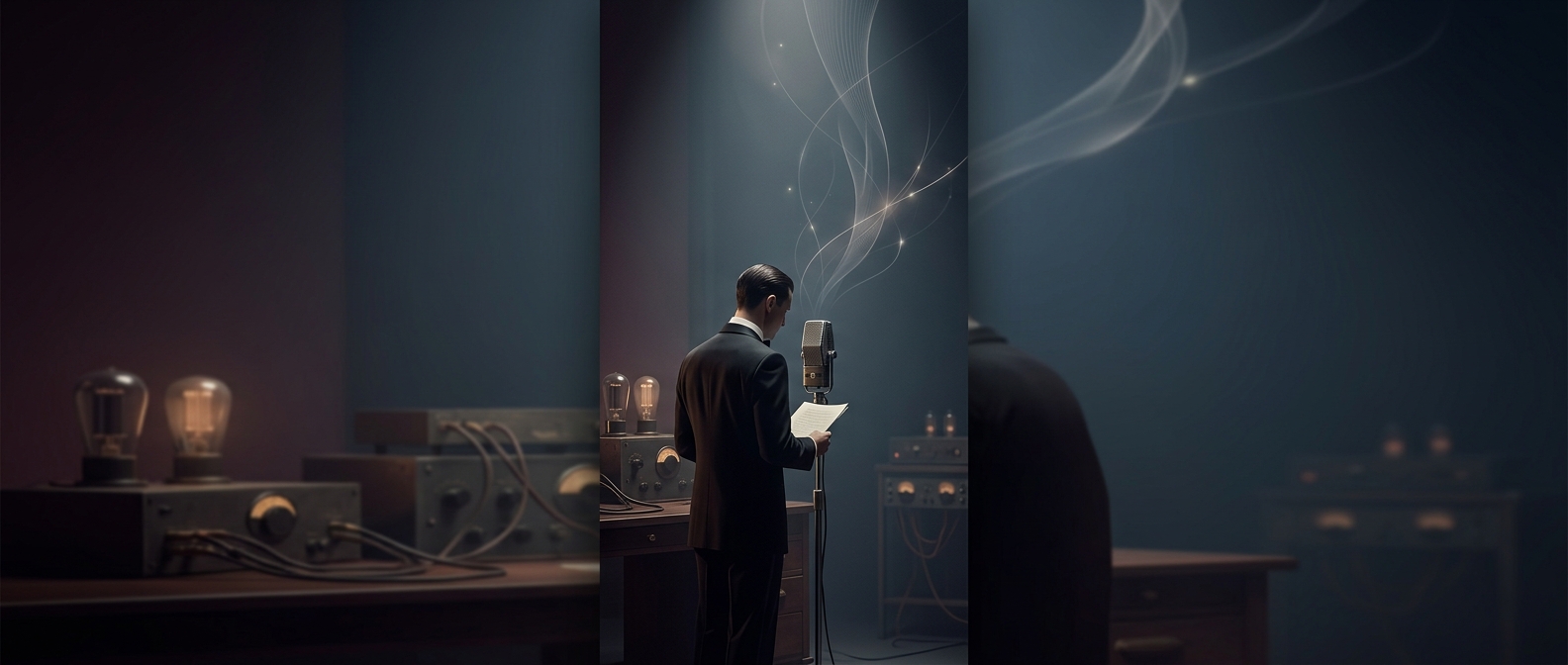
A tuxedo could not improve a voice or change how a microphone carried sound. Its purpose was institutional: early networks treated announcing as a formal public role, closer to hosting a concert or ceremony than chatting casually. A dress code made that standard visible inside the studio, even when the audience could not see it.
That distinction mattered in a medium built around trust. Listeners had to imagine the person behind the voice, while the network presented broadcasting as polished and dependable. Formal clothes helped reinforce that impression among staff and visitors—and in photographs and other publicity that showed announcers at work.
The Studio Still Had an Image
Radio did not make appearance irrelevant; it moved appearance out of the main transmission. The tuxedo was a signal aimed partly at the institution itself: the announcer was representing the network, not merely speaking into a microphone. The striking result is that a rule designed for the room could help shape how listeners pictured a voice they never saw.