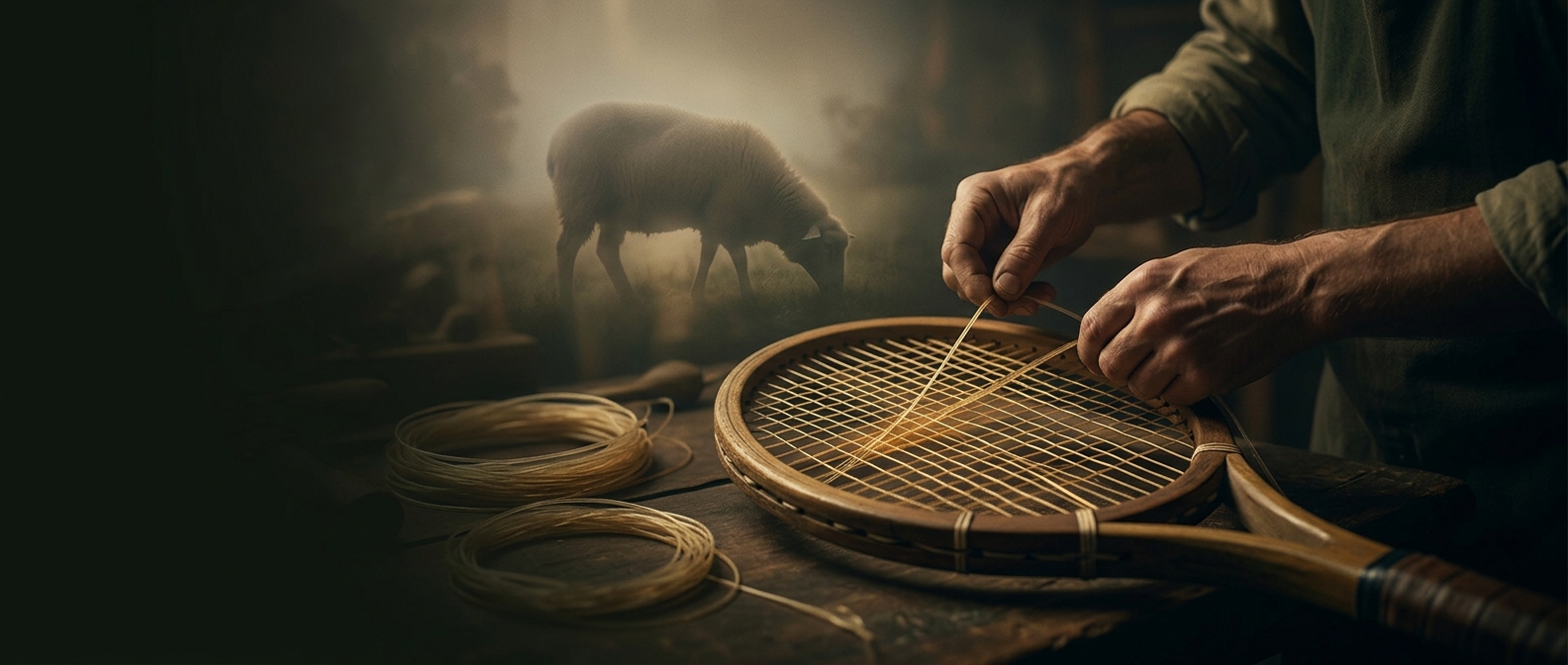
Why gut made a good tennis string
A racket string has to do more than survive a hard hit. It must stretch slightly as the ball presses against the racket, then spring back and help send the ball away. Natural gut’s tightly formed fibers could store and release that energy while remaining flexible, giving players a responsive feel that was difficult for early alternatives to match.
That performance depended on turning delicate biological material into something uniform enough to string a racket. The intestinal tissue had to be cleaned and prepared, then formed into long strands and dried under controlled tension. Variations in the raw material and in the work meant that making reliable strings was a craft, not simply a matter of cutting an animal product to length.
A racket depended on a wider supply chain
The strings connected tennis to animal processing. Intestines were a byproduct of slaughter, but converting them into a dependable sporting material required specialized labor and careful handling. A single racket therefore represented not just a piece of equipment, but a chain of work extending from the abattoir to the string maker and finally to the player.
Natural gut remained prized even as synthetic strings offered a more scalable alternative: manufactured materials could be produced more consistently and without relying on animal tissue. The change was not just a swap in ingredients. It made racket strings easier to supply to a growing sport, while gut’s combination of stretch and rebound kept it distinctive. The surprising part of the old racket is that its feel came, in part, from a material that began as a food-industry byproduct.