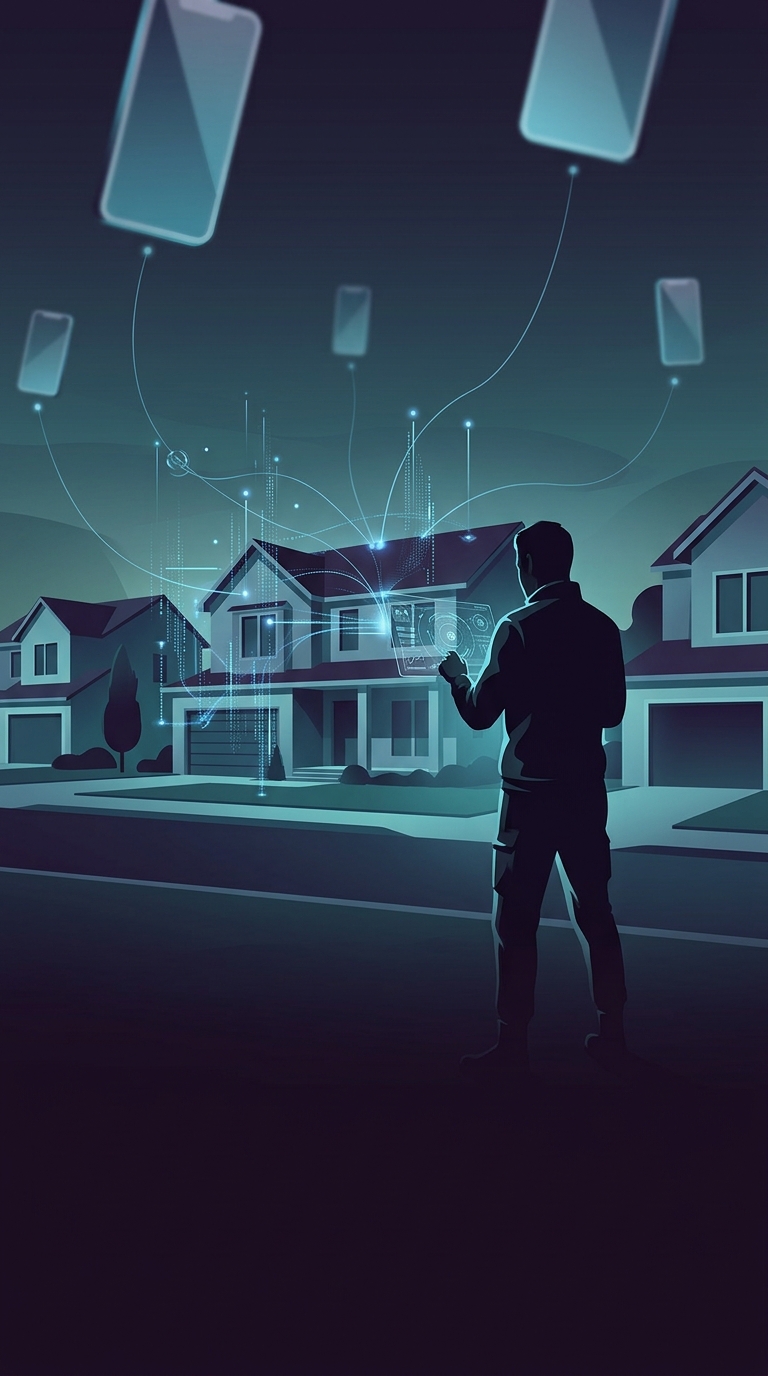
Digital traces can make an empty home look obvious
A house does not need to broadcast “no one is home” for its owners’ routines to become visible. Public posts about trips, predictable work schedules, and unattended deliveries can all provide clues. Taken together, ordinary bits of information may suggest when a home is likely to be vacant. Technology can make those clues easier to collect, but the underlying vulnerability is often routine information shared too openly.
Connected devices can reveal patterns, not certainty
Smart-home systems create digital records of activity: lights switching on, doors opening, or motion being detected. In some setups, owners also share device access with other people or use apps that report activity remotely. If account access or privacy settings are poorly managed, those records can expose more than intended. But a dark window, an inactive device, or a quiet house is not proof that nobody is inside; each can have an ordinary explanation.
Reduce what outsiders can infer
The practical defense is to limit both public clues and unnecessary access. Share travel plans with a small circle rather than broadcasting them in real time, review who can use smart-home accounts, and secure those accounts with unique passwords and available multifactor authentication. Ask a trusted person to collect deliveries or check on the home during an extended absence.
The goal is not to make a house appear occupied every minute. It is to make a household’s schedule and device activity harder for strangers to interpret—and to avoid letting several small clues add up to a clear picture.