Why soda bread can rise without yeast
Yeast bread depends on living microbes that slowly produce gas. Soda bread uses a quicker chemical reaction instead: baking soda meets an acidic ingredient, such as buttermilk, and releases carbon dioxide. The bubbles expand as the dough heats, while the flour’s starches and proteins set into a loaf. There is no long rise to wait for, which makes the method useful when baking outdoors.
The dying fire becomes the oven
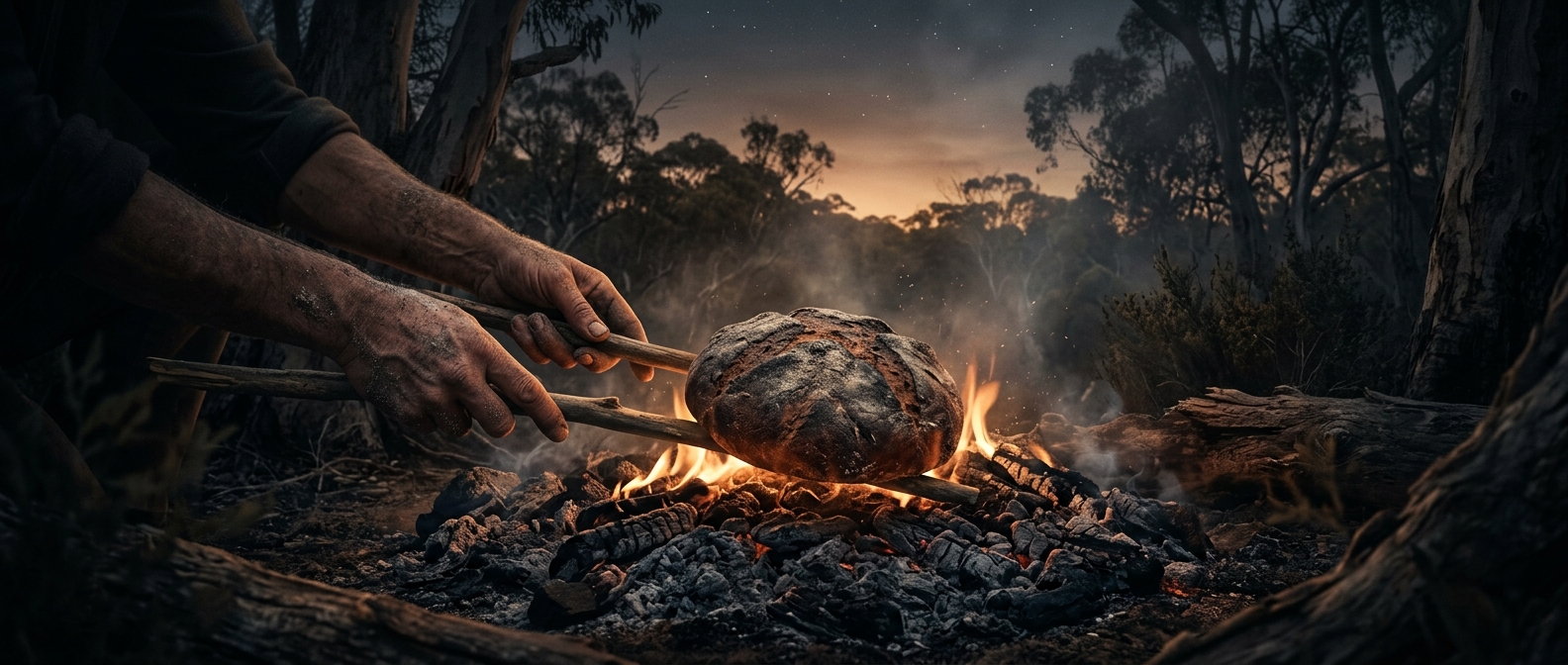
A bed of embers gives off steadier heat than open flames. Ash around the dough helps shield its surface from direct, scorching heat, while the hot coals cook it through. The challenge is uneven temperature: a loaf too close to a hot coal can burn before its middle is done, so the baker has to judge the fire and position the dough carefully.
The result is usually more rustic than an oven-baked loaf, with a firm, browned crust that may carry a trace of smoke. It is a small lesson in camp cooking: the fire’s last useful heat can bake bread, not just keep people warm.