A Draw Two resolves before the next player can act
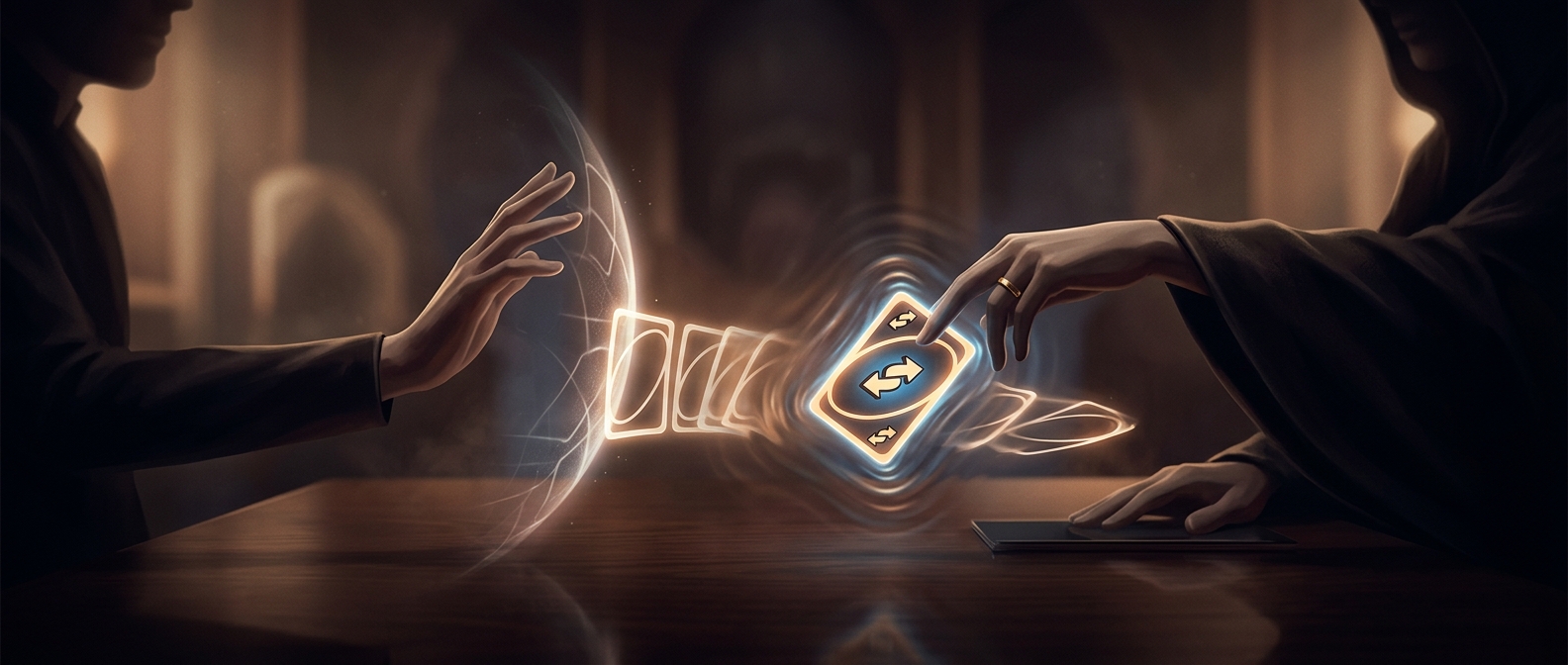
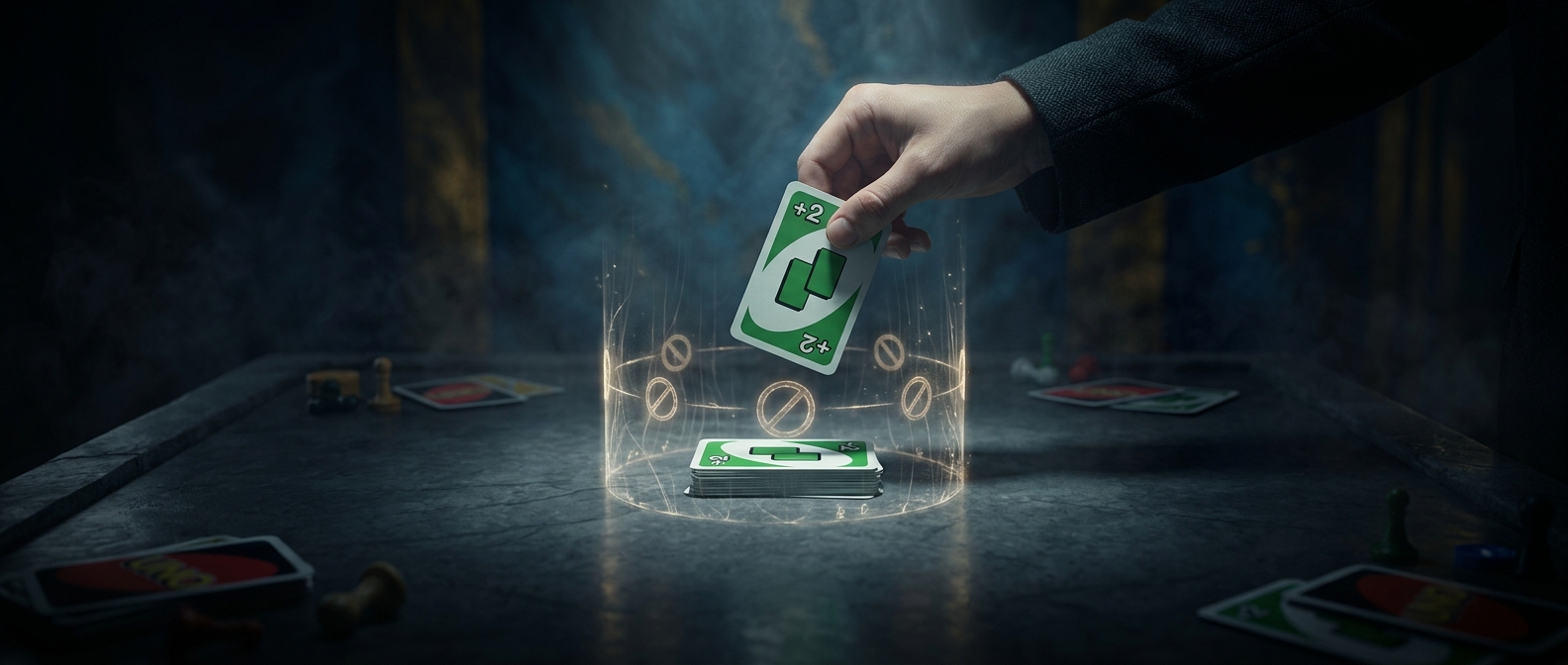
In official UNO, a Draw Two is not a penalty that waits to be answered. When it is played, the next player draws two cards and loses their turn. Because that player’s turn is skipped, they cannot play another Draw Two to make the following player draw four.
The distinction is between taking an effect and passing it on. Stacking treats the penalty as if it were still active after the next player receives it. The official rule instead resolves the card’s effect immediately: draw the cards, skip the turn, and continue with the next player who is allowed to play.
Why the table may remember it differently
Stacking is a familiar house rule, and it creates a dramatic chain: each player can add to the penalty or risk taking the growing pile. But that changes the official game’s timing and consequences. Under the official rule, the player hit by a Draw Two has no chance to defend themselves with another one; the penalty ends at them.
That difference matters most when a hand is nearly over. A player may feel they have a matching card ready, but a skipped turn means they cannot use it to escape the draw. If a group wants stacking, it can agree to that variation before play—but it is a house rule, not the official way to play.