A candy built around a field problem
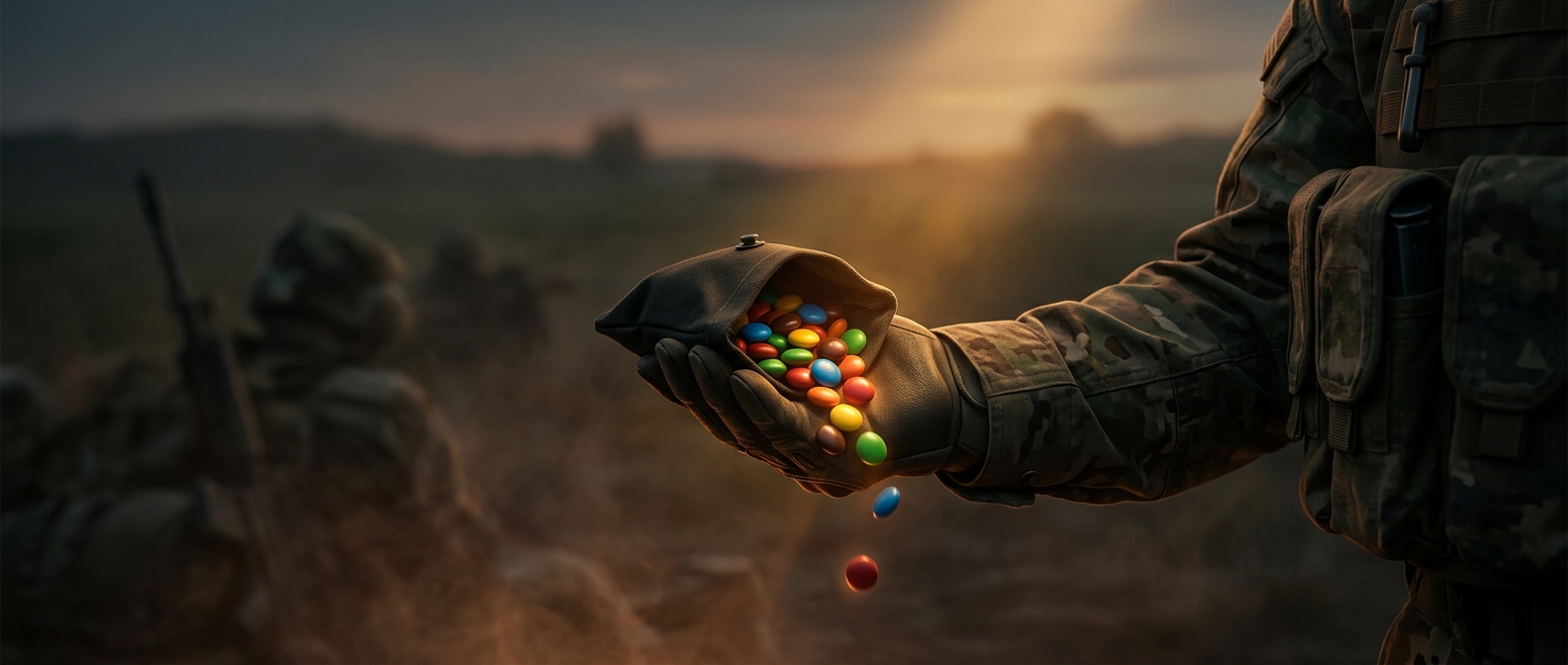
Chocolate is convenient energy to carry, but heat can soften it, smear it across a wrapper, and make it difficult to eat cleanly. M&M’s addressed the mess with a thin, hard sugar coating around each piece. The shell gave soldiers a firm surface to handle even when the chocolate inside softened. It did not make the chocolate immune to heat; it made the candy more practical to carry and eat.
That design mattered especially for troops serving in hot climates, where ordinary chocolate could become a sticky burden before it was eaten. The coating turned a familiar treat into something better suited to transport and field conditions.
The military as a first market
During World War II, the U.S. military was M&M’s only buyer. That made the candy’s usefulness more than a clever product feature: it had a large institutional customer with a specific need. For the maker, military orders provided a reason to produce the new candy at scale; for the military, the coated pieces offered a less messy way to supply chocolate to troops.
The arrangement also shaped M&M’s early identity. Its first challenge was not winning over shoppers in a candy aisle, but meeting a practical demand under wartime conditions. Once the war ended, the product could move beyond that single customer. The detail worth remembering is how plainly the shell solved the problem: it let a piece of chocolate travel farther before becoming a mess.