A small luxury became an easy purchase to postpone
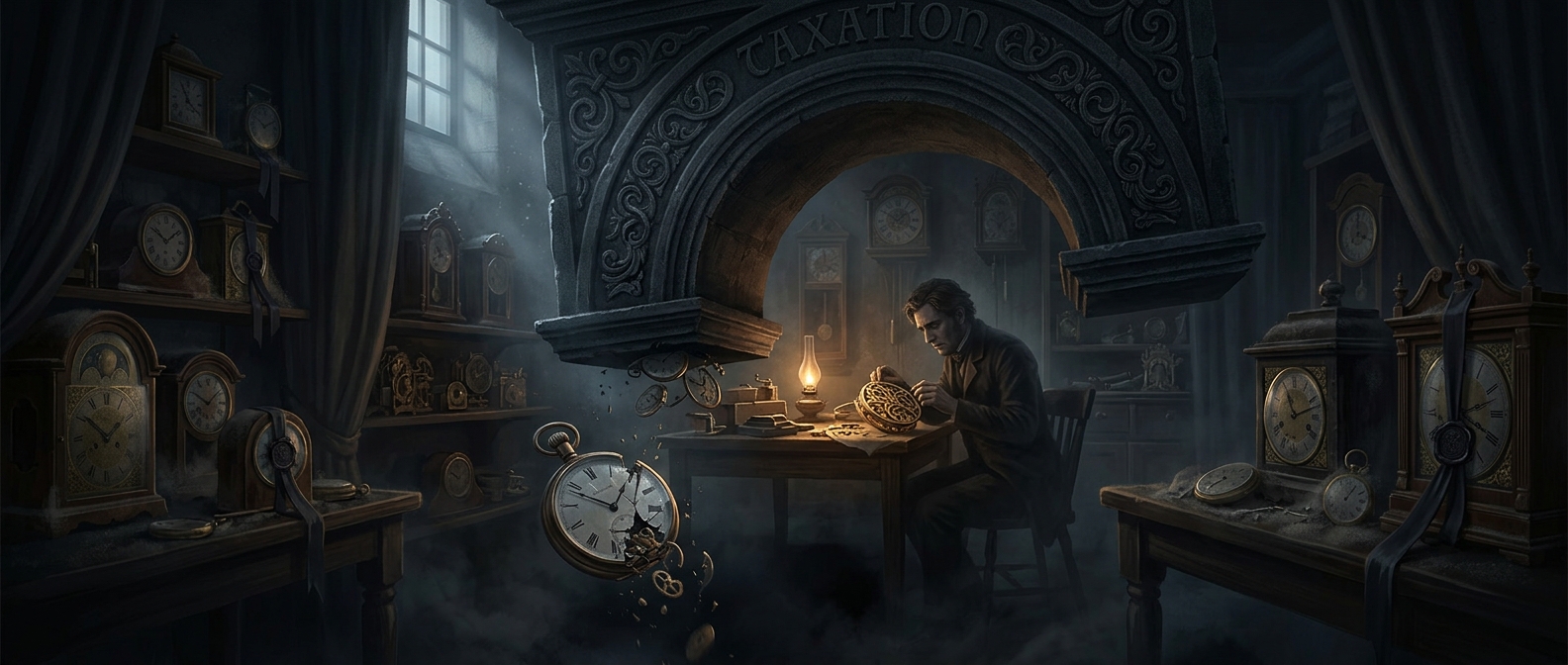
In 1797, Britain taxed clocks and watches, turning a household purchase into a more expensive one. That mattered because these goods were durable: a family that already owned a clock could keep using it, and someone who wanted a new watch could wait. Unlike food or fuel, a timepiece was not something most buyers had to replace immediately.
The tax therefore did more than add a charge to each sale. It gave customers a reason to delay buying at all. When many people made the same choice, clockmakers and watchmakers lost orders, while the tax brought in less money than the government might have expected.
Why the slump threatened the trade
Watchmaking depended on a chain of skilled work: makers and workshops produced intricate mechanisms, and merchants needed customers willing to buy the finished goods. With demand falling, fewer sales meant less work and income across that chain. The industry’s danger lay not in the tax directly stopping production, but in making purchases scarce enough to undermine the businesses that relied on them.
The government repealed the tax within a year. The episode shows why taxing a nonessential, long-lasting product can backfire: buyers can simply keep what they have, leaving producers with a sharp drop in business and the state with little revenue to show for it.