Why a full moon can feel like a pattern
A full moon is unusually easy to notice: it rises bright and round, often becoming a visual landmark on a night when people are out late. When a shift feels especially difficult, that striking detail can become part of the story. The many ordinary nights that do not fit the pattern are less memorable. This is a familiar mental shortcut: vivid examples stand out, while the quiet counterexamples slip away.
That can make a hunch feel like experience accumulated over years. But a memorable coincidence is not the same as a reliable pattern. To test whether full moons bring more emergencies or disruptive behavior, researchers compare records across many dates rather than relying on recollection. Those broad comparisons have not found the dependable surge the folklore predicts.
The moon’s light is not a simple explanation
A full moon reflects sunlight toward Earth; it does not produce its own light. Before widespread electric lighting, moonlight could make outdoor surroundings brighter, so it is plausible that lunar light sometimes affected what people did or how they slept. But plausibility does not establish that full moons cause a general rise in crime, accidents, or chaotic behavior. A proposed mechanism has to show up as a consistent effect in real-world records.
Modern nights also contain many stronger sources of light, from streetlights to phones. Whatever influence moonlight might have in a particular setting, it cannot by itself explain every difficult night in a hospital or police department.
Symbolic meaning is a different claim
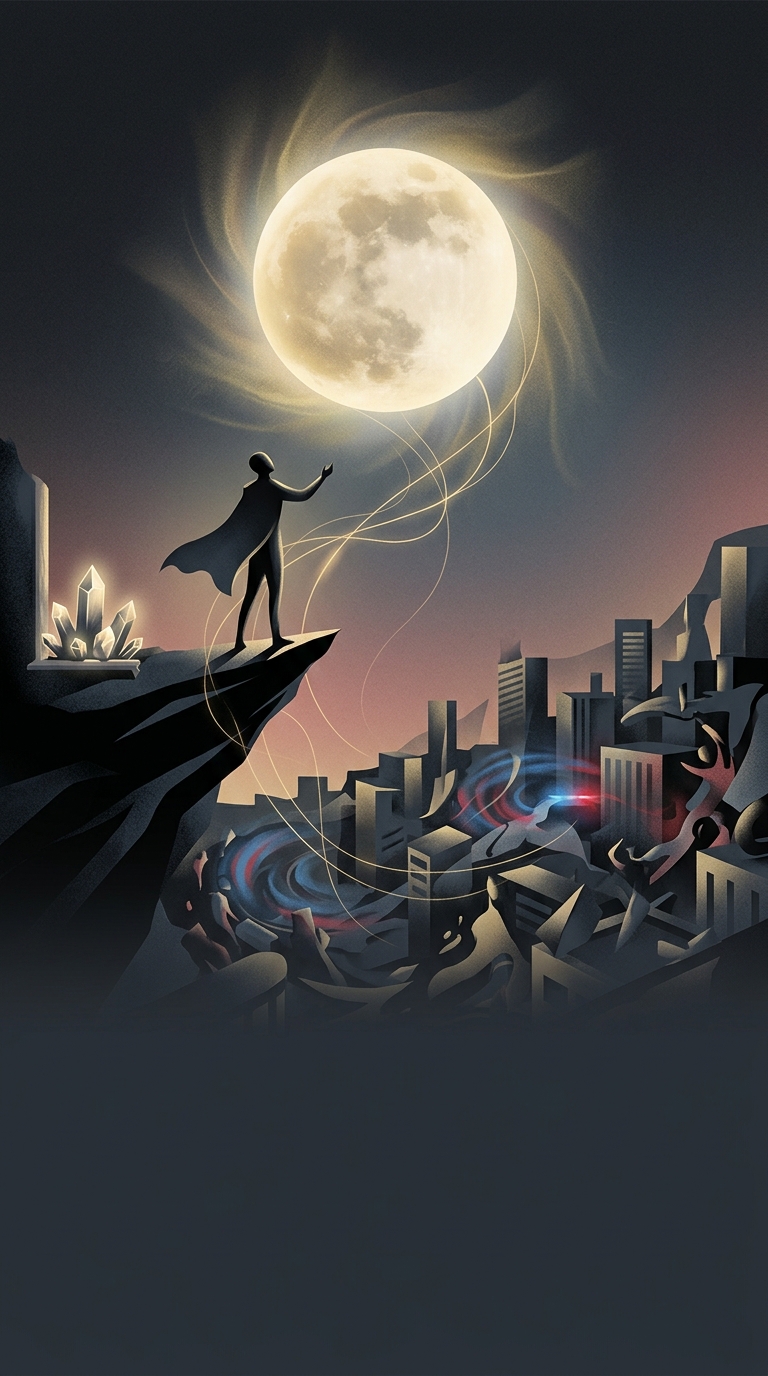
Astrological language gives the full moon a role in a symbolic calendar: a point of culmination, heightened feeling, or release. A ritual such as leaving crystals in moonlight can give someone a deliberate moment to reflect or mark a transition. That personal meaning does not require the moon to exert a measurable force on the crystal or to trigger an emotional event.
The distinction is useful: a full moon can matter as an image, a ritual cue, or a striking feature of the night without functioning as a dependable forecast of what people will do.