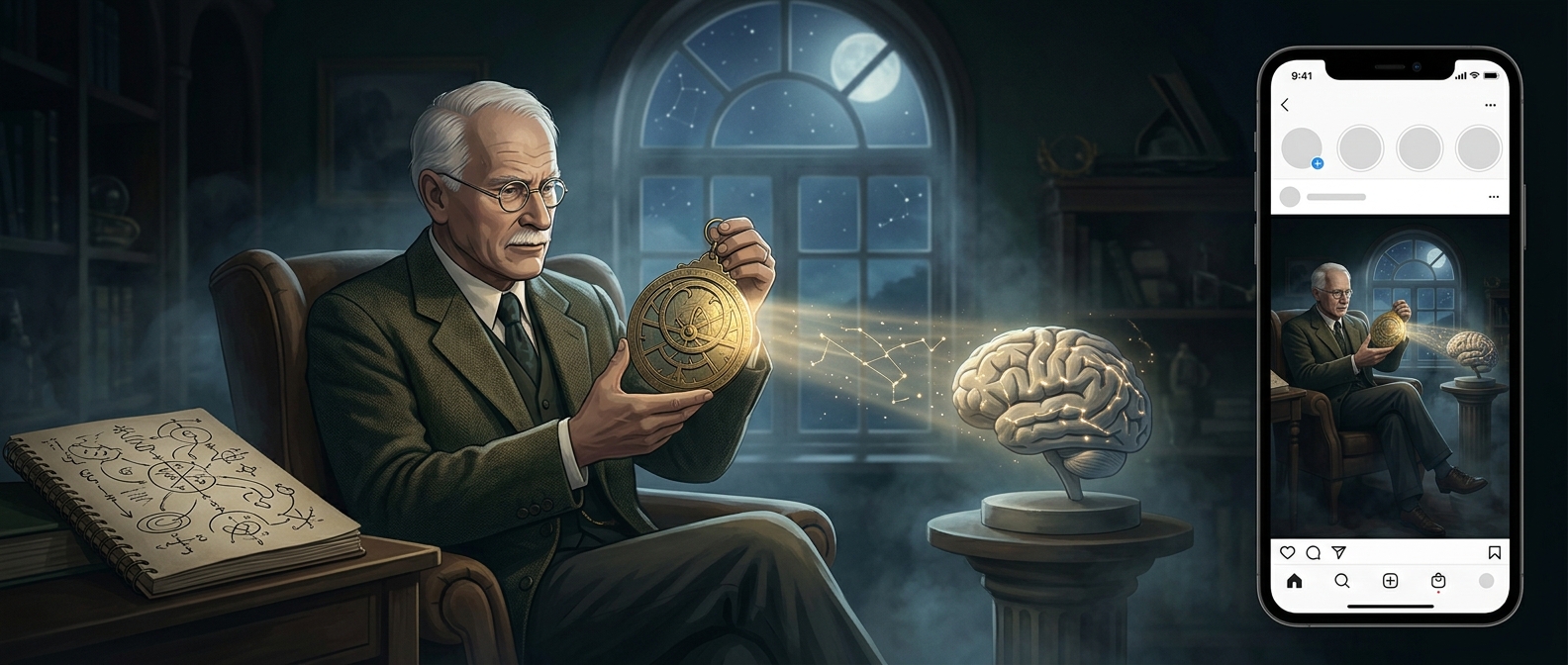
When coincidence feels like a message
Imagine wrestling with a decision when an unexpected encounter, phrase, or event suddenly seems to speak to the very question on your mind. Jung used synchronicity for coincidences that feel meaningfully connected to a person’s inner life even though one event did not cause the other.
The connection, in this account, is not a hidden chain of physical events. It is the significance the coincidence takes on in the person’s experience: an outer event appears to echo an inner concern. The same occurrence might seem ordinary to someone else, or at another moment in the same person’s life.
Meaning without a causal link
That distinction matters. If a person thinks of an old friend and then sees that friend, synchronicity describes the felt significance of the pairing; it does not explain how the thought summoned the friend. Nor does it mean that every coincidence carries a message. Jung’s idea offers a way to interpret certain striking moments, not a method for proving that the universe arranged them.
Its enduring appeal lies in the gap between probability and personal meaning. An event can be coincidental in how it happened and still become consequential in how someone understands it—perhaps prompting reflection or changing how a choice feels. The coincidence does not have to break the laws of cause and effect to leave a mark; its force comes from the connection the person perceives.