The beetle that gave Jung’s idea a shape
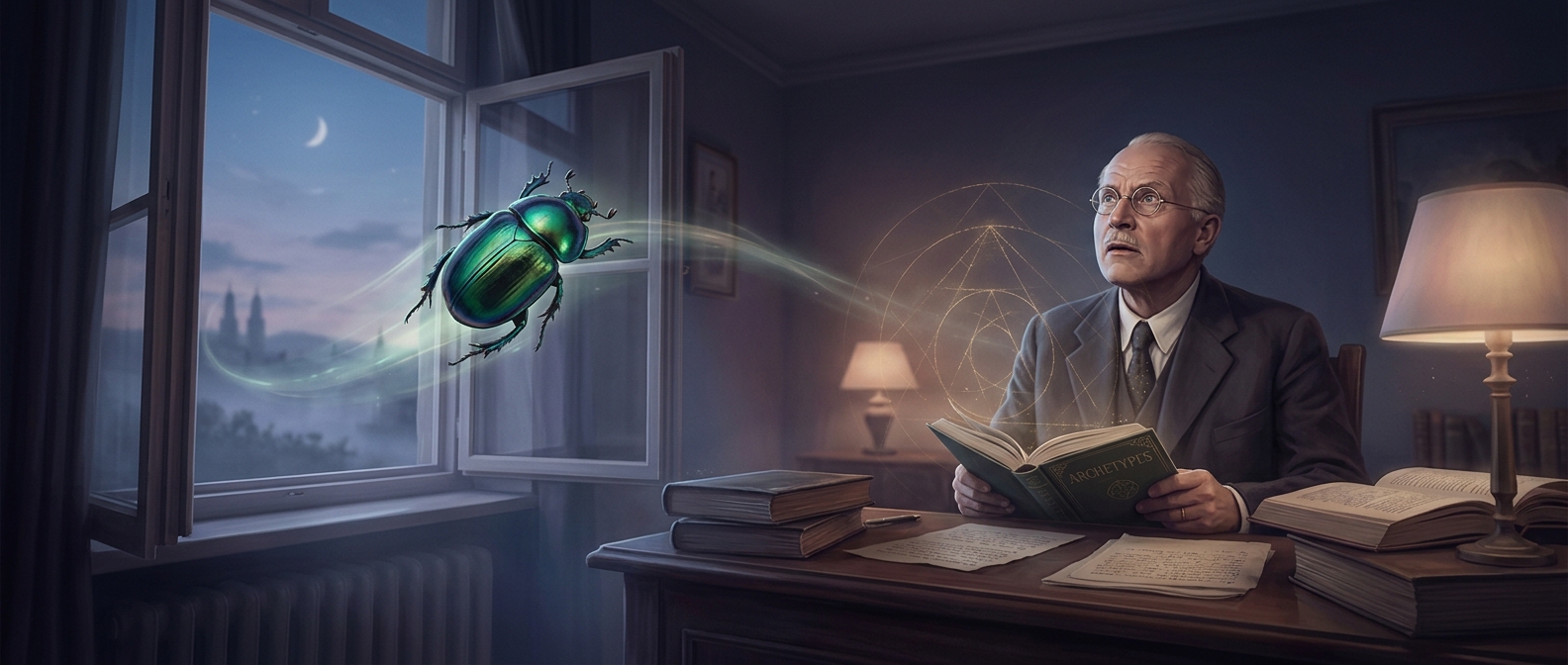
In the familiar account, a patient was describing a dream about a golden scarab when a beetle began tapping at the window of Carl Jung’s consulting room. Jung opened the window and caught it: a rose chafer, a beetle that resembled the scarab in the dream. The timing mattered to him not because one event had physically caused the other, but because the patient experienced the coincidence as significant.
What Jung meant by synchronicity
Jung used synchronicity for coincidences that seem meaningfully connected even when no ordinary cause links them. A dream does not summon a beetle; instead, an inner experience and an outside event arrive together in a way that feels relevant to the person experiencing it.
The episode became a vivid illustration of the idea, rather than proof that the beetle had been sent by the dream. Jung was interested in how such moments could affect someone’s understanding of their own life. In the story, the patient’s dream and the unexpected insect offered a striking image at a point in their conversation—one Jung believed could loosen a rigid way of thinking.
Meaning without a measurable connection
Synchronicity sits between psychology and mysticism. It takes seriously the human tendency to find meaning in striking coincidences, while making a different claim from a causal explanation: the connection is psychological or symbolic, not a demonstrated physical mechanism. That distinction is why the scarab story endures. A small beetle at a window became a memorable way to describe the feeling that an outer event has unexpectedly answered an inner one.