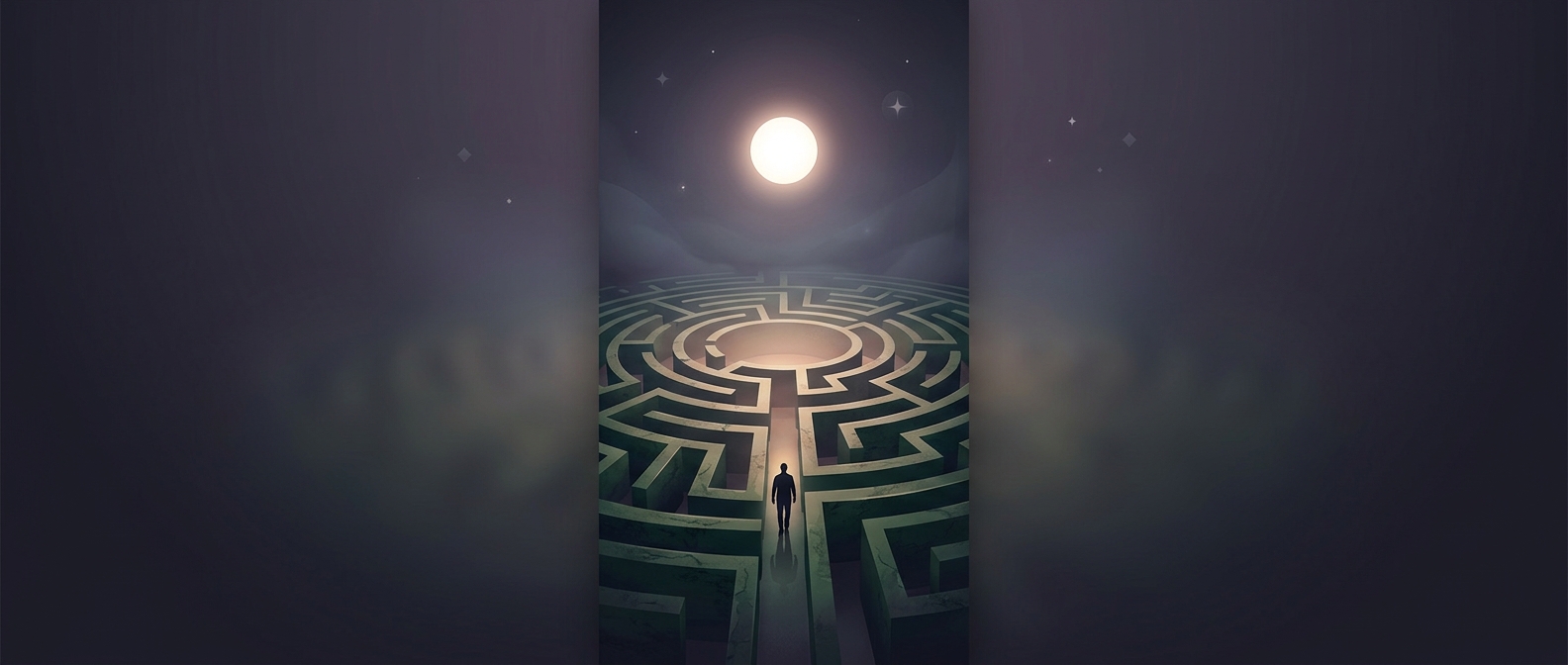
Why Solipsism Puts the Self at the Center
Solipsism begins with a problem of knowledge: experience arrives from the inside. You feel pain directly, see colors through your own perception, and encounter other people through what you observe and hear. You cannot step outside your own awareness to compare it with theirs. A solipsist therefore argues that the existence of their own mind is certain in a way the existence of anything else is not.
That claim is narrower than it may sound. Being unable to prove that other minds exist is not the same as proving that they do not. Solipsism treats the external world and other people as things that cannot be known with absolute certainty; it does not automatically mean that a person believes they are imaginary.
The Gap Between Experience and Proof
When someone speaks, their words and actions provide strong reasons to think they have thoughts and feelings of their own. But those are still observations made within the observer’s experience. Solipsism focuses on the gap between having convincing evidence and possessing certainty that no alternative could explain it.
This makes the idea difficult to test. Any apparent evidence for a world beyond the self—another person’s response, a remembered event, even a sensation—also appears as an experience in the self’s awareness. The argument can therefore turn back on itself: the very tools used to investigate reality are part of what it questions.
A Question, Not Necessarily a Spiritual Practice
Solipsism is a philosophical position, not a belief shared by mystics as a group. Some spiritual traditions describe the self and the world in ways that resemble it, but resemblance does not make their teachings identical. The lasting puzzle is more basic: how much can first-person experience establish about a reality beyond itself?