Crunches build abdominal muscles, not a window through belly fat
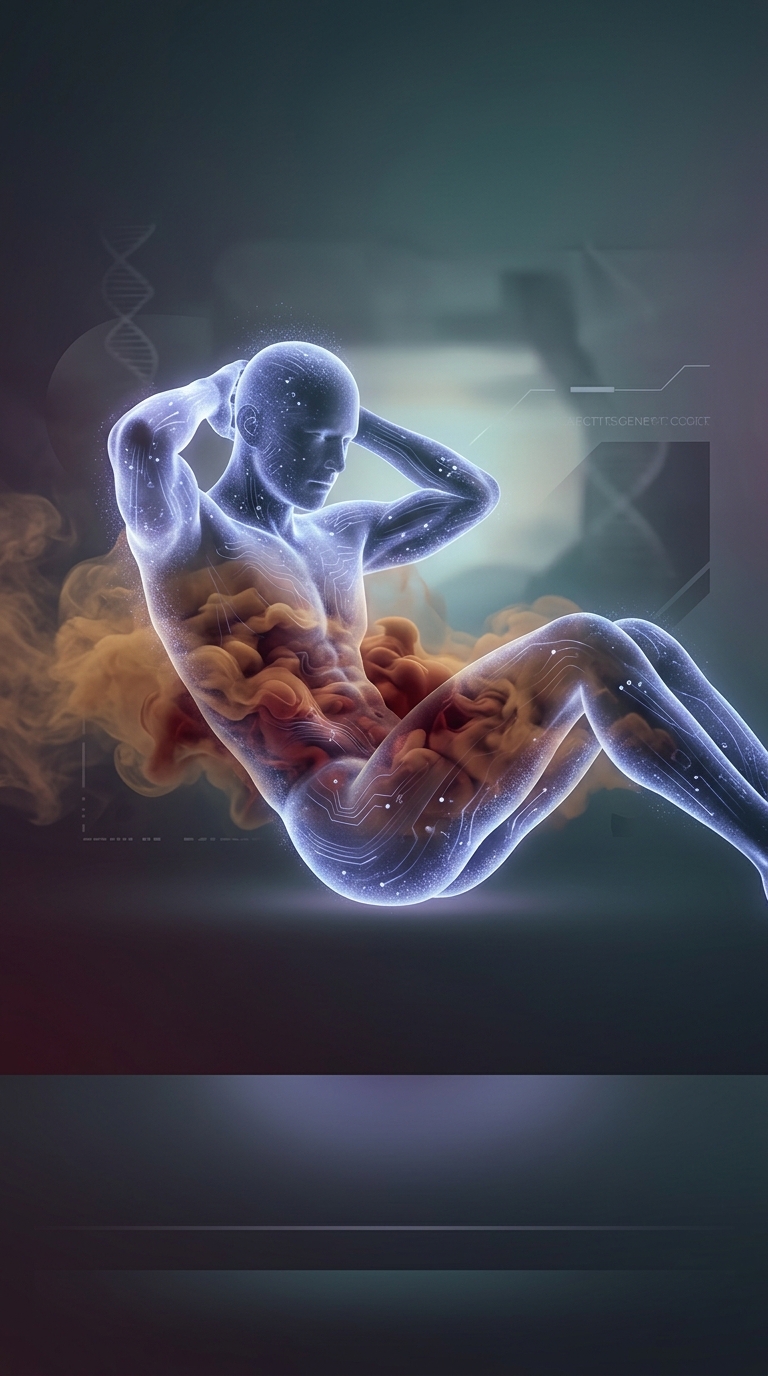
The rectus abdominis—the paired muscle that forms the familiar “six-pack”—lies beneath layers of connective tissue and body fat. Crunches make that muscle contract and, with enough resistance and recovery, can strengthen or enlarge it. But the working muscle does not selectively draw fat from the layer covering it. Fat is released into circulation from stores around the body, not burned directly over whichever muscle is exercising.
That is why doing crunch after crunch may improve abdominal strength without making the muscle outlines more visible. If a layer of fat still covers the abs, a stronger six-pack can remain hidden.
Where fat comes off is not under your control
The body’s pattern of storing and losing fat varies from person to person. Genetics, hormones, and other individual differences influence where fat tends to accumulate and which areas slim down first. As overall body fat decreases, the abdomen may change later than other areas; more abdominal exercises cannot force it to catch up.
Visible definition therefore depends on more than how many crunches someone can do. It reflects the size and shape of the abdominal muscles, the amount and distribution of fat over them, and natural differences in anatomy. There is no single exercise count that guarantees visible abs.
Crunches still have a job
They can be part of a program for building core strength, but they are not a targeted fat-loss tool. Pursuing more definition requires changes that affect overall body composition, while the eventual visibility of the abs remains partly individual. The practical distinction is simple: crunches train the muscle; they do not choose which fat the body loses.