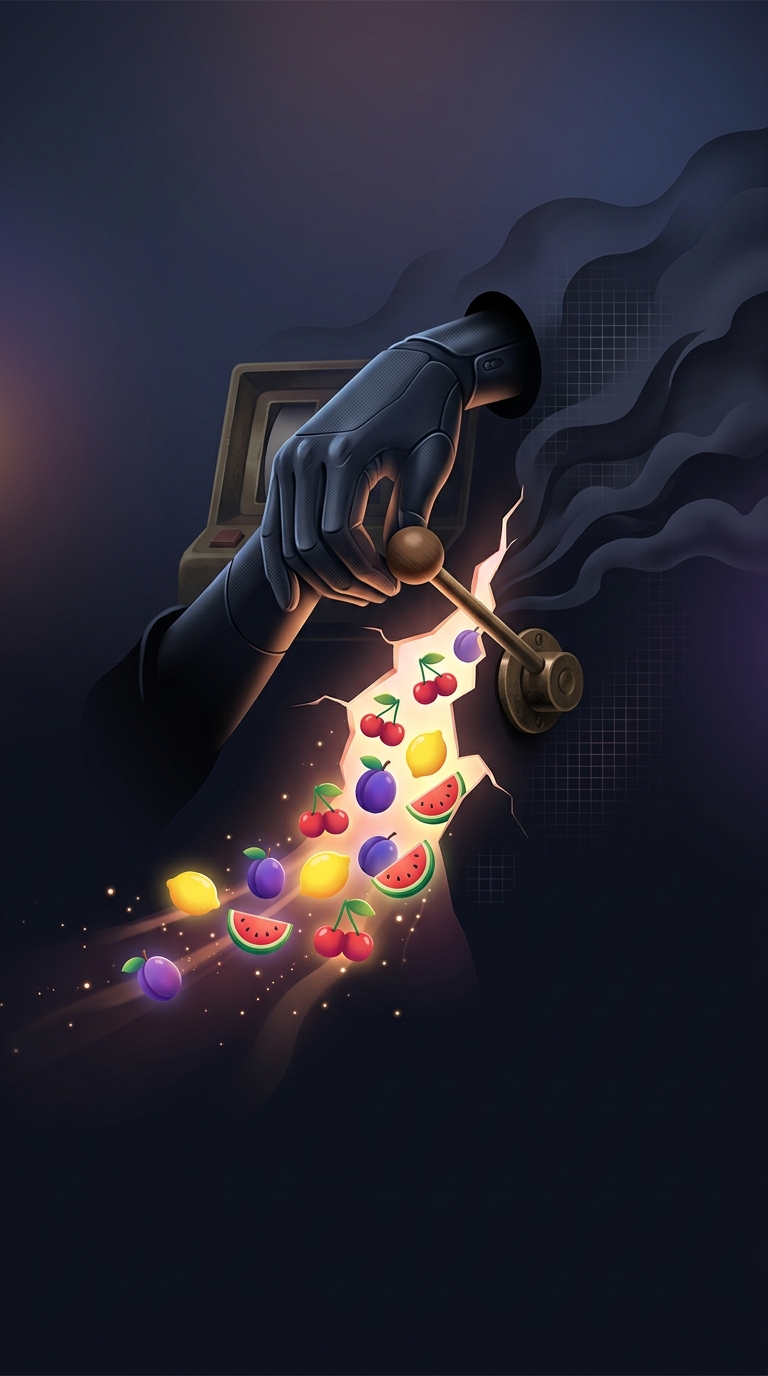
Fruit symbols began as a workaround
Early slot machines often used familiar card suits or other symbols. But when gambling machines faced legal restrictions, makers had an incentive to present them as vending devices rather than cash games. Some machines dispensed chewing gum, and fruit pictures could signal the gum’s flavor or serve as playful stand-ins for prizes.
That change suited the machine’s mechanics as well as its appearance: a player still pulled a lever and watched symbols spin, but the advertised reward could be gum instead of money. Cherries, lemons, plums, and watermelons made the connection to flavored gum instantly legible.
A legal disguise became a lasting design
The fruit imagery did not erase the gambling appeal. Players could still hope for a valuable combination, and fruit symbols made the outcome easy to read at a glance. Over time, the designs became familiar enough to define the look of a traditional slot machine—even after machines returned to paying out cash.
So the fruit is more than decoration: it preserves a trace of the era when manufacturers used gum prizes and vending-machine language to keep slot-style machines in circulation. The symbols that now suggest a jackpot once helped make the machine look like a gum dispenser.