The flight deck is only the visible worksite
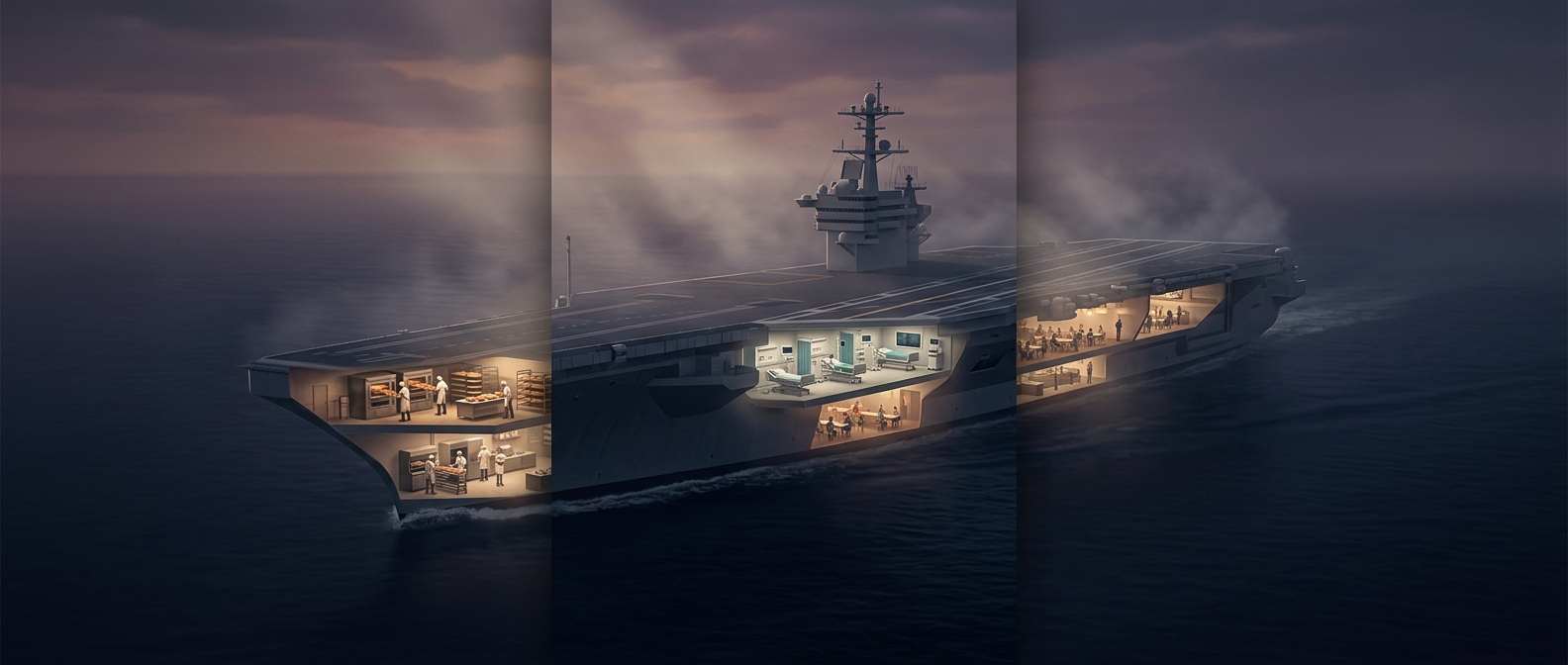
A carrier’s crowded deck can make the ship look like a runway with a hull attached. In practice, aircraft move between the deck and a hangar below it on large elevators built into the ship’s side. The hangar is a working space for storing and servicing aircraft, while workshops and supply areas support the crews who keep them ready.
That arrangement turns the ship into a tightly layered workplace. People, equipment, and aircraft share narrow routes, so operations depend on coordination: a plane being moved or prepared cannot simply be treated like traffic on an open airport apron. The deck must be cleared and arranged for each launch or recovery, while work continues elsewhere aboard.
Resupply is part of the operation
A ship far from port cannot depend on frequent trips ashore. It can take on fuel, food, and other supplies from support ships at sea, transferring cargo while both vessels are underway. This is more than a delivery: the transfer has to be planned around the ships’ movement, weather, and the equipment being passed across.
Once supplies arrive, they still have to be stored and moved through the carrier to the places that need them. Fuel for aircraft, parts for repairs, and provisions for the crew are different kinds of cargo, each with its own handling needs. Keeping them available is essential to keeping the ship’s operations going.
A runway with a supply chain attached
The carrier’s defining constraint is that its runway cannot be separated from the rest of the ship. Launching aircraft relies on a continuous chain of maintenance, fuel, people, and replenishment below deck. That is why the flight deck is best understood not as the whole airport, but as the most visible surface of a mobile operation that has to carry its own support system with it.