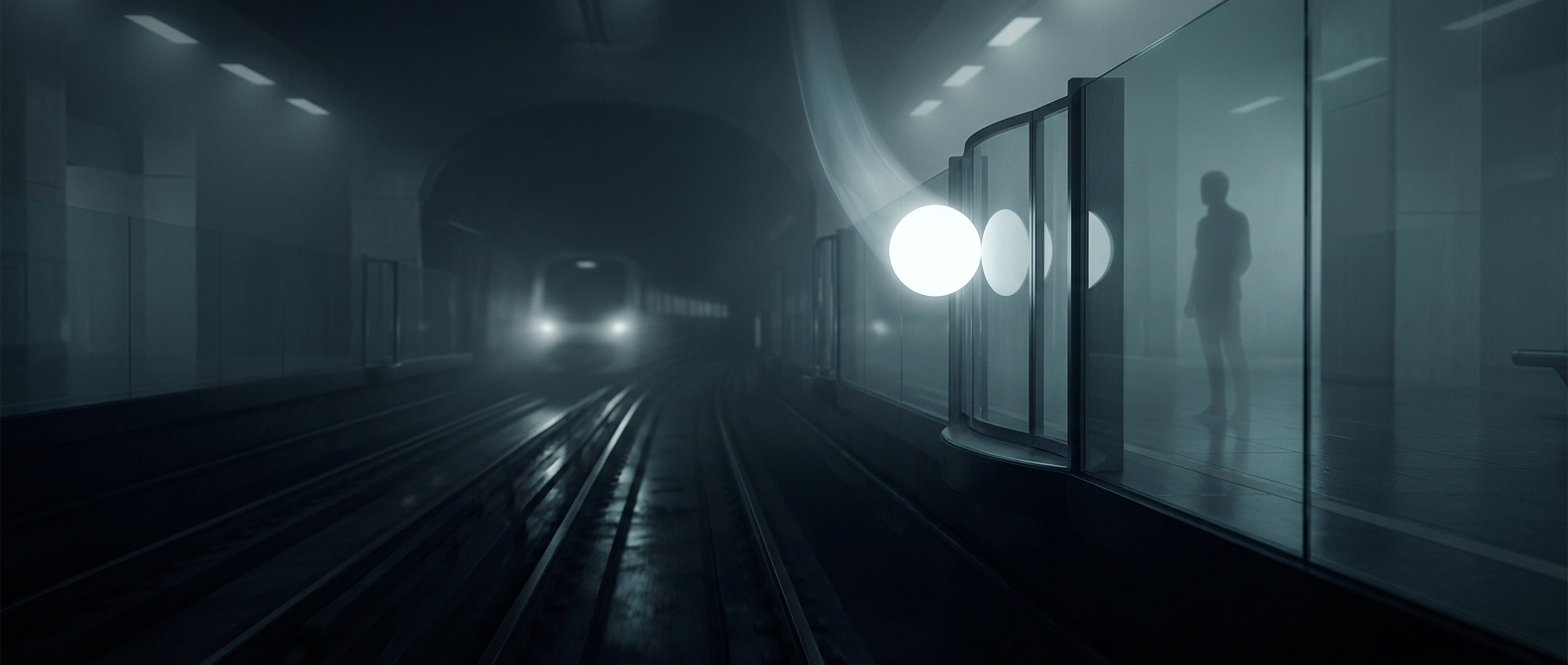
A barrier that has to agree with the train
Platform doors—often called platform screen doors—turn the edge of a station into a controlled boundary. They stay shut while trains pass or wait elsewhere, so a person or loose object cannot simply roll or fall from the platform onto the track.
When a train stops, its doors must line up with the platform openings. A control system coordinates the two sets of doors: once the train is correctly positioned, the platform doors can open alongside the train doors. Before departure, the system checks that the doors have closed and, in many installations, are secured. That check is an interlock: a safety condition that must be met before the train is allowed to move.
Why alignment matters
The system depends on more than a barrier. Trains must stop within the usable opening, and sensors or other safeguards must detect when a doorway is obstructed. If a door cannot close properly, the normal sequence is interrupted rather than treating the platform as clear. This adds equipment and maintenance work, and stations must also provide ways to evacuate people if the usual door sequence is unavailable.
By separating passengers from the track area, the doors help prevent falls and make it harder for dropped belongings to become a reason for someone to step into danger. Their most important effect is simple: a moment of distraction at the platform edge no longer leads directly to the tracks.